April 16, 2026
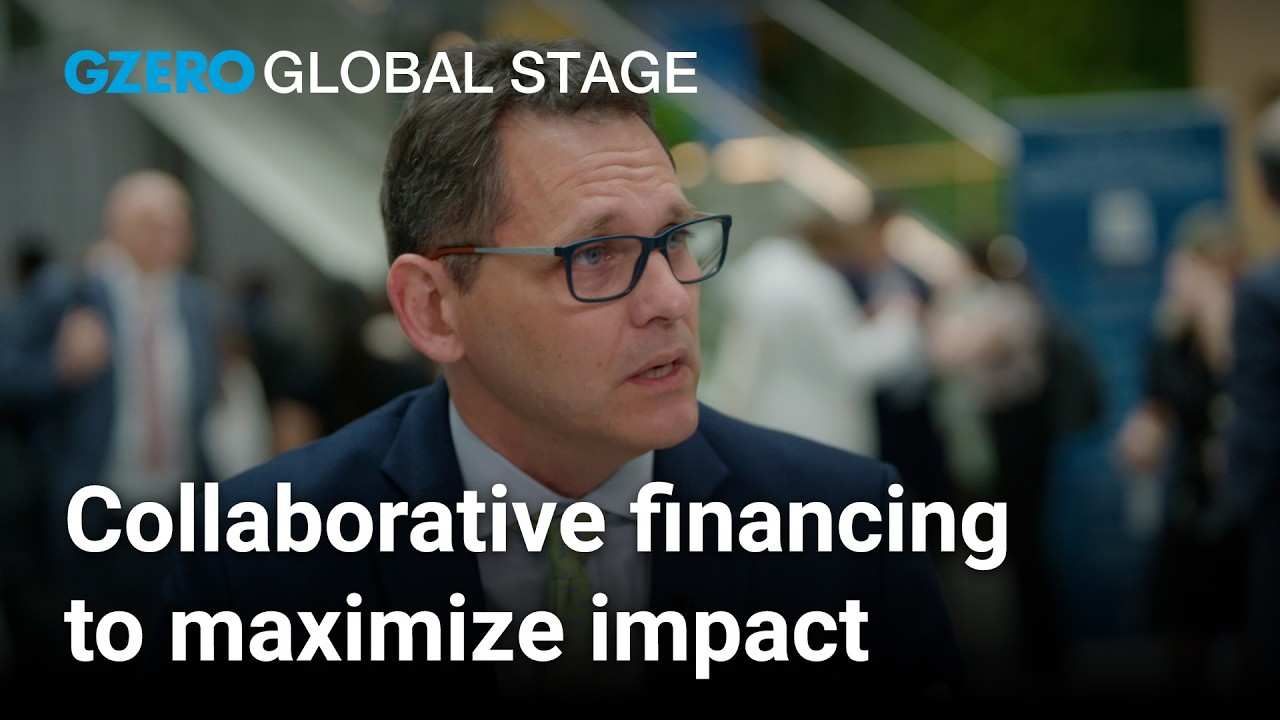
At the 2026 World Bank/IMF Spring Meetings, GZERO’s Tony Maciulis asked how development institutions prioritize investments when funding is limited, and global needs are growing.
The World Bank Group’s Germán Cufré argued that scarcity is forcing a shift toward smarter, more collaborative financing. Rather than competing, multilateral institutions are increasingly pooling resources to maximize impact. “Dollars are more scarce, so you need to squeeze more impact out of them,” Cufré said, pointing to a growing focus on partnerships that combine public funding with private capital.
With trillions of dollars needed for infrastructure, energy, and digital access, he emphasized that governments and development banks can’t fund solutions alone. Instead, their role is to de-risk investments, making it viable for the private sector to step in at scale. By sharing risk and aligning incentives, these partnerships can multiply impact, turning limited public dollars into significantly larger investments in emerging markets.
This conversation is presented by GZERO Media in partnership with Microsoft. The Global Stage series convenes global leaders for critical conversations on the geopolitical forces reshaping our world.
More For You
- YouTube
Most Popular
Think you know what's going on around the world? Here's your chance to prove it.
As the AI boom drives demand for data centers, smaller countries are betting that cheap energy and land can earn them a place in the global race for computing power
As America celebrates 250 years, Bank of America is proud to honor our shared history. Discover our commitment.
© 2025 GZERO Media. All Rights Reserved | A Eurasia Group media company.