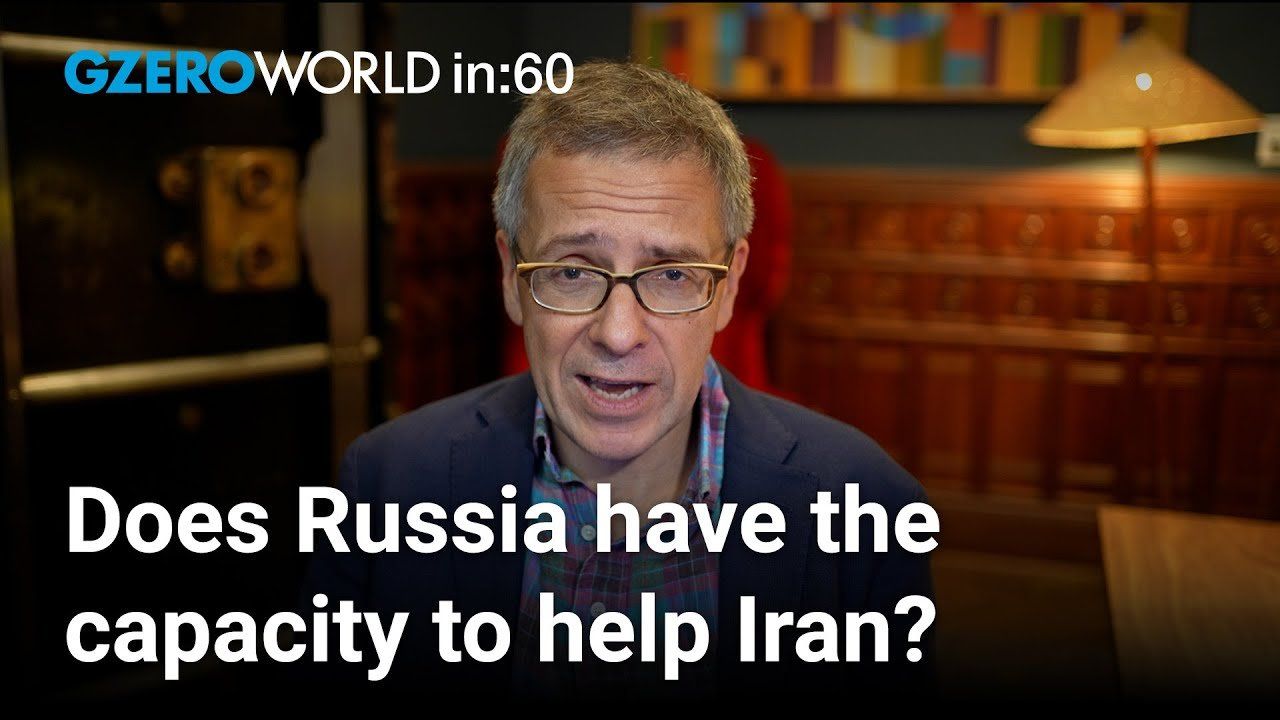
On Ian Bremmer’s World in 180 Seconds: Ian unpacks US strikes on Iran, Russia’s stance on the conflict, and the future of the United Nations at 80.
Are US strikes on Iran exposing cracks in NATO? Not according to Ian Bremmer. In this week's World in :60, Ian says, “On Iran, NATO allies are pretty aligned. They consider Iran an implacable enemy... and don't support regime change.” Even with divergent views on Israel, NATO countries are backing US actions to counter Iran’s nuclear capabilities.
On Russia’s role? It’s complicated. While Russia could help Iran, Ian emphasizes that “what they don’t have is the willingness.” The Iran-Russia relationship remains transactional, "not strategic," and Moscow’s threats over recent strikes are “all bluster.”
Finally, as the UN marks its 80th anniversary, Ian reflects on its evolving role: “Having a forum where all countries… share information and understand each other better is becoming more important, not less.” It’s not global government, but it is a critical global resource.
More For You
Could China give Europe a shortcut in the AI race?
Europe has struggled to build models that compete with American and Chinese rivals. But Chinese models that companies can download, customize, and run themselves could offer another way forward—with more control over data and security.
Most Popular
With the midterms just weeks away, Democrats are hoping for a blue wave, while Republicans are fighting to hold onto Congress. Amy Walter and Liam Donovan join Ian Bremmer to break down the races, the issues driving voters, and what the results could mean for Trump's presidency.
With the midterms just weeks away, Democrats are eyeing control of Congress as Republicans struggle with the political fallout from the Iran war, rising prices, and Trump's unpopularity. Amy Walter and Liam Donovan join Ian Bremmer to break down what could happen in November and what it means for the future of both parties.
Since returning to power in 2025, the Trump administration has drastically changed the answer to this question, pursuing an ‘America First’ philosophy that is dramatically more transactional: the US will give you money, but you must give the US something valuable in return.