GZERO North
Bad start to wildfire season
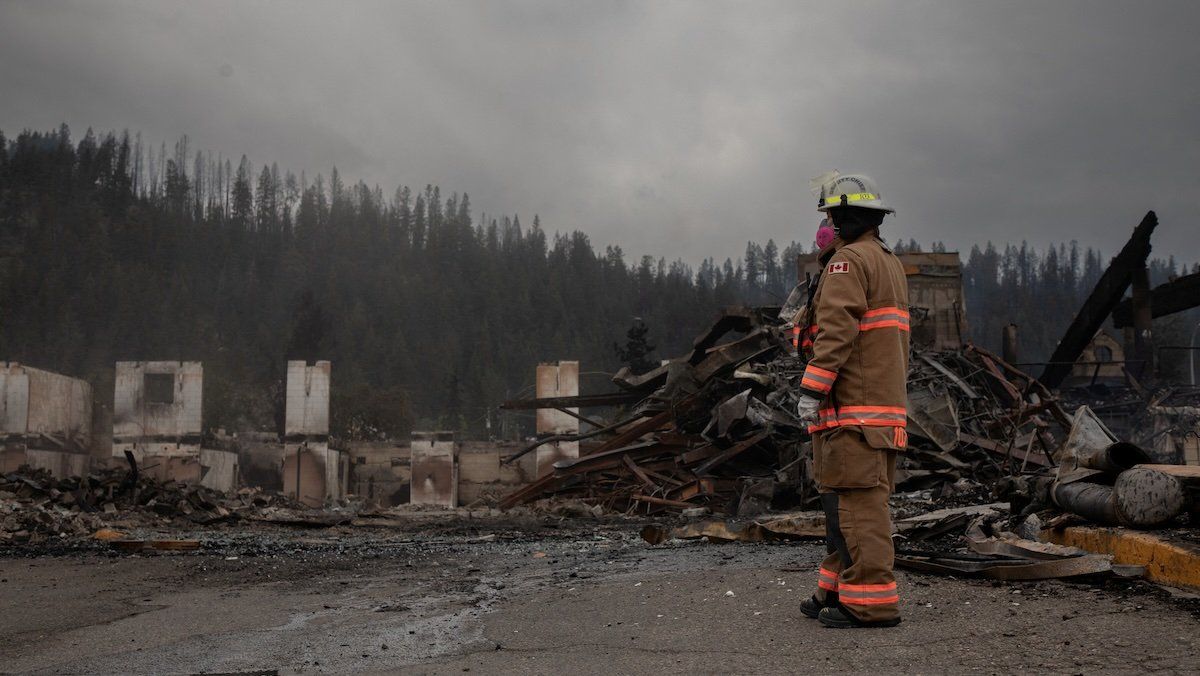
Fire crews work to put out hotspots in the Maligne Lodge in Jasper, Alberta, Canada, on Friday July 26, 2024.
Amber Bracken/Reuters
Fires in the West are already pushing firefighting resources to the limit in both Canada and the United States as wildfire season heats up.
The Park Fire in Northern California has shocked firefighters with its rapid growth, the result of higher-than-normal temperatures. The same factor caused the rapid spread of the fire that destroyed part of the resort town of Jasper, Alberta, last week.
Both fires were characterized by unusual weather phenomenon — firenadoes in California, fire thunderstorms in Alberta — that result from hotter-than-normal weather linked to climate change, which increases the amount of flammable material, so that fires are hotter and more dangerous.
This year has so far not seen the same widespread urban smoke pollution that we saw in 2023, but more than 100 wildfires are burning in the West, and the forecasts are for more of the same, putting pressure on governments to both reduce the emissions that cause climate change, and improve firefighting and forest management to reduce the toll.
In the short term, those measures are unlikely to reduce the cost of our fiery present. The Jasper fire is expected to cost insurers CA$700 million. In California, high insurance premiums caused by increasing wildfire risk are already hitting homeowners hard. Expect insurers and policymakers to put more emphasis on measures that reduce risk — replacing wooden roofs with metal, for example.
Visit Microsoft On the Issues to learn how Microsoft is thinking about the future of sustainability, accessibility, cybersecurity, AI, and more. Check back regularly to watch videos and read blogs and features on how Microsoft is approaching the issues that matter most. For the latest, follow Microsoft On the Issues.
Think you know what's going on around the world? Here's your chance to prove it.
Abductions by armed groups, including Boko Haram-linked militants, have become increasingly common to extract ransom payments.
As the AI boom drives demand for data centers, smaller countries are betting that cheap energy and land can earn them a place in the global race for computing power