August 16, 2025
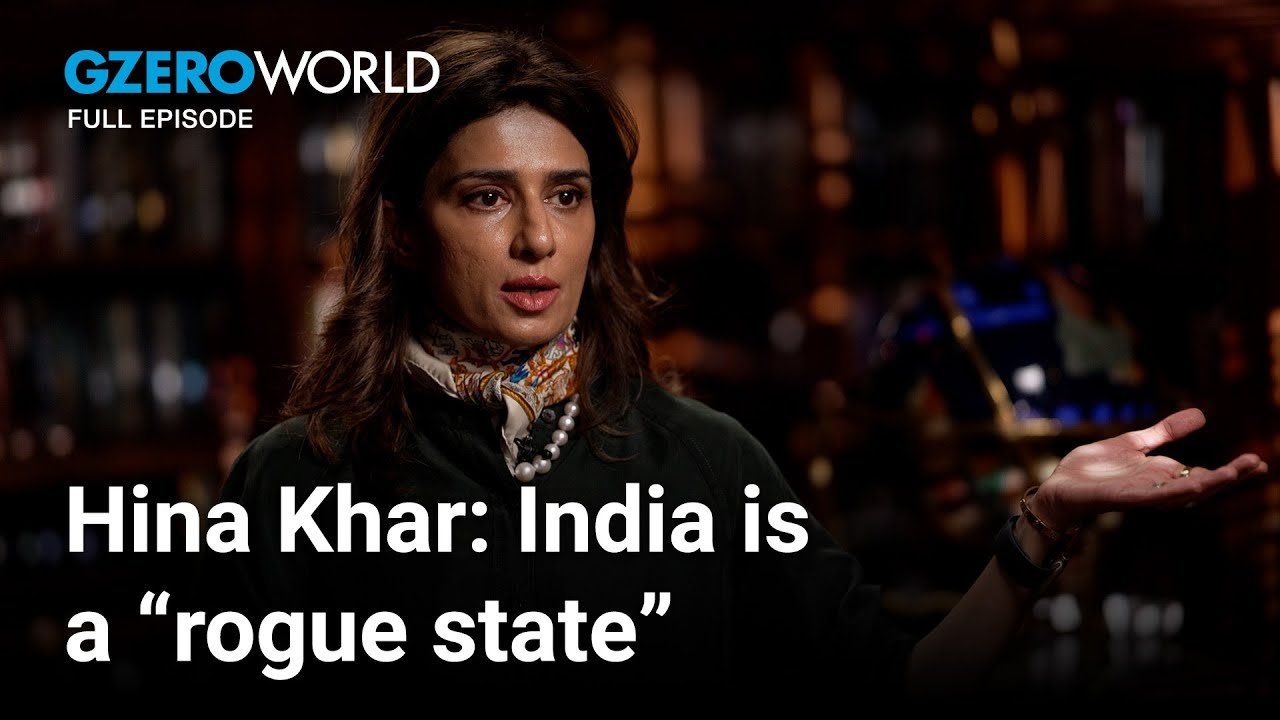
Could tensions between India and Pakistan boil back over into military conflict? Last May, India launched a wave of missile attacks into Pakistan and Pakistan-administered Kashmir, claiming it was targeting terrorist infrastructure. After four days of dangerous escalation, both sides accepted a ceasefire, putting an end to the most serious military crisis in decades between the two rival nuclear states. On GZERO World, former Pakistani Foreign Minister Hina Khar joins Ian Bremmer to discuss Pakistan’s perspective and where the conflict stands now.
Khar argues India didn’t provide credible evidence to justify the attacks and that Pakistan’s response challenged the narrative of India’s conventional military superiority. She sees China as a stabilizing force in the region and says it’s important for Pakistan to maintain broader strategic relationships within southeast Asia and the West, including the United States. Though the conflict has cooled, nerves are still on edge in Delhi and Islamabad. Now, more than ever, Khar says, it’s crucial for Pakistan to continue to strengthen its military capabilities, including nuclear deterrence, to defend its sovereignty.
“The India-Pakistan region is home to one fifth of humanity, and to put them at stake because of political engineering happening in your own country is very callous,” Khar says, “The moment one nuclear state decides to attack another, you do not know how quickly you go up the escalation ladder.”
GZERO World with Ian Bremmer, the award-winning weekly global affairs series, airs nationwide on US public television stations (check local listings).
New digital episodes of GZERO World are released every Monday on YouTube.Don't miss an episode: subscribe to GZERO's YouTube channel and turn on notifications (🔔). GZERO World with Ian Bremmer airs on US public television weekly - check local listings.
More For You
Could Chinese AI give Europe an edge? | The Debrief with Heather West
Could China give Europe a shortcut in the AI race?
Europe has struggled to build models that compete with American and Chinese rivals. But Chinese models that companies can download, customize, and run themselves could offer another way forward—with more control over data and security.
Most Popular
- YouTube
With the midterms just weeks away, Democrats are hoping for a blue wave, while Republicans are fighting to hold onto Congress. Amy Walter and Liam Donovan join Ian Bremmer to break down the races, the issues driving voters, and what the results could mean for Trump's presidency.
With the midterms just weeks away, Democrats are eyeing control of Congress as Republicans struggle with the political fallout from the Iran war, rising prices, and Trump's unpopularity. Amy Walter and Liam Donovan join Ian Bremmer to break down what could happen in November and what it means for the future of both parties.
Since returning to power in 2025, the Trump administration has drastically changed the answer to this question, pursuing an ‘America First’ philosophy that is dramatically more transactional: the US will give you money, but you must give the US something valuable in return.
© 2025 GZERO Media. All Rights Reserved | A Eurasia Group media company.