News
Israel launches new operation in Jenin
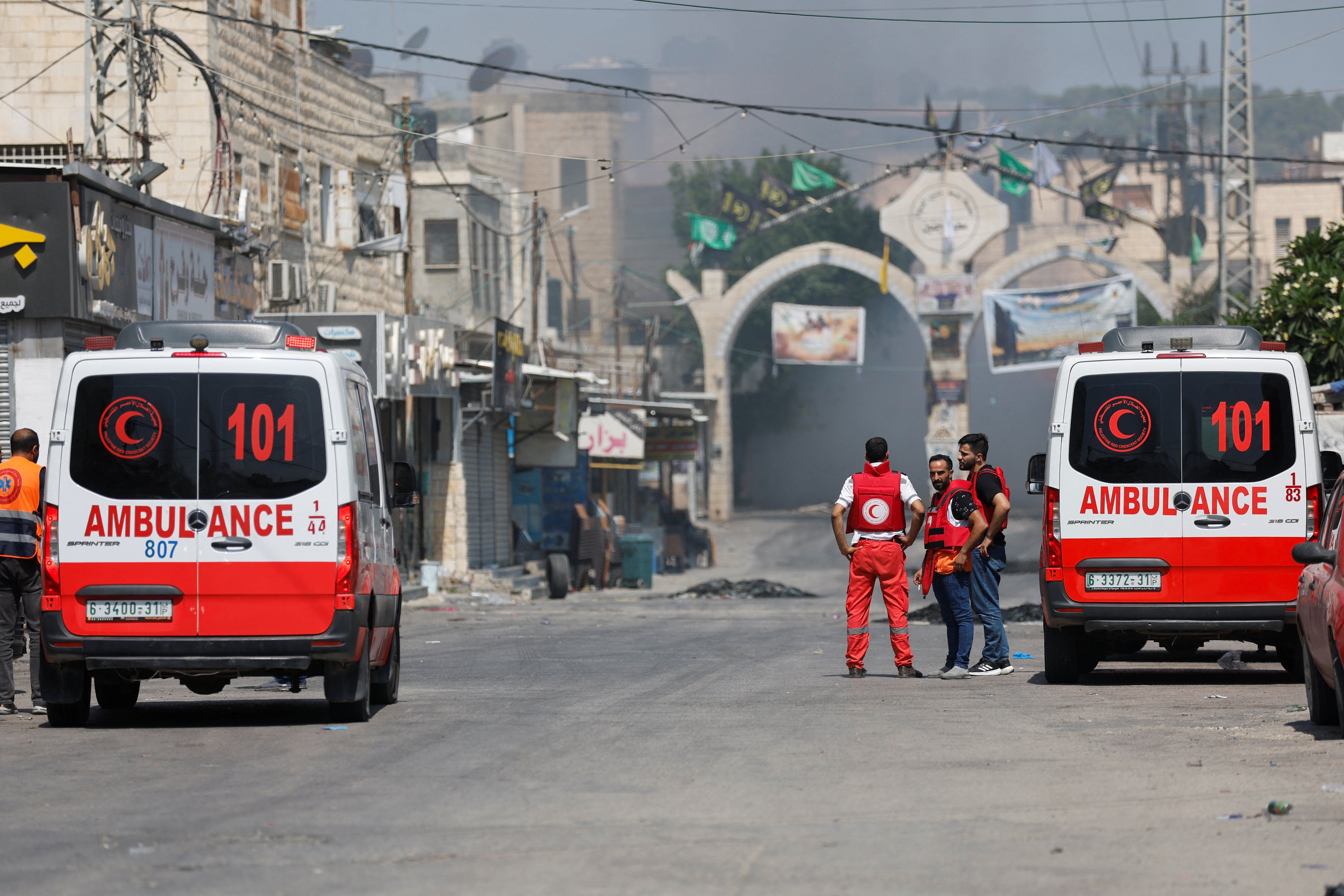
Palestinian medics stand by as smoke rises during an Israeli military operation in Jenin.
Reuters
On Monday, the Israeli army launched one of its biggest raids in the West Bank in years, focusing on the northern city of Jenin, home to a growing number of military outfits.
Israeli forces conducted airstrikes on the city before ground forces entered, engaging in a shootout with Palestinian militants. Several people were killed, though it is unclear how many were armed militants. So far, the Israelis say they have found a lab for manufacturing explosives as well as a rocket launcher and other weapons.
The timing here is crucial: The raid comes amid fresh reports that the Islamic Republic of Iran has increasingly been arming West Bank militants. Tehran, for its part, has a seeming limitless supply of cheap weapons – and prioritizing supplies to the West Bank is indeed a new challenge for Israel, which typically sees the Lebanese border as its main frontier with Iran.
Indeed, the northern West Bank has increasingly become a hotbed of terror activity, with many assailants who’ve attacked Israeli Jews in recent months hailing from the sprawling Jenin refugee camp. Israel, for its part, says that it should achieve its aims within 24-48 hours, but in such a tight enclave the risk for Palestinian civilians is also mammoth.
On Saturday, Liechtenstein’s hereditary prince announced that the tiny country of around 40,000 people would end male-only succession and adopt firstborn inheritance.
For decades, cars dominated trade, but computer servers have taken the top spot.
Polls closed in Zambia’s presidential election on Thursday as voters in one of Africa’s most stable democracies weighed whether the country’s economic turnaround has actually affected their wallets.
Think you know what's going on around the world? Here's your chance to prove it.