August 27, 2025
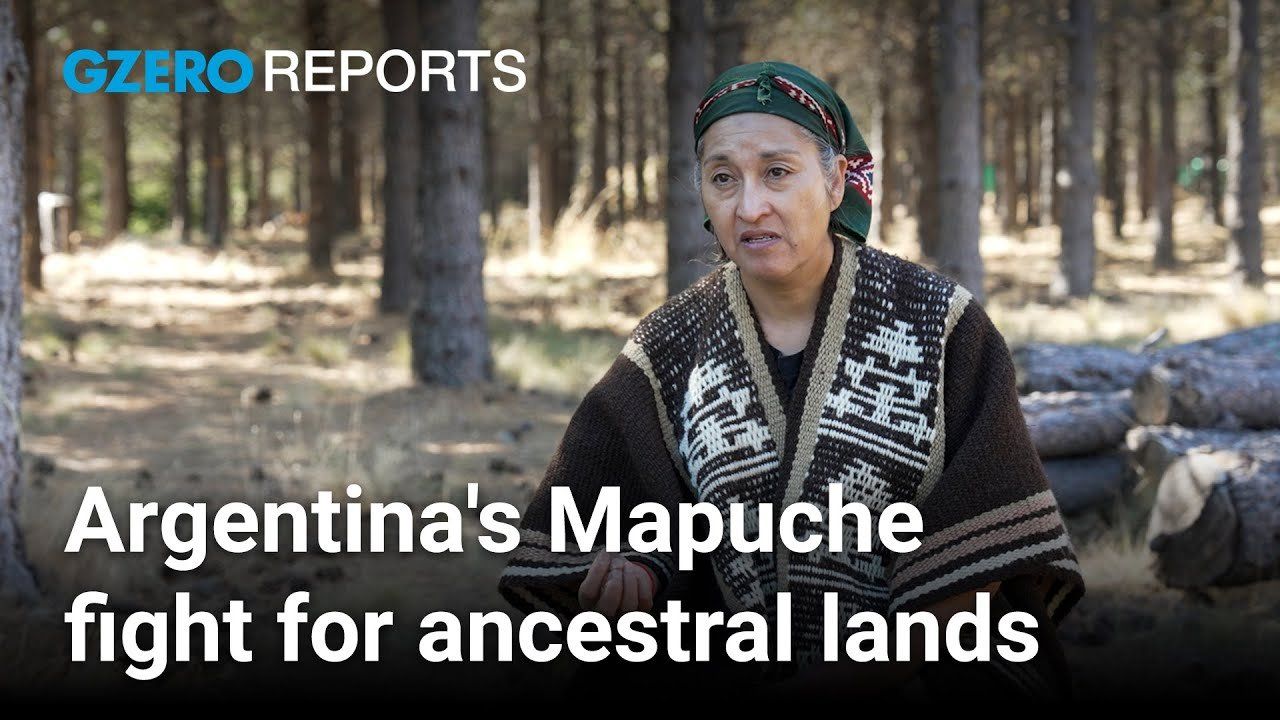
In Argentina’s Patagonia region, Indigenous Mapuche communities are clashing with President Javier Milei’s government over rights to their ancestral lands. Facing a deep financial crisis, Milei sees Argentina’s vast natural resources—minerals, oil, timber—as central to economic recovery. But the Mapuche, among the country’s strongest voices fighting for environmental protection, are being evicted from land they’ve lived on for over 14,000 years. On GZERO Reports, Will Fitzpatrick travels to Patagonia to interview Mapuche community members about the legal fight they say threatens Argentina’s unique biodiversity and indigenous culture, as well as their survival.
Land disputes between the Mapuche and the Argentinian state have existed for decades, but after the Milei government revoked a key law that protected Indigenous territories at the end of 2024, officials began an aggressive eviction campaign. Recent raids and accusations of arson have escalated tensions, and many Mapuche fear state power is now being wielded to push them off resource rich territory.
GZERO World with Ian Bremmer, the award-winning weekly global affairs series, airs nationwide on US public television stations (check local listings).
New digital episodes of GZERO World are released every Monday on YouTube. Don't miss an episode: subscribe to GZERO's YouTube channel and turn on notifications (🔔). GZERO World with Ian Bremmer airs on US public television weekly - check local listings.
More For You
Most Popular
Supporters of the Forever Canadian group, who want Alberta to remain in Canada, wave Canadian flags as they wait for the results of a non-binding referendum on Alberta sovereignty in Edmonton, Alberta, Canada October 19, 2026.
REUTERS/Todd Korol
Alberta is staying in Canada. But the more important results may have come from the nine other questions on the referendum ballot that have received considerably less attention.
- YouTube
A Democratic sweep in 2026 could shake up Washington. Will it change Trump’s grip on power or set the stage for 2028? Amy Walter and Liam Donovan join Ian Bremmer on GZERO World.
Could Chinese AI give Europe an edge? | The Debrief with Heather West
Could China give Europe a shortcut in the AI race?
Europe has struggled to build models that compete with American and Chinese rivals. But Chinese models that companies can download, customize, and run themselves could offer another way forward—with more control over data and security.
© 2025 GZERO Media. All Rights Reserved | A Eurasia Group media company.