June 01, 2021
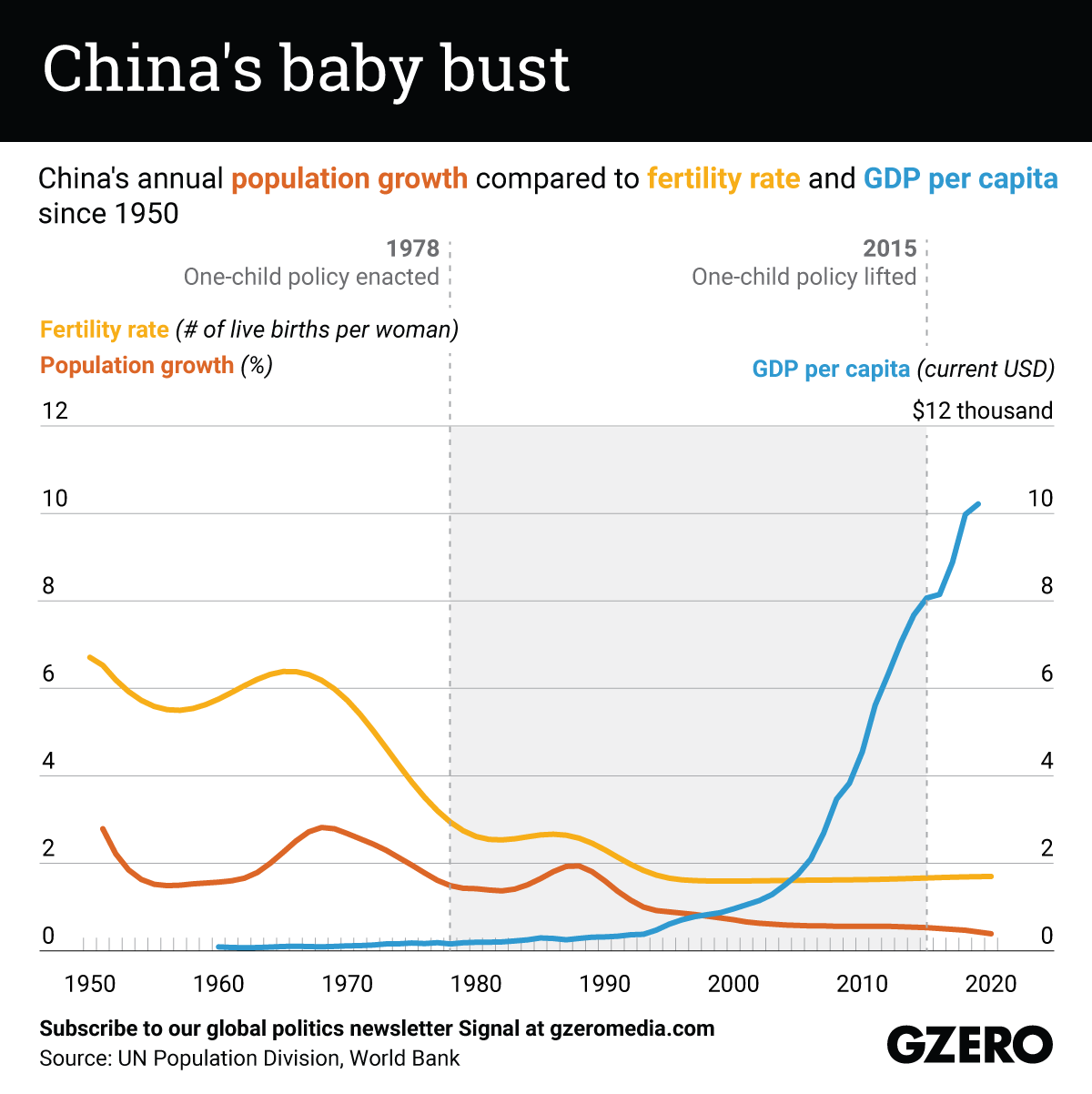
Six years after China relaxed its one-child policy in place since 1978, Beijing announced this week that it will now allow parents to have three children. The ruling Communist Party, which half a century ago was worried about overpopulation, is now desperate for Chinese couples to have more babies to bolster the country's sluggish population growth rate, which has plummeted in recent years due to the rising cost of living. For Beijing, this is a very big deal, as a declining and aging population could make it very hard for the country to maintain the strong economic growth needed to rival other economic powerhouses, like India or the US. We take a look at China's population growth, fertility rate, and GDP per capita over the past 70 years.
More For You
- YouTube
Artificial intelligence is transforming one of humanity's oldest challenges: predicting the weather. Speaking at the 2026 AI for Good Global Summit, World Meteorological Organization Secretary-General Celeste Saulo explains how AI has dramatically accelerated weather forecasting. Tasks that once required a week of computing can now generate multi-day forecasts in just minutes, making advanced forecasting faster, more accessible, and increasingly available beyond the world's largest supercomputers.
Most Popular
With the 2026 World Cup quarterfinals complete, we wondered what the tournament would look like if teams were competing on a different kind of playing field: clean energy.
- YouTube
Has Iran’s regime emerged from the war more emboldened than before? Yeganeh Torbati explains how survival itself became a victory for Tehran, giving it new leverage at home and abroad.
- YouTube
On GZERO World with Ian Bremmer, Yeganeh Torbati takes us inside the lives of ordinary Iranians after the war, where fear, repression, and economic hardship are shaping an uncertain future.
© 2025 GZERO Media. All Rights Reserved | A Eurasia Group media company.