AI is global, but its powerhouses aren’t
Although people in nearly 150 countries use artificial intelligence, the infrastructure that makes it possible is largely controlled by just two nations: the US and China.
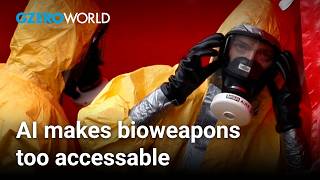
AI is rapidly lowering the barriers to knowledge and expertise that once kept some of humanity’s most dangerous capabilities out of reach. Investigative journalist Annie Jacobsen joins Ian Bremmer to examine why biological weapons may pose an even greater risk than nuclear war – and whether governments and tech companies can keep up.
AI probably isn’t going to end the world on its own. The bigger risk may be that it makes it easier for humans to trigger a catastrophe they can’t control.

Ian Bremmer analyzes the recent wave of AI doomsday rhetoric
AI could dramatically lower the barriers to developing biological weapons, giving bad actors access to expertise that once required years of specialized training.

Dive deeper with our top stories and analysis.
Privacy notice: By signing up, I acknowledge that I have read, understand, and consent to the Privacy Policy and Terms of Use, including the transfer of my personal data to the United States from my country of residence (if different).
In this Quick Take, Ian Bremmer breaks down why the AI risks dominating the headlines may not be the ones worth worrying about.

Newly released Kimi K3 has become the center of a fierce debate in Washington and Silicon Valley over whether America’s “closed” approach is protecting its lead, or helping China catch up.
At least 164 people were killed and nearly 1,000 were left injured after two powerful earthquakes struck Venezuela on Wednesday evening.
The maker of the large-language model Claude became the latest AI giant to file to go public.