GZERO World Clips
António Guterres: the world won’t have enough food in 2023 without Russian fertilizer
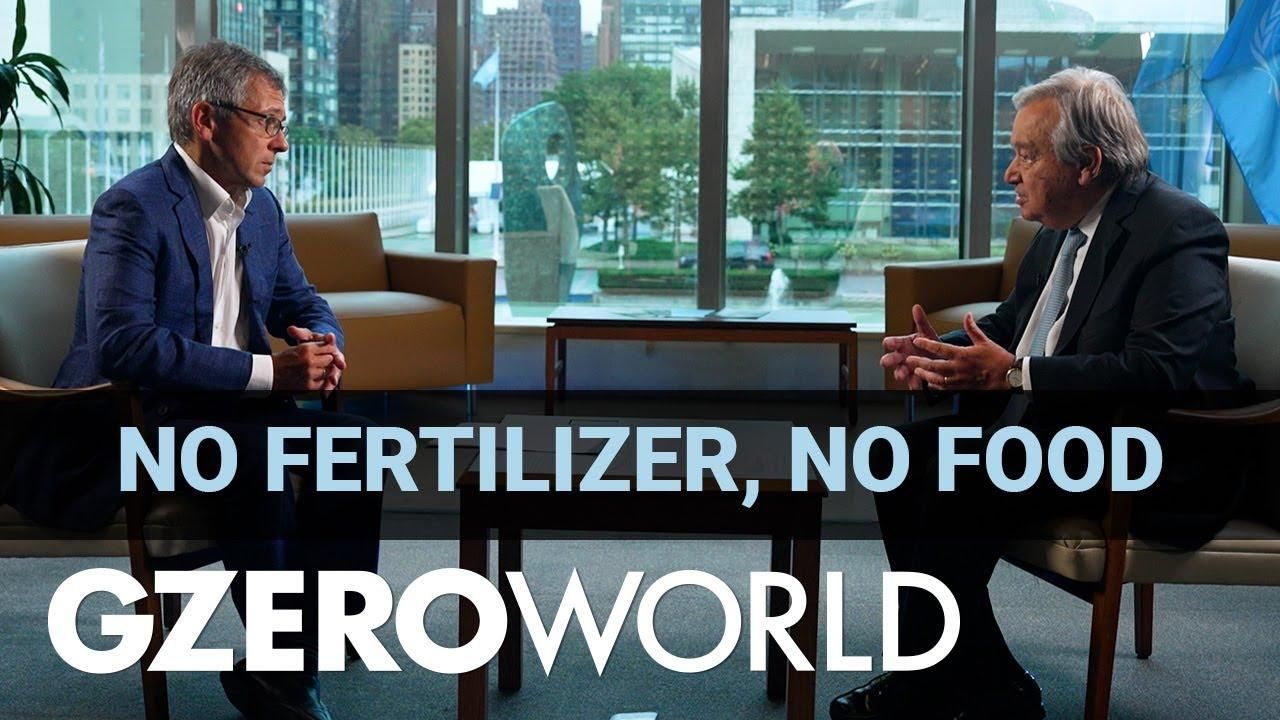
We Won’t Have Enough Food Next Year if We Don’t Get Russian Fertilizer Out | GZERO World
The UN- and Turkey-brokered deal with Russia to unblock Ukrainian grain exports stuck at Black Sea ports was a big success for the United Nations — and for Secretary-General António Guterres.
Look, he recalls he told Vladimir Putin and Volodymyr Zelensky: this is a dramatic situation caused by the war because it is threatening the living conditions of most of the world.
The UN chief tells Ian Bremmer on GZERO World that we need to find a way for Ukraine to ship its grain; and the UN hopes to negotiate with the US, the EU, and others to get some exemptions from Western sanctions against Russia so Moscow is able to export the food and fertilizer that the world needs right now.
Guterres says that this year we have enough food. But we may not in 2023 if we don't fix the fertilizer market soon.
Could China give Europe a shortcut in the AI race?
Europe has struggled to build models that compete with American and Chinese rivals. But Chinese models that companies can download, customize, and run themselves could offer another way forward—with more control over data and security.
With the midterms just weeks away, Democrats are hoping for a blue wave, while Republicans are fighting to hold onto Congress. Amy Walter and Liam Donovan join Ian Bremmer to break down the races, the issues driving voters, and what the results could mean for Trump's presidency.
With the midterms just weeks away, Democrats are eyeing control of Congress as Republicans struggle with the political fallout from the Iran war, rising prices, and Trump's unpopularity. Amy Walter and Liam Donovan join Ian Bremmer to break down what could happen in November and what it means for the future of both parties.
Since returning to power in 2025, the Trump administration has drastically changed the answer to this question, pursuing an ‘America First’ philosophy that is dramatically more transactional: the US will give you money, but you must give the US something valuable in return.