What We're Watching

Can North Koreans help Russia push Ukrainians out of Russia?

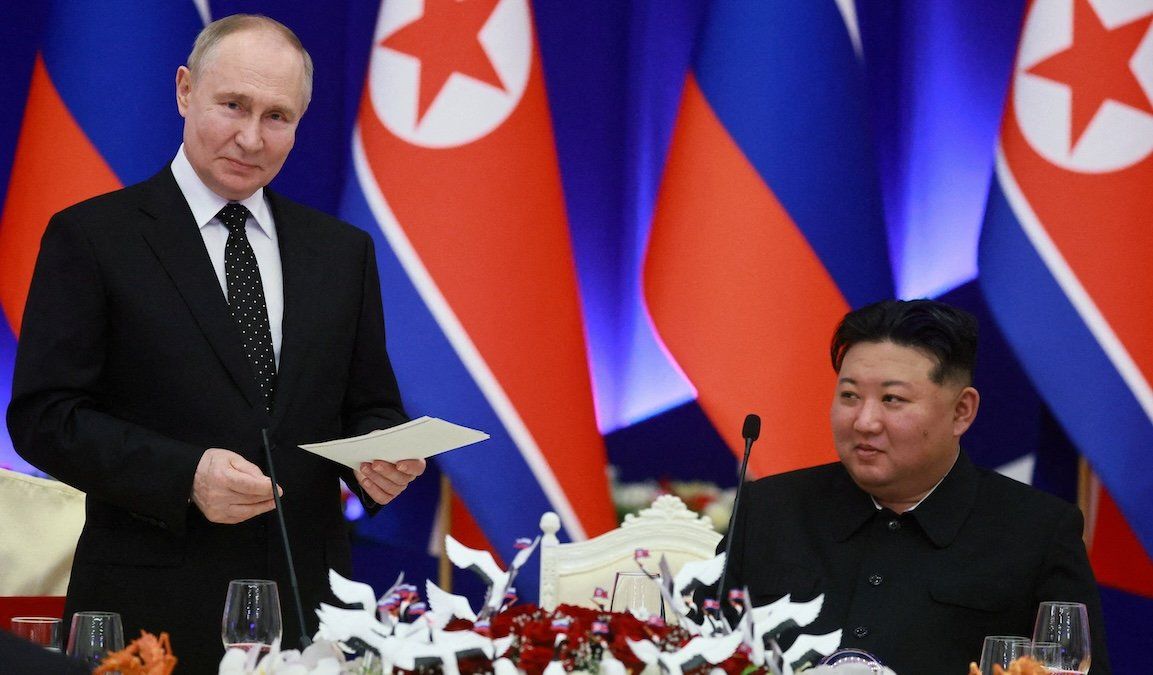
Russia's President Vladimir Putin and North Korea's leader Kim Jong Un attend a state reception in Pyongyang, North Korea, in June, 2024.

Russia's President Vladimir Putin and North Korea's leader Kim Jong Un attend a state reception in Pyongyang, North Korea, in June, 2024.

Sputnik/Vladimir Smirnov/Pool via REUTERS

North Korea's state-controlled news agency KCNA announced on Tuesday that the country has ratified a strategic partnership agreement that allows Russia to use North Korean troops to help push Ukrainians from Russia’s Kursk region.

Ukrainian, US, NATO, and South Korean officials have warned in recent days that Russia has amassed a force of about 50,000 troops to try to evict Ukrainian forces from Russia’s Kursk and Belgorod regions – and they say the force includes 10,000-12,000 North Koreans.

The presence of North Korean soldiers could help Russia push forward with its offensive in Ukraine’s East. But beyond the ability of the North Koreans to draw Ukrainian fire away from Russian forces, it’s not clear how effective they will be on the battlefield. None of them has significant combat experience, and the Ukrainians they will be deployed to attack have been fighting in their country’s Donbas region for a decade.

In addition, throughout this war, Russian forces have faced command-and-control issues. It remains to be seen how Russian commanders can effectively coordinate real-time battlefield maneuvers with large numbers of non-Russian-speaking troops.
More For You

FILE PHOTO: Canadian Prime Minister Mark Carney and India's Prime Minister Narendra Modi shake hands before posing for a photo during the G7 Leaders' Summit in Kananaskis, in Alberta, Canada, June 17, 2025.
REUTERS/Amber Bracken/File Photo

Indian Prime Minister Narendra Modi and Canadian Prime Minister Mark Carney struck a series of deals during a meeting in New Delhi on Monday, including a 10-year nuclear energy deal under which Canada will provide India with uranium.

A satellite image shows black smoke rising and heavy damage at Iranian Supreme Leader Ayatollah Ali Khamenei's compound, following strikes by the United States and Israel in Tehran, Iran, on February 28, 2026.

Pleiades Neo (c) Airbus DS 2026/Handout via REUTERS

Supreme Leader Ali Khamenei is dead, the conflict is spreading, and US President Donald Trump still isn’t clear on who he wants to run Iran.