Deepfake videos are a possible election threat

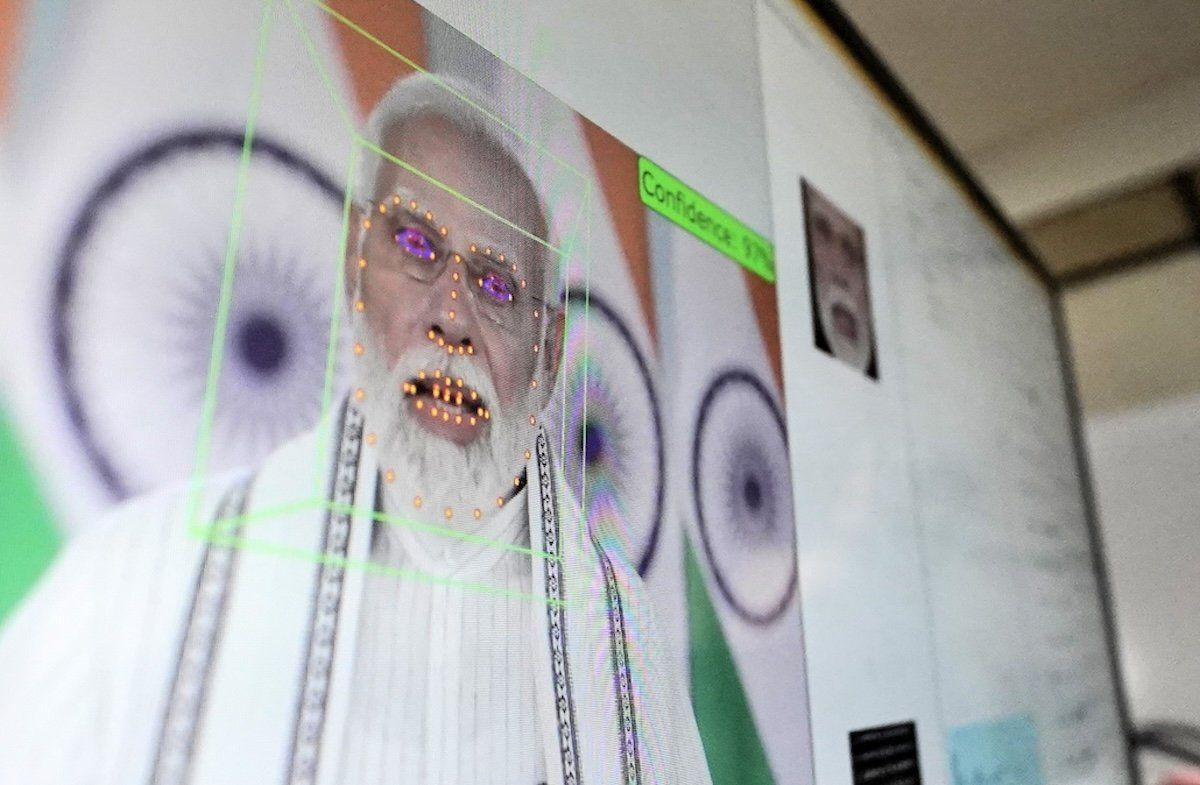
Polymath Synthetic Media Solutions shows a demo video to potential customers that shows Indian Prime Minister Narendra Modi speaking. You can see how the face of Indian Prime Minister Modi is analyzed to create an avatar of him.
Himanshu Sharma/dpa via Reuters Connect
Ahead of the November elections in the United States, AI-generated video could play a disruptive role. The main barrier so far has been the quality and availability of text-to-video models. Neither OpenAI’s Sora, first previewed earlier this year, nor Meta’s Movie Gen, announced earlier this week, have been released to the public. Both are being tested by a small group of professionals, particularly because of company concerns about how they could be used to promote disinformation in a year with many elections around the world.

Some startups like Runway and Pika have made AI video models available to the public, but video generation as a whole has further to go than image and text generation. There are more visual clues in videos that can show something isn’t 100% authentic: blurry spots, lag, discontinuity between frames, object impermanence, or other visual oddities are often present.

We’ve seen deepfake images and audio of Donald Trump and Joe Biden, AI voices in Pakistan, and AI avatars in Indonesia. While deepfake videos haven’t yet been prevalent, they’re almost certainly the next frontier. Ahead of an interview with Sen. Amy Klobuchar, CNN anchor Jake Tapperdeployed a convincing deepfake version of himself, and Miles Taylor, the former Department of Homeland Security chief of staff, warned in Time Magazine that a deefpake video could be this election season’s “October surprise.”

If a deepfake video doesn’t sow chaos during the upcoming US election, it’s almost sure to disrupt an election somewhere in the world very soon.
More from GZERO Media

US President Donald Trump pardons a turkey at the annual White House Thanksgiving Turkey Pardon in the Rose Garden in Washington, D.C., USA, on Nov. 25, 2025.
Andrew Leyden/NurPhoto

Although not all of our global readers celebrate Thanksgiving, it’s still good to remind ourselves that while the world offers plenty of fodder for doomscrolling and despair, there are still lots of things to be grateful for too.

Marine Le Pen, French member of parliament and parliamentary leader of the far-right National Rally (Rassemblement National - RN) party and Jordan Bardella, president of the French far-right National Rally (Rassemblement National - RN) party and member of the European Parliament, gesture during an RN political rally in Bordeaux, France, September 14, 2025.
REUTERS/Stephane Mahe

Army Chief Asim Munir holds a microphone during his visit at the Tilla Field Firing Ranges (TFFR) to witness the Exercise Hammer Strike, a high-intensity field training exercise conducted by the Pakistan Army's Mangla Strike Corps, in Mangla, Pakistan, on May 1, 2025.

Inter-Services Public Relations (ISPR)/Handout via REUTERS

Field Marshal Asim Munir, the country’s de facto leader, consolidated his power after the National Assembly rammed through a controversial constitutional amendment this month that grants him lifelong immunity from any legal prosecution.