News
It's the final countdown for the US Supreme Court
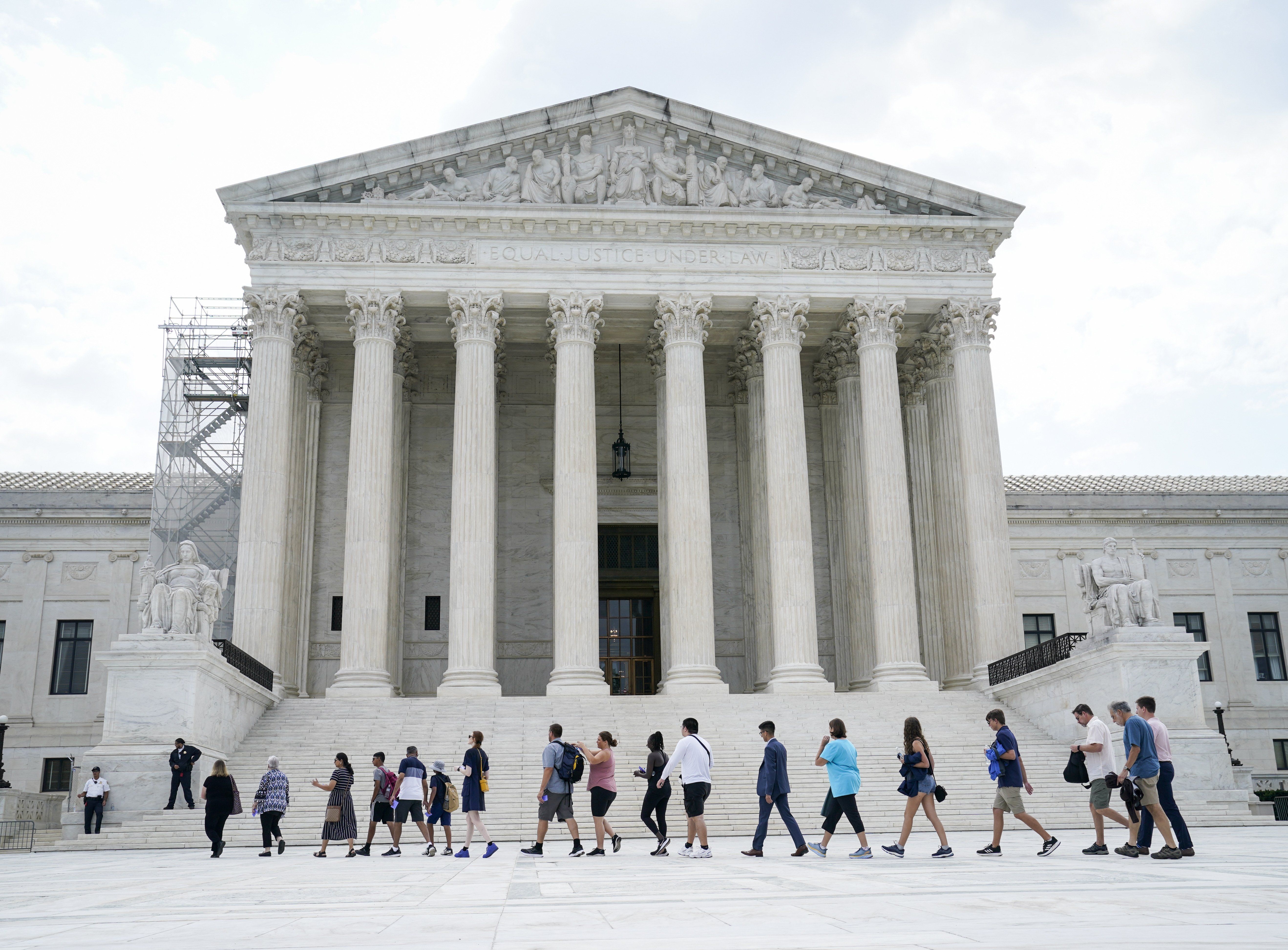
People file into the United States Supreme Court before SCOTUS handing down opinions.
Jack Gruber/USA TODAY
The US Supreme Court will issue the final decisions of its current term this week, and so far its rulings have been surprisingly moderate for a conservative-majority court.
On Tuesday, it rejected the so-called “independent state legislature theory," a fringe legal argument to give state legislatures broadly unchecked power over federal election rules. The same theory served as the basis of former President Donald Trump’s attempt to have states send “alternative” pro-Trump electors to the electoral college to overturn the 2020 election.
While the theory has been rejected by mainstream legal scholars, it seemed likely that the justices (three of whom were appointed by Trump) might rule in its favor. The decision, which runs contrary to the growing perception that the court is a political body, reinforces checks and balances and puts the kibosh on any repeat antics in 2024.
Other decisions: The justices ruled in favor of equal voting rights and tribal rights, and against stronger environmental protections this session. It also heard two cases over tech companies' liability for harmful content, deciding both in favor of Big Tech.
Looming decisions: Four consequential rulings are expected this week on student loan forgiveness, affirmative action in college admissions, religious workers' rights, and a case at the nexus of religion, free speech, and gay rights.Netanyahu said Israel won’t pull back from Gaza until Hamas gives up its weapons—a nonstarter for Hamas, which insists it won’t disarm until Israel withdraws first.
Check out the latest swag from the official Puppet Regime merchandise store! Browse an array of products that will show the world you are a devoted subject of the Regime, including: A big, beautiful mug for drinking coffee very strongly, A handsome tote bag to carry your favorite classified documents, Collectible stickers, Stylish t-shirts and hoodies – now also available in pink. We ship worldwide! Shop now at shop.puppetregime.tv!
US-backed negotiations are opening a possible path to democratic elections in Venezuela – even as the country’s most popular opposition leader remains outside the room.
Think you know what's going on around the world? Here's your chance to prove it.