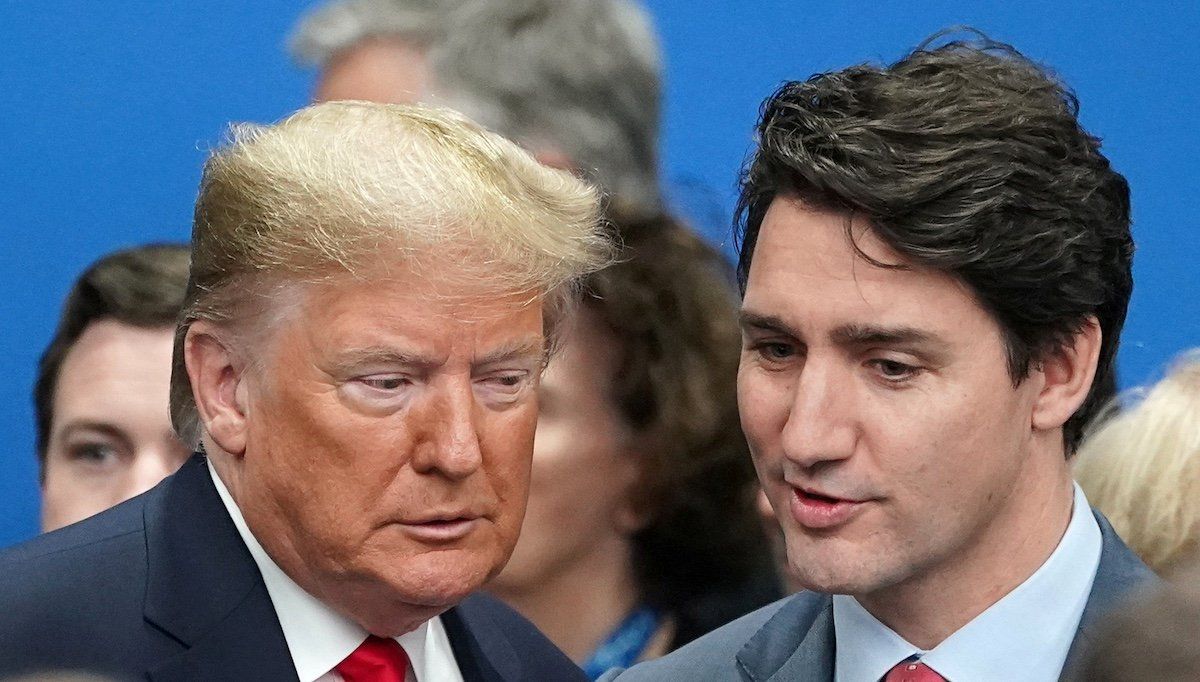
Anyone expecting a two-way race in Iowa was disappointed this week. Former President Donald Trump netted the biggest caucus win in history on Monday and looks set to cruise to the Republican nomination. This means Eurasia Group’s No. 1 Top Risk of 2024 – which says the “two major parties’ likely presidential candidates are uniquely unfit for office” – is evolving before our very eyes. After all, Trump is facing dozens of felony charges, while Biden would be four years short of 90 at the end of another term.
North of the border, the majority are more worried about a Trump 2.0. A poll this week from the Angus Reid Institute finds roughly two-thirds of Canadians concerned that US democracy will crumble under another Trump administration, while nearly 50% think the country is headed toward becoming an authoritarian state.
Prime Minister Justin Trudeau is also concerned. After the Iowa caucuses, he said a second Trump term “won’t be easy,” and he asked whether the US wants to be “a nation that is optimistic and committed to the future? Or will they choose a step backwards …” In short, Trudeau is on Team Biden.
But he’s also getting ready, just in case. Trudeau is pulling his Cabinet together next week for a meeting before Parliament resumes after winter break with the Canada-US relationship on the agenda as the government games out how to deal with a potential Trump return. The Liberals didn’t get on well with the Trump administration, and there’s reason to believe a second round would be just as bad – or worse.
While a Trump win would be another headache for Trudeau, it’s not his biggest one. With a Canadian election due by October 2025, the Trudeau government may not have to grapple with any US administration for much longer anyway. The latest
polls and
projections find the Liberals trailing the Conservatives by a dozen points or more.