GZERO North
US government spending drives growth as Canada flatlines
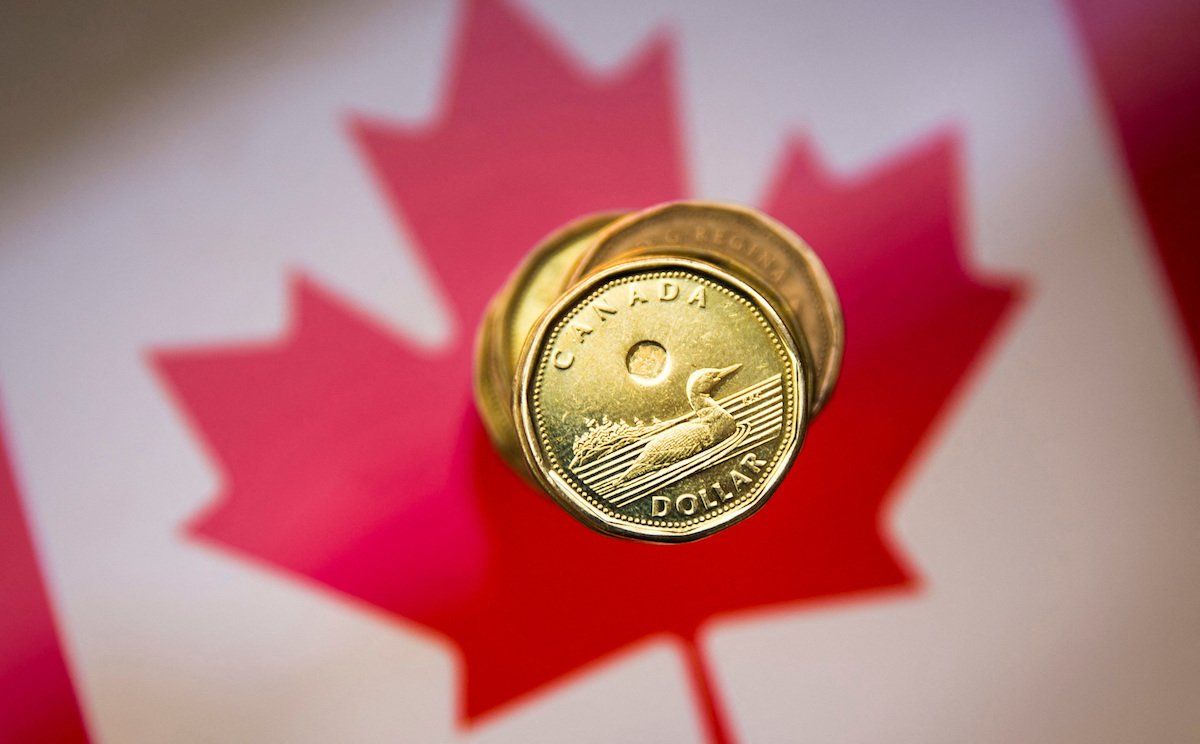
FILE PHOTO: A Canadian dollar coin, commonly known as the “Loonie”, is pictured in this illustration picture taken in Toronto, January 23, 2015.
REUTERS/Mark Blinch/File Photo
The US economy is growing much faster than Canada’s – while north-of-the-border GDP has been flat for months, the Americans posted a 4.9% growth rate in the third quarter.
What accounts for the difference? Experts point to higher US spending – both public and private – as well as lower debt loads. Canadians carry the heaviest household debt in the G7. The country is also, of course, suffering from a brutal housing crisis that is showing no signs of abating.
US growth is expected to slow by next year, while Canadian growth is expected to eventually pick up. But any growth right now carries concerns that it will drive up inflation as central banks in both countries – who’ve recently held interest rates steady – struggle to hit their 2% inflation benchmark.
Both President Joe Biden and Prime Minister Justin Trudeau are struggling in the polls and will be watching the numbers closely ahead of elections in which pocketbook issues will, as always, be important for voters.
As Hezbollah’s power weakens and Israel occupies parts of southern Lebanon, could the country finally reclaim its sovereignty? Or is it headed toward another war? Journalist Kim Ghattas joins Ian Bremmer on the GZERO World Podcast.
Think you know what's going on around the world? Here's your chance to prove it.
The World Health Organization said this week that 80% of the confirmed cases are coming from unknown chains of transmission
Ian Bremmer answers questions straight from you, GZERO readers, on whatever has been on your mind.