How will the Strait of Hormuz's closure impact food supply?
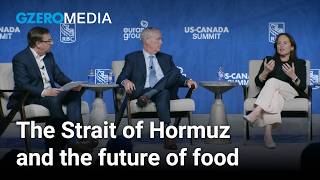
The Strait of Hormuz may be the world's most important oil chokepoint, but its closure is sending shockwaves through something even more fundamental: the global food supply.

The Strait of Hormuz may be the world's most important oil chokepoint, but its closure is sending shockwaves through something even more fundamental: the global food supply.

Agriculture is the foundation of human civilization, the economic activity that makes every other endeavor possible. But historically, says International Fertilizer Association Director General Alzbeta Klein — at a GZERO Live event organized by Sustainability Leaders Council, a partnership between Eurasia Group, GZERO Media, and Suntory — the subject hasn't received attention in climate talks.

Without water, there's no food. However, according to agriculture expert Alzbeta Klein — at a GZERO Live event organized by Sustainability Leaders Council, a partnership between Eurasia Group, GZERO Media, and Suntory — there's a growing need to be economical to move closer to averting the water crisis.

What would you do if you turned on the tap one day and nothing came out? By 2025, water scarcity is expected to affect about 50% of the world’s 8 billion people, and climate change is worsening the problem by changing global weather patterns. The Sustainability Leaders Council - a partnership between Eurasia Group, GZERO Media, and Suntory - brought together leading experts and industry leaders to discuss the problem and possible solutions for a GZERO Live event.

Dive deeper with our top stories and analysis.
Privacy notice: By signing up, I acknowledge that I have read, understand, and consent to the Privacy Policy and Terms of Use, including the transfer of my personal data to the United States from my country of residence (if different).