GZERO World with Ian Bremmer
Does China's rise have to mean America's decline?
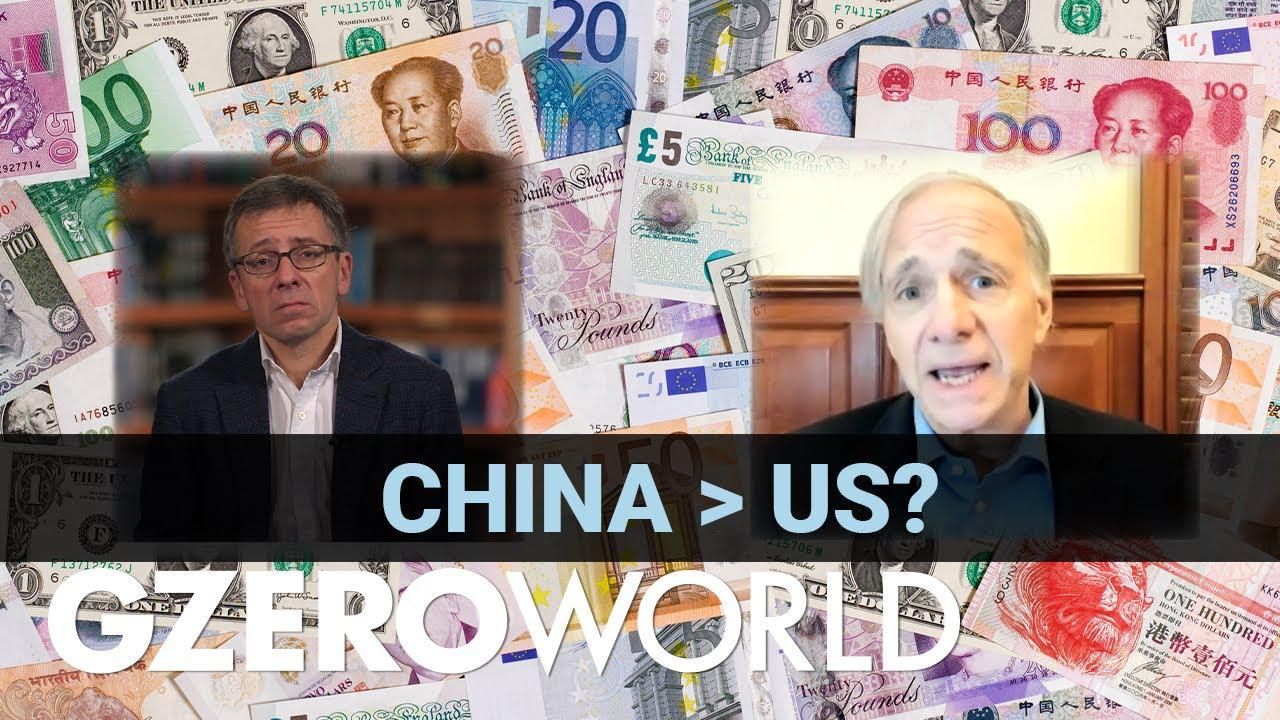
Does China’s Rise Have To Mean America’s Decline? | GZERO World with Ian Bremmer
The US and China are as wary of each other as they've ever been. But the Chinese think they are on the rise, while America is declining.
On this episode of GZERO World, Ian Bremmer talks to billionaire Ray Dalio, head of the world's largest hedge fund, who thinks rising US debt, a widening wealth gap among Americans, and the meteoric rise of China all play into Beijing's plans to overtake the US as a global superpower.
For instance, Dalio believes that too much national and household debt — combined with rising inflation — is a ticking time bomb that'll surely hurt the US dollar, which in the near future might lose its status as the global reserve status to the Chinese yuan.
And then there's dysfunctional US politics, which for Dalio have a lot to do with rising inequality — caused in part by too much cheap money in the hands of those who already have a lot of it.
Does this mean investors should bet on China over the US? America has a better system, he says, but the Chinese have become a much better competitor in many areas.
Also, what's up with crypto these days?
Check out the latest swag from the official Puppet Regime merchandise store! Browse an array of products that will show the world you are a devoted subject of the Regime, including: A big, beautiful mug for drinking coffee very strongly, A handsome tote bag to carry your favorite classified documents, Collectible stickers, Stylish t-shirts and hoodies – now also available in pink. We ship worldwide! Shop now at shop.puppetregime.tv!
Washington and Ottawa are down to the wire with last-minute talks to reach an agreement by 12:01 a.m. Wednesday, when President Donald Trump has threatened to impose 50% tariffs on over $20 billion of Canadian goods.
On Monday, public health officials said the virus had killed 2,325 people.
As the line between the battlefield and everyday life blurs, countries are increasingly preparing civilians for the next war.