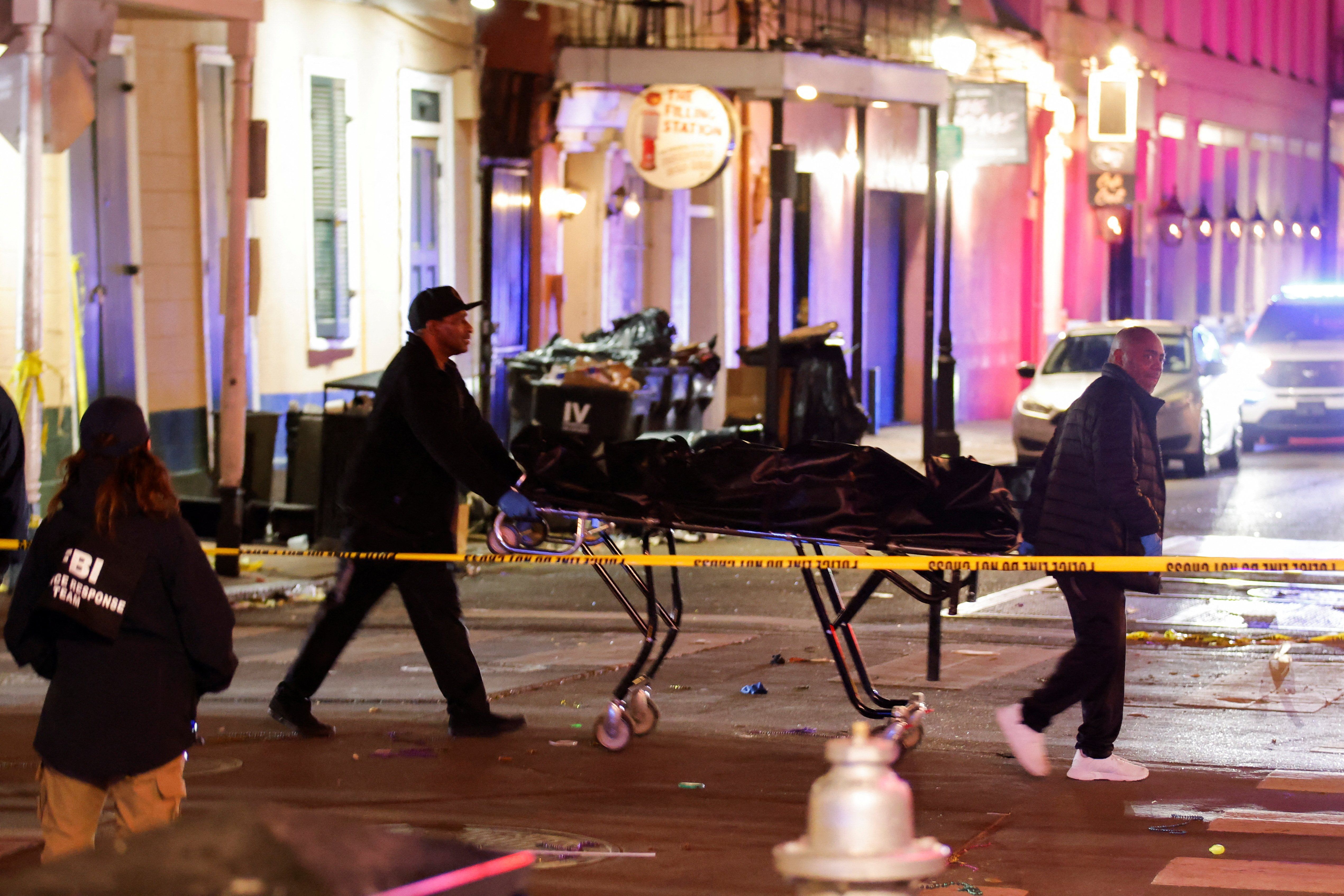
“We’re confident, at this point, that there are no accomplices,” said FBI Deputy Assistant Director Christopher Raia on Thursday at a press briefing about Shamsud-Din Jabbar,who drove a truck into a crowd on Bourbon Street in New Orleans early Wednesday, killing 14 and injuring dozens more. Jabbar hailed from Texas and served for nearly eight years in the Army, including a deployment to Afghanistan. He posted on social media ahead of the attack, professing to have joined the Islamic State terrorist group.
Raia said that investigators had not uncovered a connection between Jabbar and the Cybertruck that detonated outside of the Trump International Hotel Las Vegas on the same day, but they weren’t ruling out the possibility that the two attacks were coordinated. Both attacks have superficial similarities: the timing; the use of trucks rented from the same company, Turo; and Matthew Livelsberger, the person suspected to have been behind the wheel in Las Vegas,served on the same military base as Jabbar.
Raia assured football fans that the Sugar Bowl, which was postponed for 24 hours following the attack, had taken the necessary safety precautions to proceed on Thursday. But New Orleans remains on edge as it prepares to welcome tens of thousands of people for the Super Bowl next month. And it isn’t the only city concerned about large gatherings in the wake of the attack: In Washington, DC, fears have ticked up about potential violence during Jimmy Carter’s upcoming funeral or Donald Trump’s victory rally and inauguration.
Despite these fears, the president-elect’s response was to link the New Orleans attack to insufficient border control and the dangers of illegal immigration, even though Jabbar was an American citizen. GZERO Media’s founder, Ian Bremmer, says that “far from rallying around the flag,” Trump’s “response to a devastating terrorist attack was disinformation and greater political division.”