What We're Watching

Romania’s Ciolacu comes back following TikTok turmoil

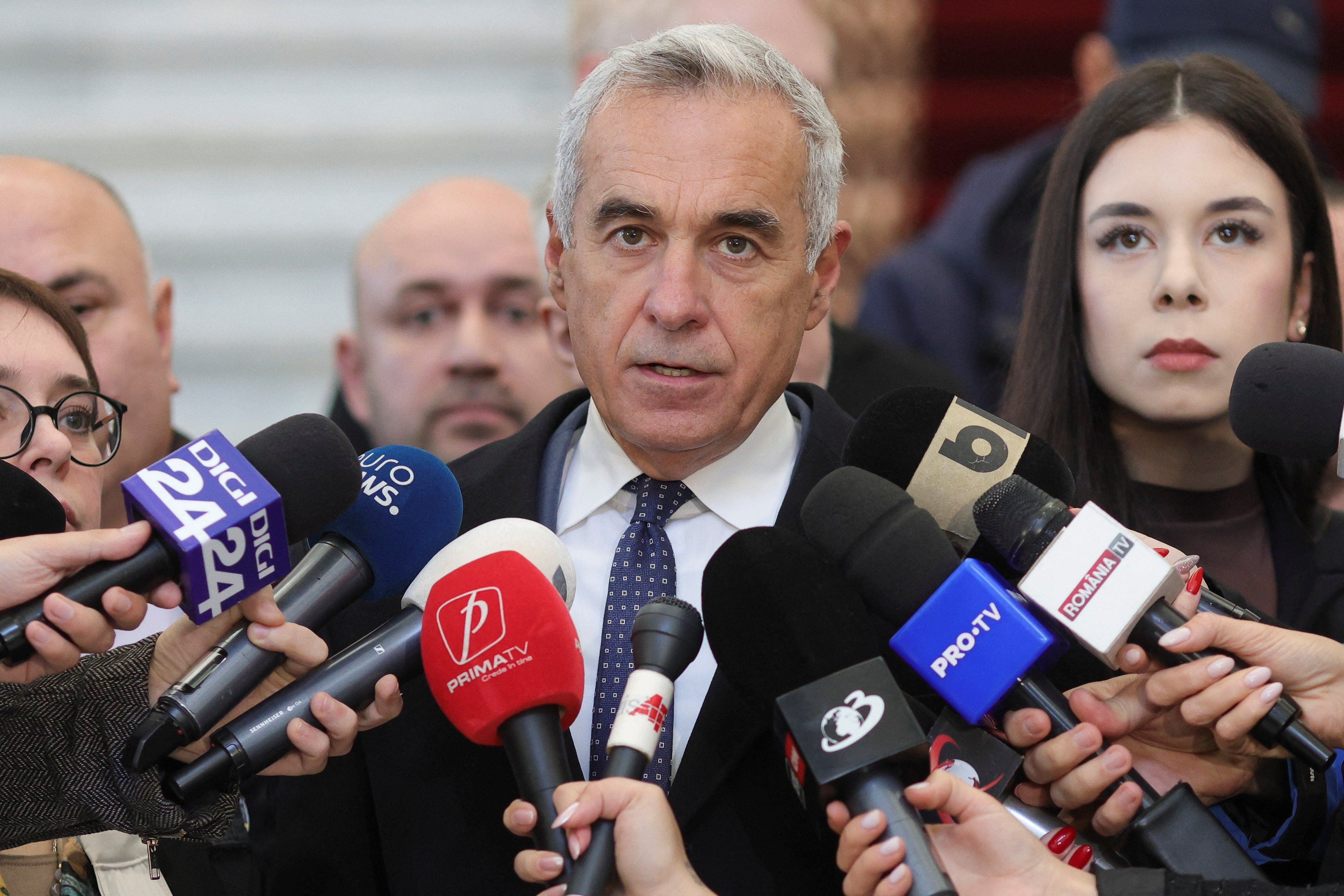
​Romanian far-right presidential election candidate Calin Georgescu delivers a press statement at the Bucharest Court of Appeal, in Bucharest, Romania, December 19, 2024.
Romanian far-right presidential election candidate Calin Georgescu delivers a press statement at the Bucharest Court of Appeal, in Bucharest, Romania, December 19, 2024.
Inquam Photos/Octav Ganea
Romanian Prime Minister Marcel Ciolacu secured a parliamentary vote of confidence on Monday, cementing a new coalition government amid the country’s worst political crisis in decades. Lawmakers voted 240-143 to back Ciolacu, who served as Prime Minister since June 2023. He will govern with a pro-EU alliance of Social Democrats, Liberals, ethnic Hungarians, and minority groups.

The vote puts a pause – for now – on the political drama that ensued following the first round of presidential elections December 1. Five days later, Romania’s constitutional courtannulled the vote on evidence that Russia manipulated TikTok to boost the candidacy of little-known far-right candidate Calin Georgescu.

While Ciolacu’s Social Democratic party topped the parliamentary vote in that election, he came in third in the presidential vote and was eliminated as a presidential candidate andstepped down as leader. The tainted presidential contest must now be rerun, likely in the spring. Ciolacu’s new coalition will field ajoint candidate, retired liberal politician Crin Antonescu.

What’s on Ciolacu’s agenda? Romania’s new government faces severe fiscal challenges. The national budget deficit is projected totop 8.5% of GDP, threatening a credit downgrade to junk status. Ciolacu has pledged to stabilize the economy and rebuild investor confidence, but austerity measures could fuel support for extremists ahead of next year’s vote.

We’re also watching for more allegations of Russian interference, and whether the court’s annulment changes the rest of the presidential election in the spring.
More For You

People vote in the legislative elections in Algiers, Algeria, on July 2, 2026. The electorate, including the diaspora, consists of 24,727,041 registered voters. These elections will elect the 407 members of the tenth legislature of the People's National Assembly (APN), with a mandate of five years.
Billel Bensalem/APP/NurPhoto

Algerians are headed to the polls today to elect their next members of parliament. However, hopes for true democracy look more remote than ever.

Natalie Johnson

In addition to the health concerns from the Ebola outbreak, the UN is sounding the alarm on a potential development crisis in Africa sparked by the disease.

Protesters hold flamingo-shaped placards and a large representation of a flamingo as they demonstrate against the government, following weeks of protests against a planned luxury resort backed by a company linked to Jared Kushner, the son-in-law of US President Donald Trump, on an environmentally sensitive part of the Adriatic coast, in Tirana, Albania, on June 22, 2026.
REUTERS/Valdrin Xhemaj

The protests in the small Balkan country were touched off by the start of construction on a seaside luxury resort linked to US President Donald Trump’s son-in-law, Jared Kushner.