What We're Watching
US and China try a little jaw-jaw to avoid war-war over Taiwan
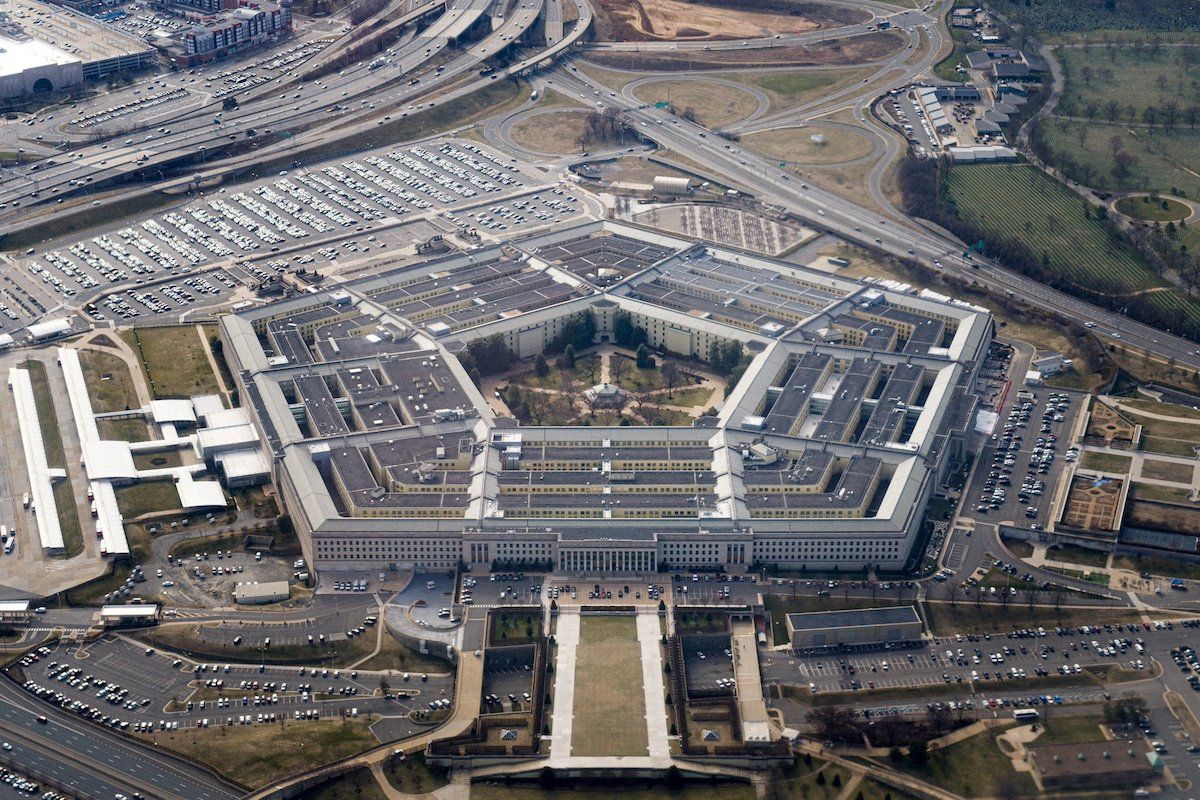
FILE PHOTO: The Pentagon is seen from the air in Washington, U.S., March 3, 2022.
REUTERS/Joshua Roberts/File Photo
Chinese Maj. Gen. Song Yanchao visited Washington on Monday and Tuesday for talks with his US counterpart, Assistant Sec. of Defense Michael Chase, in the first such exchange since 2021 – and just ahead of the Taiwanese election on Saturday.
Beijing laid out its typical stringent line on that front, saying it would make no “concession or compromise on the Taiwan question” and urging the US to stop sending Taipei weapons and avoid supporting Taiwanese independence. The US said it would continue to support the status quo – in other words, “fat chance” – though it is important to note the US has not officially supported Taiwanese independence since reconciling with Mao’s China 52 years ago.
But despite butting heads, both sides also emphasized their commitment to continuing military-to-military communications to avoid accidents, misinterpretations, and potentially catastrophic consequences if events start to snowball. It’s a crucial safeguard as China is expected to amplify its military harassment of Taiwan with jets and warships – already a near-daily phenomenon – should incumbent party candidate William Lai, the front-runner, emerge victorious after this weekend’s vote.
China has defied Western sanctions for years and buys as much as 90% of Iran’s oil exports.
Think you know what's going on around the world? Here's your chance to prove it.
President Bola Tinubu faces strong headwinds in his bid for a second term.
Critics have said that Zelensky – now in his seventh year in office – has been in power for too long.