News
What We’re Watching: United States of Guns, Ukrainian strategy, Iran censured
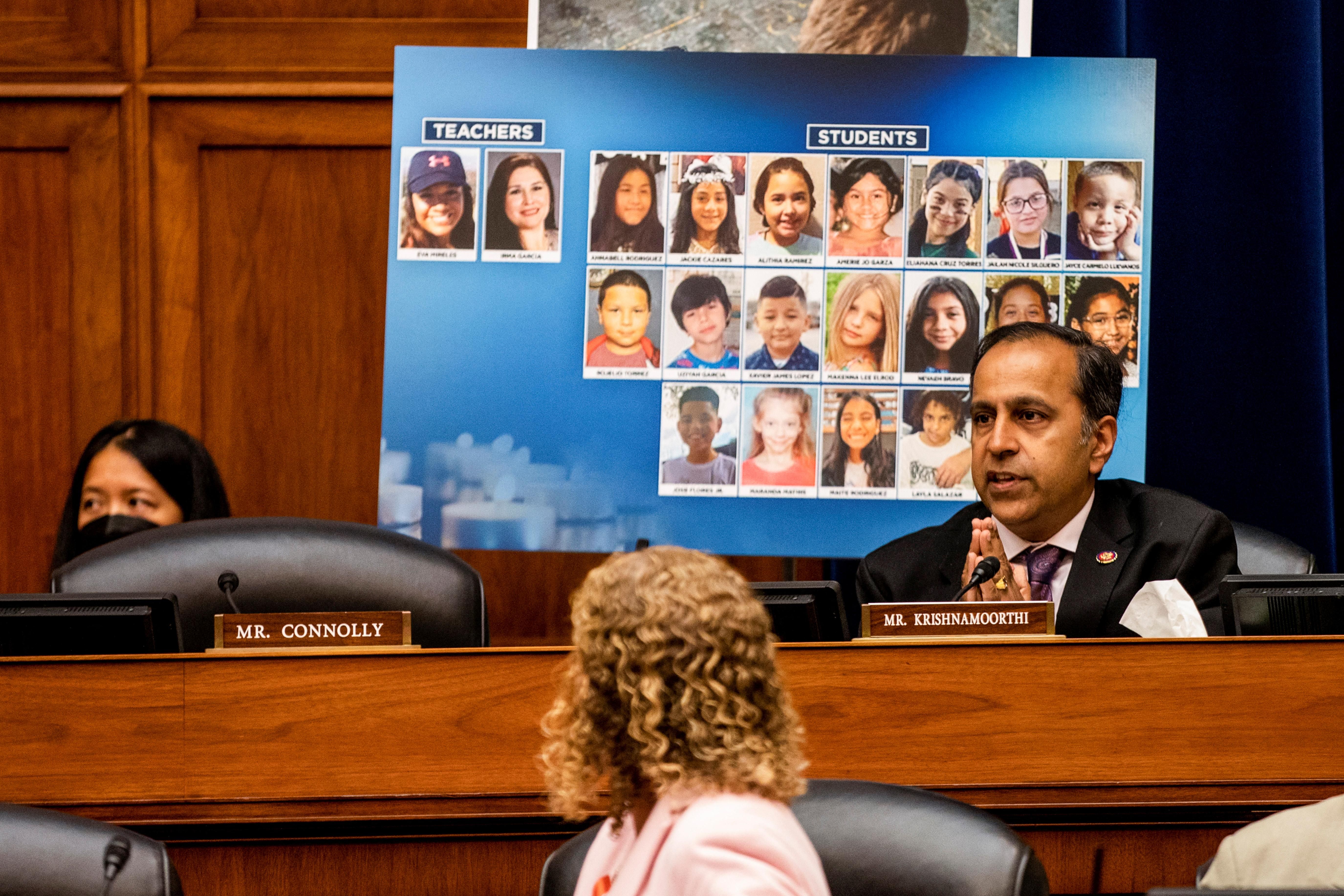
An image of the victims of the Uvalde school shooting displayed at a House hearing on gun violence on Capitol Hill.
Jason Andrew/ Reuters
The US House of Representatives kicked off a grueling two-day hearing on gun violence in America on Wednesday, just two weeks after a school shooting in Uvalde, Texas, claimed the lives of 19 children and two teachers. Miah Cerrillo, 11, whose classroom was attacked, recounted how she painted herself with a classmate’s blood and played dead. Kimberly Rubio, whose daughter Lexi was killed, recalled how she ran miles barefoot looking for her daughter that fateful day. The hearing is part of the Congressional debate on how to respond to a spate of recent deadly shootings, most notably in Uvalde, as well as at a supermarket in Buffalo, New York, where Black Americans were targeted by a white supremacist. Senate Democrats, in coordination with the White House, are working on narrow legislation that could get the support of at least 10 Republicans needed to pass. Proposals center on addressing mental health issues in young males and incentivizing states to introduce their own “red-flag laws” to remove guns from dangerous owners. The Democrat-controlled House, meanwhile, has advanced a bill with eight gun-control measures – including banning large-capacity magazines – but it's unlikely to pass the Senate, where Dems hold a razor-thin majority. It’s a busy week for the House, which will also launch hearings on the Jan. 6 riots on Thursday. Check out what Eurasia Group's lead US analyst, Jon Lieber, has to say about how the Dems hope to use these hearings to gain an edge in the midterms here.
Western media coverage of Russia’s war in Ukraine has focused mainly on the Russian side of the fight. We see plenty of estimates of Russian casualties and reports on Russian tactics. Invaluable coverage from the Institute for the Study of War more often quotes Russian military bloggers, aka “milbloggers,” on Russia’s wins and losses than analysts who can estimate Ukraine’s strengths, losses, and changes of plan. The New York Times reports that even the Pentagon remains partially in the dark on what the Ukrainians are doing and how well they’re doing it. Why the secrecy? Ukraine’s leaders want to control the war’s narrative for multiple audiences. The news shared by President Volodymyr Zelensky and others is sometimes designed to persuade both Ukrainian and foreign audiences that Ukraine can win the war, and at other times to emphasize the need for immediate help. Ukraine’s US and European backers, who want their help to have maximum impact, also have an interest in keeping Ukraine’s secrets, and Russian sources on the war are tightly controlled by a government that doesn’t produce credible info. We must keep these realities and limitations in mind as daily updates inform our understanding of this war and where it’s headed.
This comes to you from the Signal newsletter team of GZERO Media. Subscribe for your free daily Signal today.
Think you know what's going on around the world? Here's your chance to prove it.
Critics have said that Zelensky – now in his seventh year in office – has been in power for too long.
Washington and Ottawa are down to the wire with last-minute talks to reach an agreement by 12:01 a.m. Wednesday, when President Donald Trump has threatened to impose 50% tariffs on over $20 billion of Canadian goods.
On Monday, public health officials said the virus had killed 2,325 people.