May 18, 2020
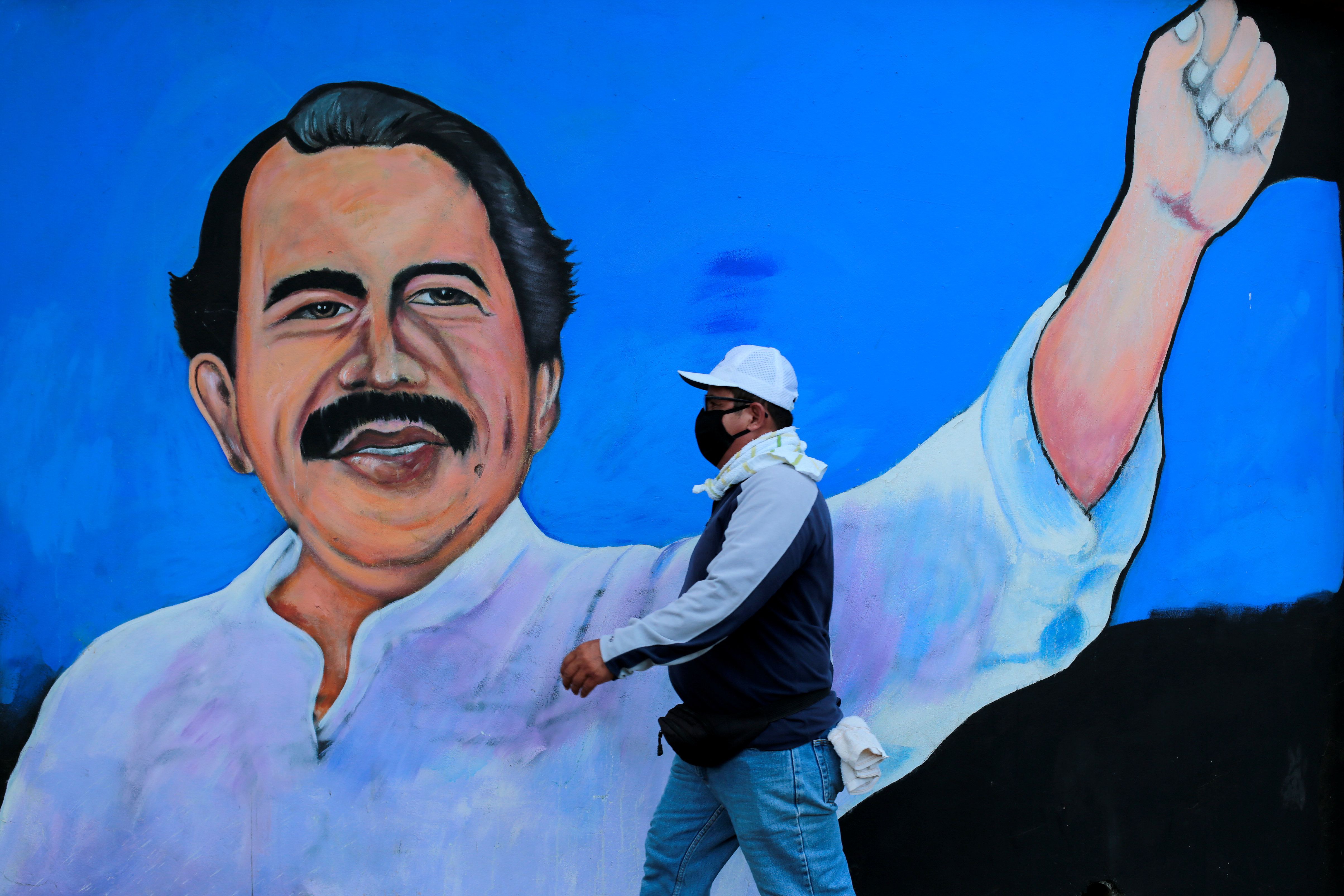
Is Nicaragua covering up COVID cases? As other countries across Latin America have imposed strict lockdowns to stem the spread of COVID-19, Nicaragua's nominally socialist strongman president Daniel Ortega has continued to encourage mass gatherings, citing the country's low caseload as justification for carrying on with business as usual. But Nicaraguans who have lost loved ones to respiratory illness in recent weeks say the government isn't counting them, and that their deceased relatives were whisked away for "express burials," accompanied by members of pro-government paramilitary groups. Taken together with reports that hospitals are packed with people showing coronavirus symptoms, the official toll of just 10 people is looking like a gross cover up. Meanwhile, although Ortega and his wife, the powerful vice president Rosario Murillo, have said the crisis is overblown, they haven't made a public appearance in months, a sign, critics say, that they are seeking to prevent their own exposure to the outbreak.
Russia's search for supplies: As Russia now records the second highest number of cases in the world, the Kremlin has asked the United States for much-needed medical supplies. You may recall that it was barely a month ago that Russia was lavishing medical aid on the US, in what was viewed as a propaganda coup for the Kremlin. Washington now says it will send Moscow a shipment of test kits and excess ventilators in the coming days. For months, medical workers in Moscow and St. Petersburg have warned that the virus was spreading like wildfire in hospitals because of an acute shortage of protective equipment, even as President Putin and other top officials claimed the situation was "under control" and cracked down on critics of the government's response. President Putin has pointed to Russia's low death toll as proof that things are going well — it has registered fewer than 2 deaths per 100,000 people, against 27 in the US and more than 50 in the UK, Italy, and Spain. But critics say the Kremlin is undercounting COVID-19 deaths, and that the toll could be 70 percent higher than official data show.
Deaths in Sweden: Sweden's approach to COVID-19 continues to be a source of intense controversy. Its government has not ordered citizens to stay home or wear masks. It has closed universities and banned large public gatherings, but it hasn't shuttered schools, bars or restaurants. The hope is that by allowing the virus to work its way through healthier people—even as precautions are taken for the elderly and people with underlying health problems—a large number of people will develop immunity. Thus, a future wave of the virus will kill far fewer people—leaving less human and economic damage in total. Is it working? On the one hand, more Swedes died in April than in any month in the past 27 years, and its death rate is much higher than in other Scandinavian countries. On the other, it has avoided the death tolls we've seen in Italy, France, Britain, and New York City, where lockdowns have been the rule. Whether there's a lesson here for other countries is another question.
More For You
U.S. President Donald Trump and Chinese President Xi Jinping talk as they leave after a bilateral meeting at Gimhae International Airport, on the sidelines of the Asia-Pacific Economic Cooperation (APEC) summit, in Busan, South Korea, October 30, 2025.
REUTERS/Evelyn Hockstein
China has defied Western sanctions for years and buys as much as 90% of Iran’s oil exports.
Most Popular
Sponsored posts
Show your undying devotion to The Regime
Sponsored posts
Invested in America’s curiosity
Think you know what's going on around the world? Here's your chance to prove it.
President Bola Tinubu faces strong headwinds in his bid for a second term.
Ukraine's Minister of Defence Mykhailo Fedorov speaks at a joint press conference with his Swedish counterpart Pal Jonson (not pictured), amid Russia's attack on Ukraine, in Kyiv, Ukraine, July 1, 2026.
REUTERS/Alina Smutko
Critics have said that Zelensky – now in his seventh year in office – has been in power for too long.
© 2025 GZERO Media. All Rights Reserved | A Eurasia Group media company.