News
Hard Numbers: South Korean tragedy, US political violence, deadly Somali blast, German frugality
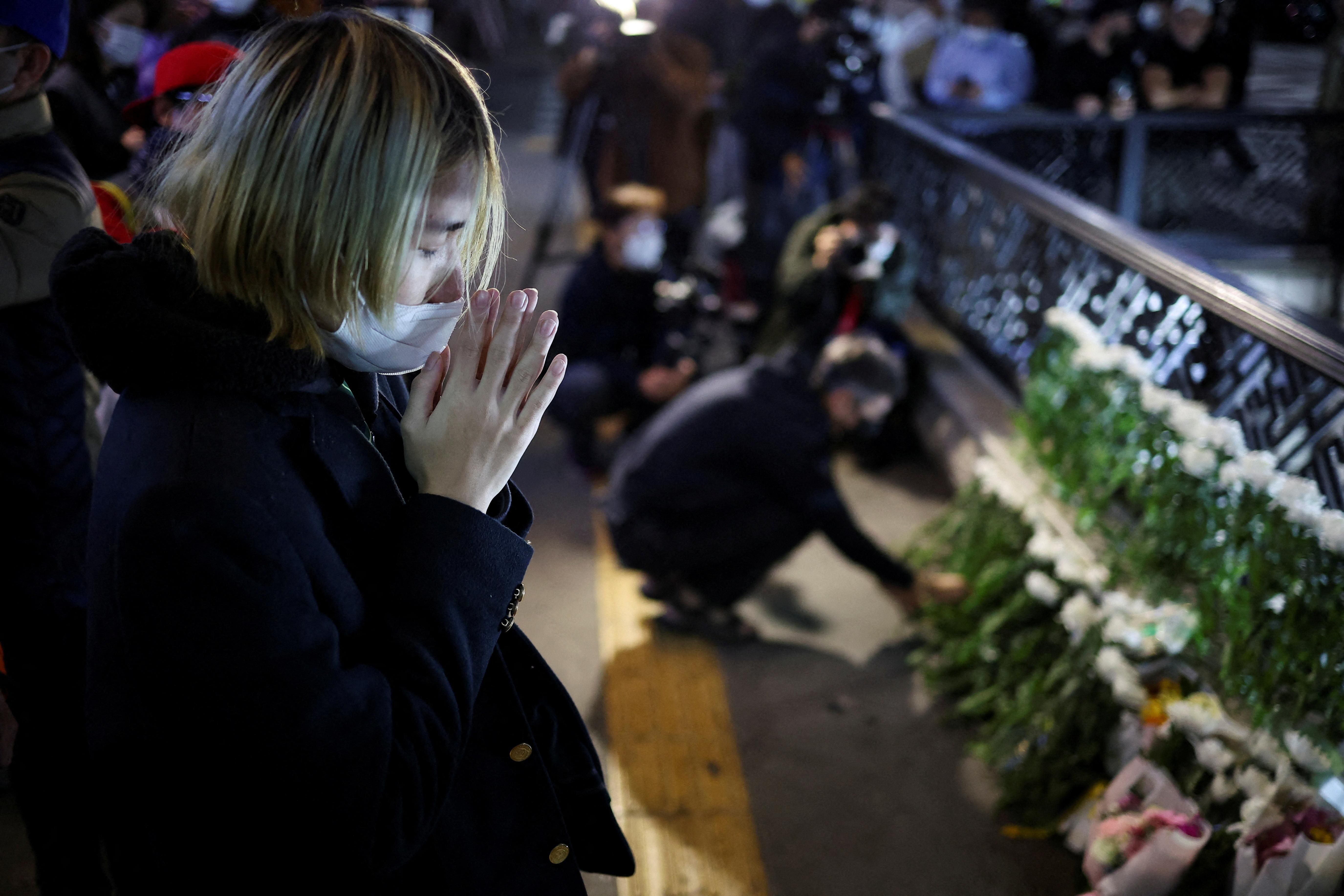
People pay tribute near the scene of the stampede during Halloween festivities in Seoul.
REUTERS/Kim Hong-ji
153: At least 153 people — including two Americans and 18 other foreign nationals — died Saturday in a crowd surge at popular Halloween celebrations in Seoul. A 100,000-strong crowd had gathered in the Itaewon neighborhood of South Korea's capital for the country's biggest outdoor Halloween celebrations since the pandemic began. US President Joe Biden tweeted to share his condolences, while President Yoon Suk Yeol declared a week of mourning and launched an investigation into the tragedy.
9,625: The husband of US House Speaker Nancy Pelosi was attacked by an assailant armed with a hammer on Friday, raising alarm bells about political violence ahead of midterm elections on Nov. 8. The number of recorded threats against members of Congress has jumped more than tenfold since 2016, with 9,625 threats reported last year alone.
100: At least 100 people died Sunday when two car bombs exploded in Somalia's capital, Mogadishu. President Hassan Sheikh Mohamud blamed the blasts on al-Shabab, a terror group affiliated with al-Qaida whose former spokesman is now a cabinet minister.
2.89: Germany's finance minister has rejected issuing common EU debt to cover rising energy costs because higher ECB interest rates make it cheaper for (some) individual countries to borrow on their own. Hmmm. The borrowing cost for a 10-year EU bond is now 2.89%, higher than Germany's but much lower than in Italy or Spain.This comes to you from the Signal newsletter team of GZERO Media. Sign up today.
In his latest Quick Take, Ian Bremmer argues that the war between the United States and Iran has entered a more dangerous phase, with both sides demonstrating they can sustain military and economic pressure without forcing the other to back down. The question is, will this standoff bring them back to the table before the conflict escalates further?
Ukraine is bringing the war to Russia, challenging one of the conflict's biggest assumptions: that time is on Vladimir Putin's side. Former Ukrainian Foreign Minister Dmytro Kuleba joins Ian Bremmer to discuss whether the war is entering a new phase.
For years, Russia has counted on one advantage above all else: time. Ian Bremmer explains why Ukraine's expanding campaign inside Russia is challenging that assumption, and what it could mean for the future of the war.
The US president used a primetime address last night to argue America’s election system is broken and vulnerable to “rigging.” He pointed to documents he says show Chinese interference in the 2020 vote. But the evidence Trump offered, along with past assessments from the intelligence community, doesn’t support his broadest claims.