GZERO North
Our men in Havana
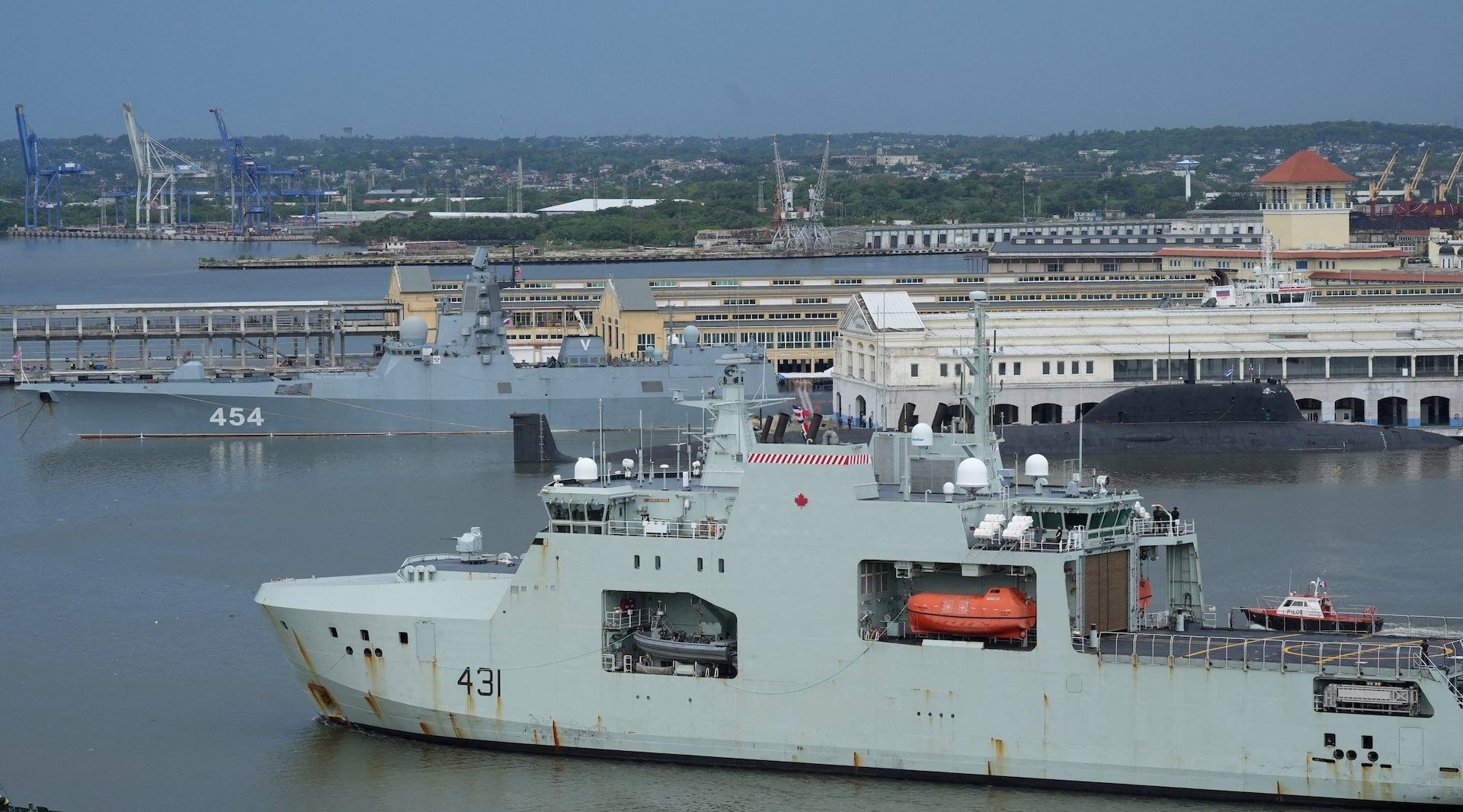
Canadian navy patrol boat HMCS Margaret Brooke passes by Russian nuclear-powered cruise missile submarine Kazan and frigate Admiral Gorshkov, as it enters Havana’s bay, Cuba, June 14, 2024.
REUTERS/Alexandre Meneghini
Even a summer trip to Cuba is fodder for controversy in Canada these days. This week, a Canadian warship paid a controversial visit to the port of Havana – docking near Russian warships that were also on a high-profile visit to the Cuban capital.
Defense Minister Bill Blair said there was nothing special about the naval drop-in, which was meant to demonstrate Ottawa’s commitment to freedom of navigation in the Western Hemisphere. It was, he said, announced by the Canadian Armed Forces “in advance.”
Canada’s Joint Operations Command had a slightly different gloss on it, saying the port visit was to recognize “the long-standing bilateral relationship between Canada and Cuba.”
Ottawa has kept up strong ties with Cuba over the years, in stark contrast to the US, which has maintained a crippling embargo against the Communist regime there for more than six decades.
But Canada’s opposition seized on the naval visit to criticize the Trudeau government, with Conservative leader Pierre Poilievrecalling the apparent challenge to Russia “reckless, radical, and dangerous.” Conservative foreign affairs spokesman Michael Chong said it was a bad look to “‘celebrate’ relations with a communist dictatorship.”
China has defied Western sanctions for years and buys as much as 90% of Iran’s oil exports.
Think you know what's going on around the world? Here's your chance to prove it.
President Bola Tinubu faces strong headwinds in his bid for a second term.
Critics have said that Zelensky – now in his seventh year in office – has been in power for too long.