May 16, 2024
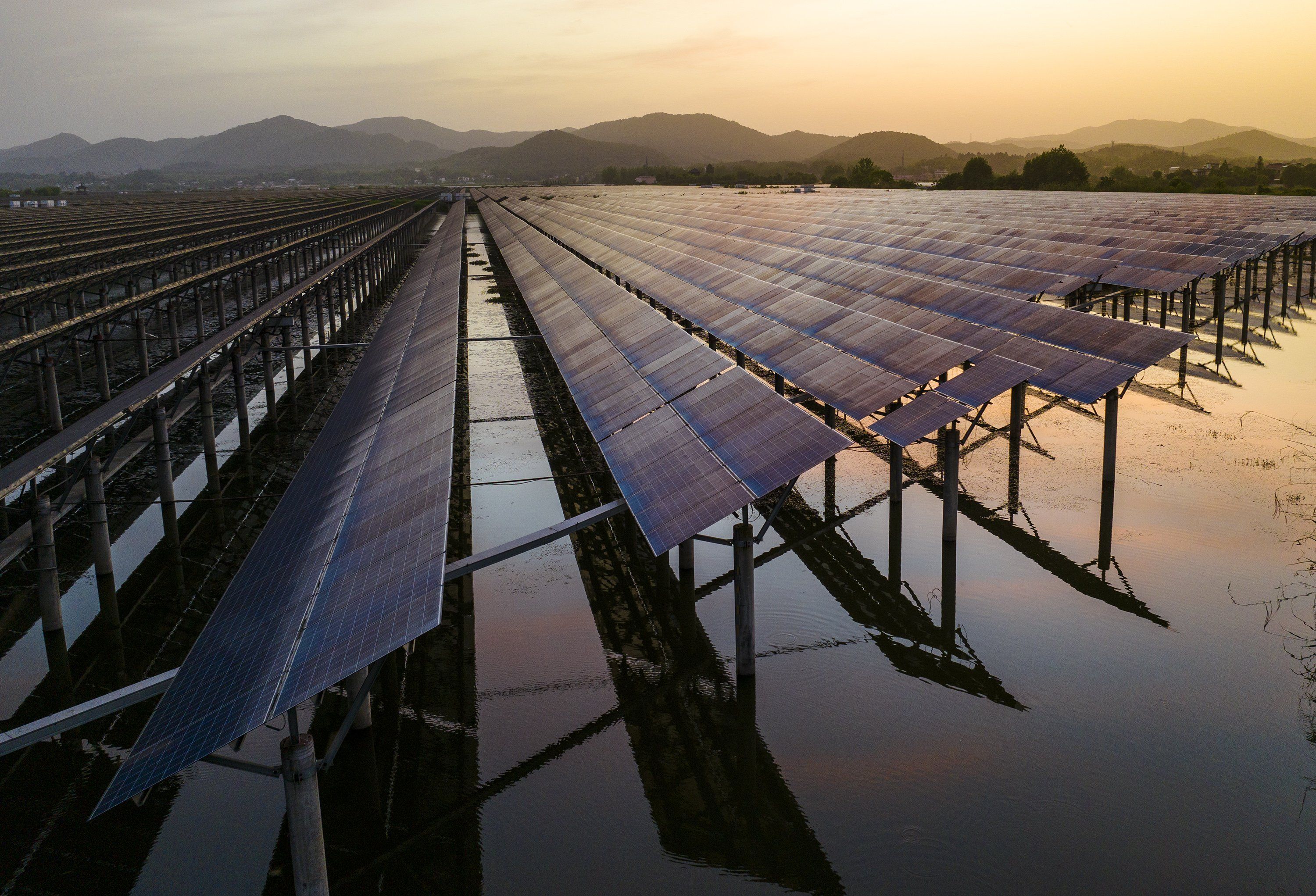
Globally, solar power is surging. The International Energy Agency says that in 2023, solar made up 75% of new renewable energy capacity and is set to continue growing—more than doubling in the next four years over 2022 levels. But in the US and parts of Canada, the solar industry is facing headwinds.
As Bloomberg reports, President Joe Biden’s Inflation Reduction Act wrote a big check for the future of solar, aiming to spur domestic manufacturing. For a while, it worked. But two years after the $16 billion infusion, plant construction is behind schedule and one has already been canceled in the face of market pressures and cheaper foreign imports from China.
In Canada, Alberta recently introduced energy regulations that put seven solar projects at risk as the province moves to restrict land-use in favor of agriculture over renewable power.
Solar power grew 11.2% in 2023 in Canada and is expected to grow 75% in the US in the next year or so. The question is who, in the long run, will be leading the development and production of solar technology? Capacity will continue to grow, but cheap Chinese solar panels – which are good for the energy transition – make establishing a domestic industry challenging, and protectionist measures risk a full-blown trade war, which may be good for no one as the world rushes to lower greenhouse gas emissions.
More For You
Ukraine is bringing the war to Russia, challenging one of the conflict's biggest assumptions: that time is on Vladimir Putin's side. Former Ukrainian Foreign Minister Dmytro Kuleba joins Ian Bremmer to discuss whether the war is entering a new phase.
Most Popular
Think you know what's going on around the world? Here's your chance to prove it.
Israeli Prime Minister Benjamin Netanyahu attends a session at the Knesset, Israel's parliament, before it dissolves ahead of the 2026 Israeli elections, in Jerusalem, Israel, on July 16, 2026.
REUTERS/Ronen Zvulun
Israel’s parliament affirmed that the country will hold a national election on Oct. 27.
Several hundred Kyiv residents gather in front of Ivana Franka Theater to protest the dismissal of the Ukrainian Minister of Defense Mykhailo Fedorov by President Volodymyr Zelenskyy, on July 16, 2026, in Kyiv, Ukraine.
Justin Yau/ Sipa USA
President Volodymyr Zelensky’s decision to remove Mykhailo Fedorov on Wednesday has not gone down well with the Ukrainian public.
© 2025 GZERO Media. All Rights Reserved | A Eurasia Group media company.