What We're Watching
Stubb takes Finnish presidency in close race
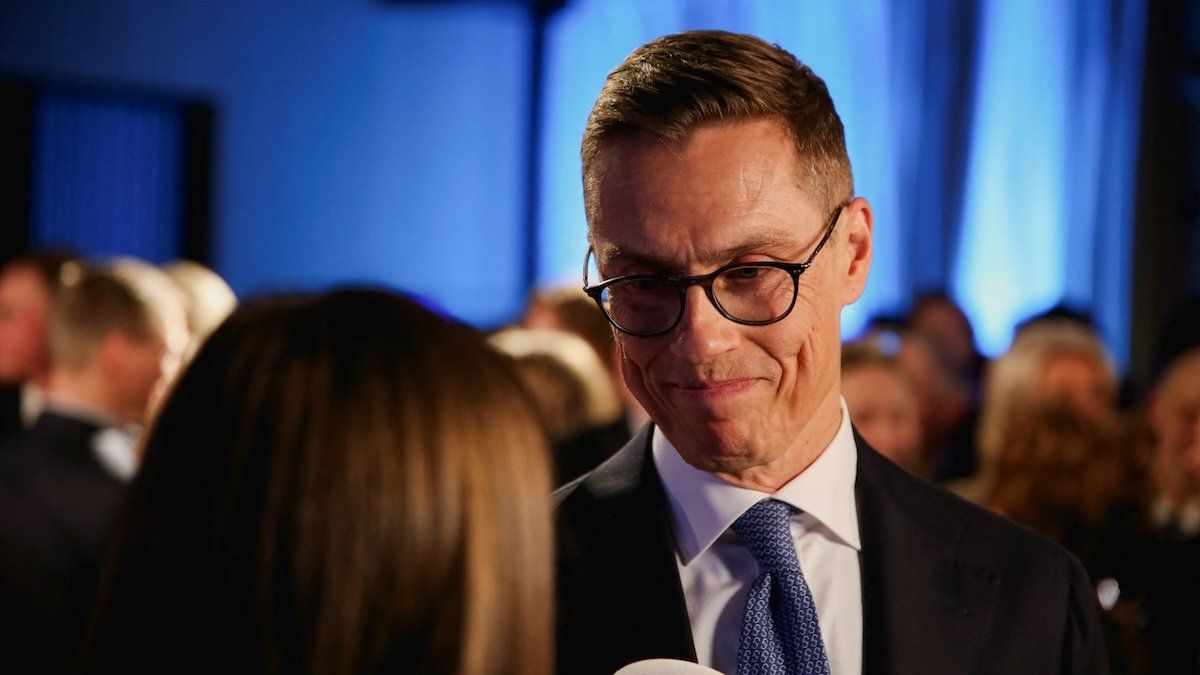
Alexander Stubb talks to the media ahead of the announcement of the results, at an election night event, in Helsinki, Finland, February 11, 2024.
REUTERS/Tom Little
Finland’s former Prime Minister, Alexander Stubb, narrowly defeated former Foreign Minister Pekka Haavisto in a presidential runoff election this Sunday, with 51.6% of vote. Stubb will replace two-term President Sauli Niinisto, known as “the Putin Whisperer” due to his cordial relations with the Russian president prior to Russia’s invasion of Ukraine in 2022.
That said, Niinisto’s successor is no fan of the Kremlin: as Stubb told Reuters last month, "Politically, there will be no relations with the president of Russia or with the Russian political leadership until they stop the war in Ukraine."
As president, Stubbs’ role is to shape foreign policy and act as commander-in-chief of the country’s armed forces. In the past, Finnish presidents largely focused on diplomacy and maintaining the Nordic country's historically neutral foreign policy to avoid antagonizing Russia — but Moscow's belligerent behavior changed the channel and prompted Finland to join NATO in April 2023. Helsinki also signed a defense cooperation agreement with the US in December. That treaty gives the US access to Finnish military bases, an airfield, and locations to store equipment, including ammunition.
In response, Russia has threatened Finland with retaliation and is beefing up its military presence along the countries’ shared 830-mile border. Stubb therefore promises to be a key player not just for Finland’s security, but for that of NATO as a whole.
Could replacing Benjamin Netanyahu change Israel’s direction? Brett McGurk explains why a government led by Gadi Eisenkot would likely maintain Israel’s security doctrine while taking a different approach to the West Bank.
Think you know what's going on around the world? Here's your chance to prove it.
Canadian Prime Minister Mark Carney is in Turkey on Thursday for talks with President Recep Tayyip Erdogan - the visit is the first by a Canadian prime minister.
Temps are dropping. Approval ratings are dropping. Protests are rising. Throw on a classic Puppet Regime hoodie to get you through this season of geopolitical chaos. Visit the Puppet Regime Ministry of Merchandise here.
We also offer:
• A big, beautiful mug to take your coffee VERY STRONGLY.
• A tote bag to carry the microfilms to your next dead drop.
• Stickers to challenge existing borders.
Tariffs are complicated. Our shipping isn't. We deliver almost everywhere (sorry Iran, Russia, and North Korea). Shop now at shop.puppetregime.tv!