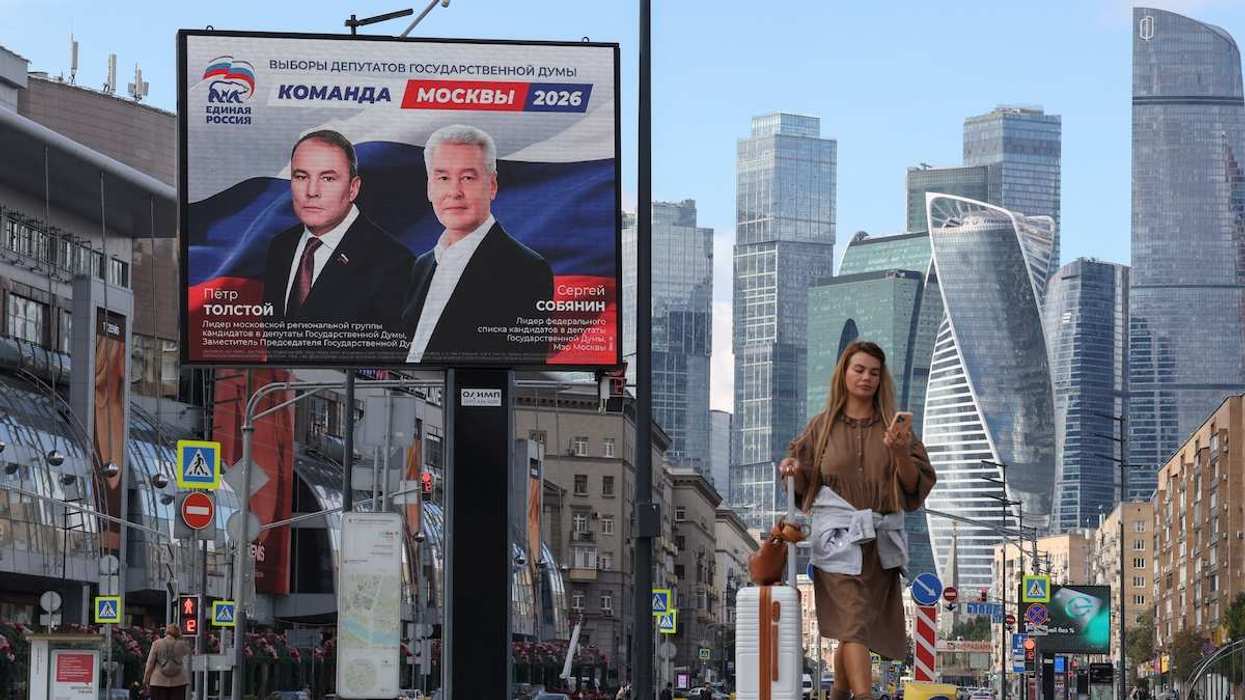
At first glance, Russia has coped well under the weight of Ukraine-related Western sanctions. In 2024, its economy grew at a faster rate than every G7 country. Though Europe has gone almost entirely cold turkey on Russian oil and gas supplies, thirst for these resources in China and India, quenched by a shadow tanker fleet that helps evade those sanctions, has kept Russia’s energy trade stable.
Longer term, climate change can help. Warming temperatures will open new Russian lands to farming and boost its agricultural output. They will open new sea routes that lower Russia’s cost of commerce and bring revenue from transit fees imposed on others. Perhaps most importantly, the Kremlin has long claimed it can transition from its currently heavy reliance on oil and gas exports to deeper investment in wind, hydro, geothermal, biomass, hydrogen, and solar energy.
But the realities of Russia’s future are darkening.
Its economy has become addicted to war in Ukraine. Its growth over the past two years was fueled mainly by the tidal wave of military spending needed to eke out modest gains in what’s become a war of attrition. Military and security spending now make up about 40% of Russia’s total government expenditure. This spending surge is sending inflation into overdrive, forcing Russia’s central bank to raise interest rates to a record 21%, raising borrowing costs for businesses and slowing future investment. Manufacturing has slowed and ordinary Russians aren’t spending.
None of this will persuade President Vladimir Putin to cut a deal with Ukraine – and that’s Russia’s bigger problem. Current evidence suggests Putin intends to keep doubling down on a war that leaves a supposed great military power to take 1,000 casualties per day to make tentative gains of a few kilometers, to kill Ukrainian civilians, and to laud slow advances on individual towns and villages in a war that’s already dragged on for three years and four months.
In addition, while China and India remain eager to buy the energy Russia pumps out of the ground, they know the loss of Moscow’s best customers in Europe allows them to buy the product at a below-market price. China, with an economy nearly nine times larger than Russia’s, has done remarkably little to help Putin win his war. India has shifted large volumes of arms purchases from Russia to the United States. The Kremlin’s trade problem is compounded by the reality that even ending the war with Ukraine won’t bring mistrustful Europeans to return to their former volumes of trade with Russia.
But Russia’s biggest problems are found inside its borders. Longtime reliance on the revenue from exports of oil, gas, metals, and minerals has allowed Russia to avoid large-scale investment in the digital-age industries needed for an innovative 21st-century economy. The most recent credible measure of this comes from the Global Innovation Index 2024, produced by the World Intellectual Property Organization, a UN agency. According to the report, which measures entrepreneurship and innovation-driven growth and development across 133 countries, Russia ranks 59th in the world, behind Mauritius, Georgia, and North Macedonia.
This problem probably has many sources – an economy dominated by well-connected elites who don’t need innovation to remain wealthy, a lack of entrepreneurial tradition, and increased investment focus on a war Russia isn’t winning. But the larger challenge facing Russia is the depletion of the generation of young people that might help solve these problems. A report last month from the Center for Strategic and International Studies found “250,000 Russian soldiers have died in Ukraine, with over 950,000 total Russian casualties.” That’s a tremendous blow for Russia’s potentially most productive generation, with no end of the sacrifice in sight. Here’s another: aware of both Russia’s long-term economic problems and the much more urgent problem of avoiding war, nearly one million Russians have fled the country in search of better opportunities since the earliest days of Putin’s invasion of Ukraine.
Russia, a resource-rich country with 11 time zones and an economy about half the size of California’s, still depends almost entirely for its great-power claims on its stockpile of nuclear weapons, the world’s largest. But these are weapons that can only be used at high risk of self-annihilation, and Russia’s sophisticated arsenal of cyber-weapons is useful only for undermining other countries.
Worst of all, it’s hard to imagine any Kremlin change of direction toward creating a more dynamic and innovative Russia anytime soon. The war in Ukraine grinds on. For now, Putin and his enablers seem content to define Russia’s “greatness” solely by its ability to disrupt and punish others.