September 10, 2019
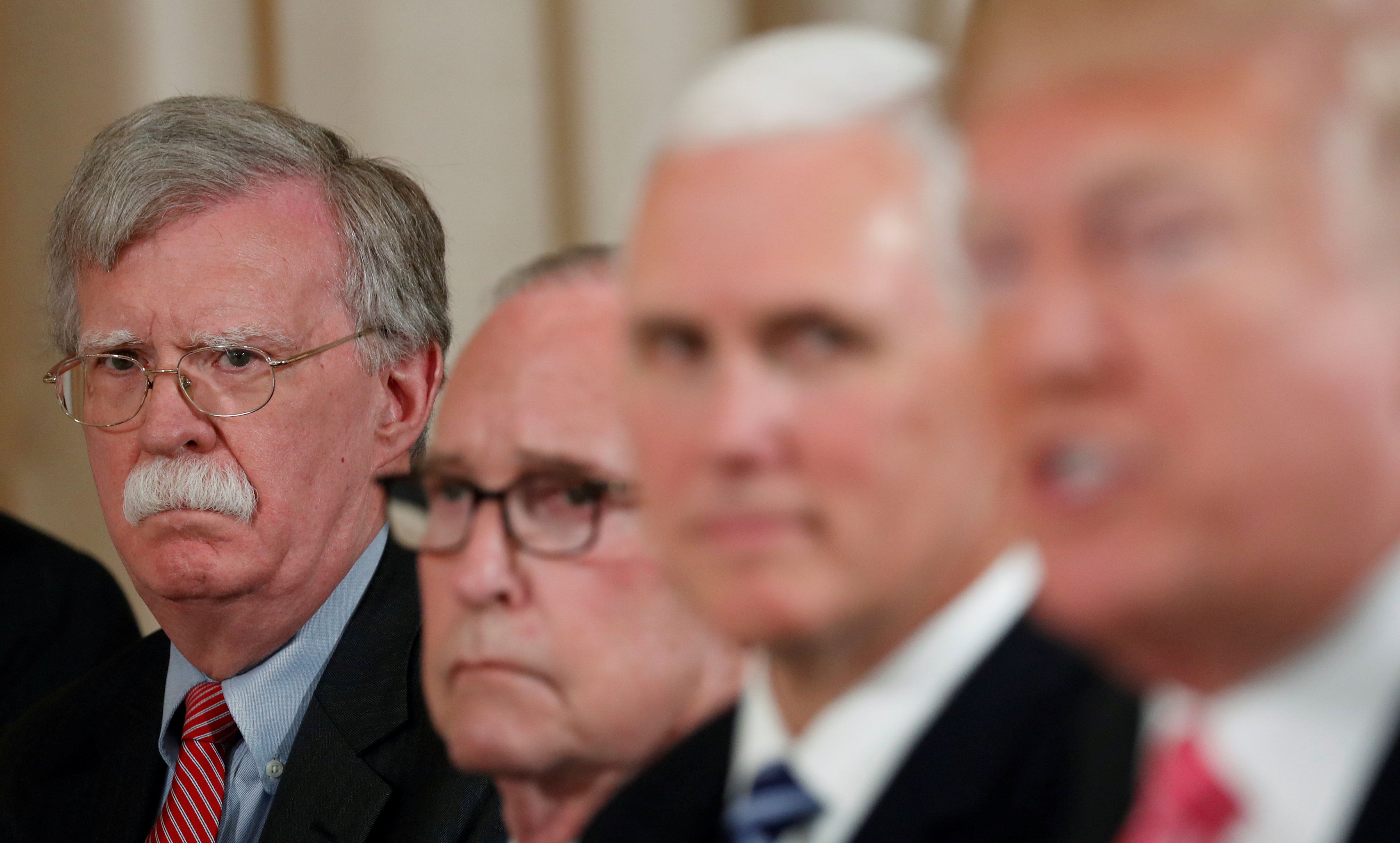
Exit John Bolton - Yesterday's news that President Donald Trump has fired national security advisor John Bolton offers yet more evidence that, however his critics will characterize his motives, Trump is eager to avoid fresh military conflicts and wants to try to make deals instead. The ultra-hawkish Bolton appears to have wanted a more aggressive approach to Iran, North Korea, Afghanistan, Venezuela, and other places where US adversaries operate. Trump had evidently reached the limits of his trust in Bolton's judgment. But the remaining mystery is why, in the first place, a man elected on promises to end wars hired a man who wants nothing more than to start them? And, of course, who will want this job next?
Russian Spy Games – A CIA mole provided sensitive Kremlin intelligence, including photographs of documents seen by Vladimir Putin, for more than a decade, according to a bombshell CNN story. The source led the CIA to believe Putin had personally ordered Russia's meddling in the 2016 election. But in 2017, the CIA pulled him out of Russia – a decision that a source told CNN was partly motivated by the Trump administration's patchy handling of classified intelligence. The New York Timesfollowed with other details, including concerns among some US intelligence officials that their most senior Russian asset may have been a double agent. There's plenty of fodder in this story for those on all sides of the Trump-Russia story – we're watching to see how Trump's critics, the president himself, and Vladimir Putin react now that the spy games have become public.
Turkey's Waning Hospitality – Turkey's President, Recep Tayyip Erdogan, has said that unless the US sets up a safe-zone within Syria where he can send a million of the Syrian refugees currently living in his country, he will "open the gates" for them to head into Europe. Turkey hosts 3.6 million Syrian refugees, by far the largest number of any country. But Ankara's hospitality is wearing thin. Since 2015, the EU has given Turkey $6.7 billion to deal with the influx of migrants, but Erdogan says this isn't enough now, as Turkey's deepening economic woes have fueled anti-Syrian sentiment among Turks. We're watching two things here: first, will Trump agree to Erdogan's ultimatum on setting up the safe zone? Second, if not, will the EU-Turkey deal hold up? Given the backlash against migrants across the EU, Brussels can ill-afford to see millions of fresh arrivals now.
What We're Ignoring:
Calls to abolish higher education – A Republican state senator from Tennessee received national attention after he called to abolish higher education during his weekly radio show. Kerry Roberts, who represents a district near Nashville, said the move would "cut off a liberal breeding ground." The lawmaker subsequently walked back his comments, suggesting they were hyperbole (judge for yourself – his education remarks start around 50 minutes in). We are ignoring this story, because we'd rather tune in to a serious debate about whether Americans would be better off spending time and money on vocational or technical education rather than on increasingly expensive four-year degrees.
More For You
Could Chinese AI give Europe an edge? | The Debrief with Heather West
Could China give Europe a shortcut in the AI race?
Europe has struggled to build models that compete with American and Chinese rivals. But Chinese models that companies can download, customize, and run themselves could offer another way forward—with more control over data and security.
Most Popular
- YouTube
With the midterms just weeks away, Democrats are hoping for a blue wave, while Republicans are fighting to hold onto Congress. Amy Walter and Liam Donovan join Ian Bremmer to break down the races, the issues driving voters, and what the results could mean for Trump's presidency.
With the midterms just weeks away, Democrats are eyeing control of Congress as Republicans struggle with the political fallout from the Iran war, rising prices, and Trump's unpopularity. Amy Walter and Liam Donovan join Ian Bremmer to break down what could happen in November and what it means for the future of both parties.
Since returning to power in 2025, the Trump administration has drastically changed the answer to this question, pursuing an ‘America First’ philosophy that is dramatically more transactional: the US will give you money, but you must give the US something valuable in return.
© 2025 GZERO Media. All Rights Reserved | A Eurasia Group media company.