What We're Watching
Speaker race: Jordan might get there
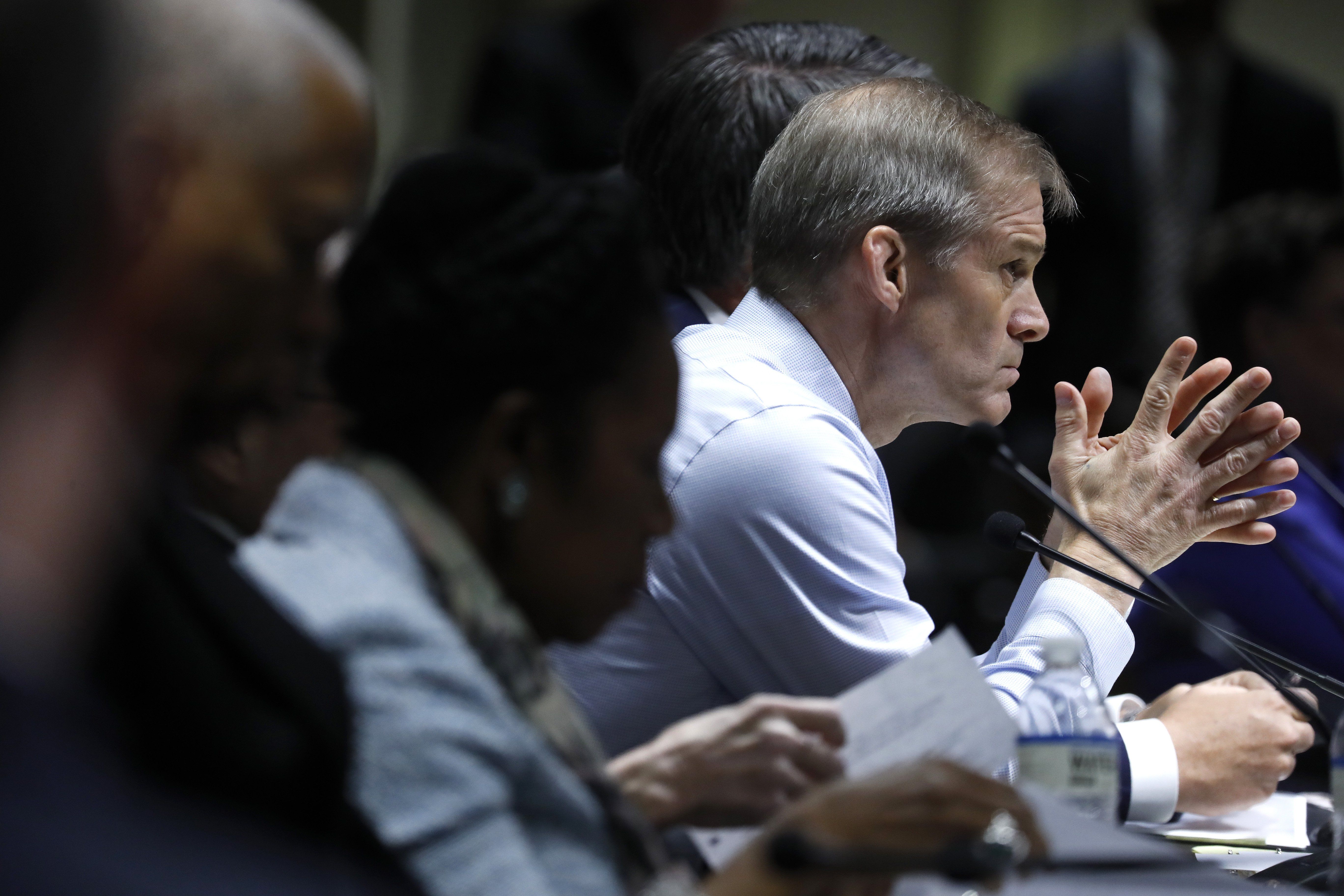
Rep. Jim Jordan (R-OH) presides over the House Judiciary Committee
Nurphoto
As the week began, it seemed unlikely Jim Jordan of Ohio, the Republican nominee for Speaker of the House, could win the near unanimous support within his party he needed to win the job. But on Monday, his fortunes appeared to shift.
Endorsements from three crucial members – Mike Rogers of Alabama, Ann Wagner of Missouri and Ken Calvert of California – sharply raised expectations that House Republicans can get to yes and end their crisis.
Those are not the only three converts Jordan appears to have won, but they’re especially significant because they’re influential lawmakers that most analysts considered beyond the reach of Jordan, a man known mainly as a partisan flamethrower and loyal Donald Trump lieutenant. Rogers and Calvert, in particular, were thought to be holding out for larger commitments on defense spending.
Two big questions remain. Can Jordan win over all but four of the 221 Republican members? That’s still not a done deal as of this writing. And what did Jordan promise Rogers, Wagner, Calvert and others in exchange for their unexpected backing?
The next vote for speaker is set to take place Tuesday at noon. Jordan will continue to campaign up to and through the vote. Even if he wins, he’ll find himself trying to lead an increasingly fractious Republican majority with much more infighting to come. The problem that brought down former Speaker Kevin McCarthy remains: A single disgruntled Republican can bring House business to a halt.
China has defied Western sanctions for years and buys as much as 90% of Iran’s oil exports.
Think you know what's going on around the world? Here's your chance to prove it.
President Bola Tinubu faces strong headwinds in his bid for a second term.
Critics have said that Zelensky – now in his seventh year in office – has been in power for too long.