US Politics In 60 Seconds
Why Trump won't debate Biden or make a decision on stimulus
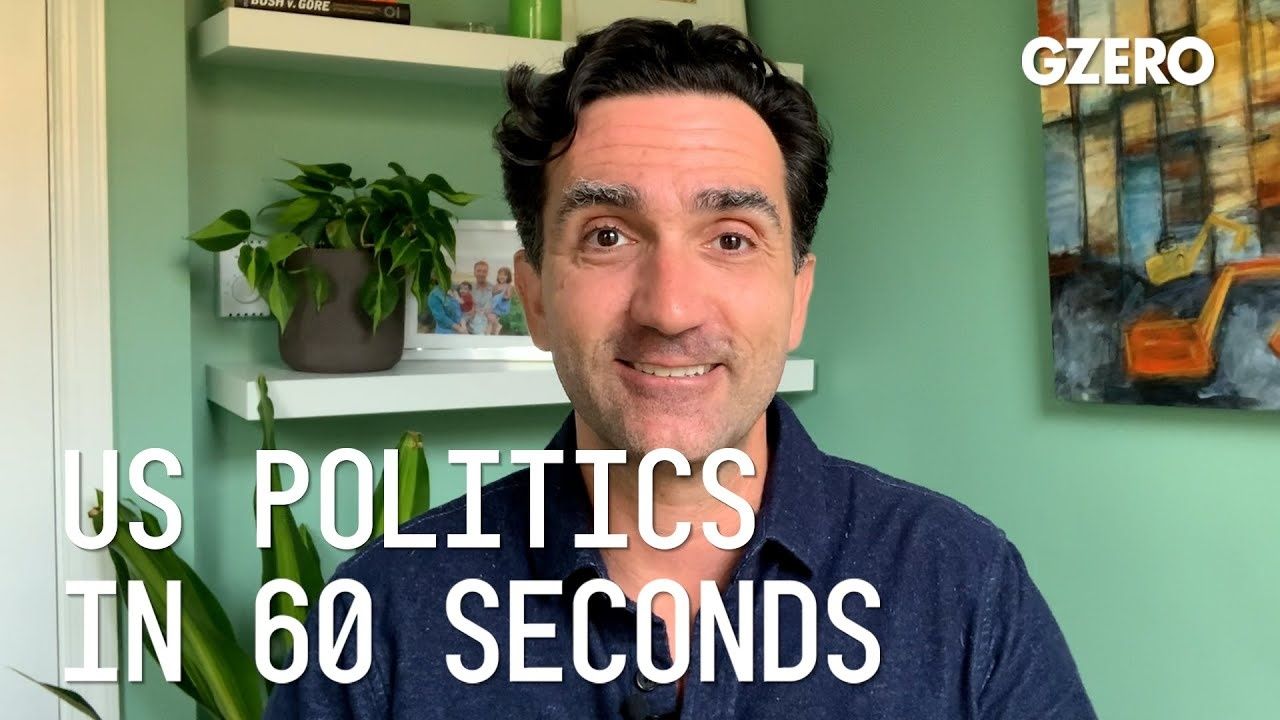
Why Trump Won't Debate Biden Or Make a Decision On Stimulus | US Politics In :60 | GZERO Media
Jon Lieber, Managing Director of the United States for the Eurasia Group, shares his insights on US politics this week:
Why wouldn't the president want to debate Joe Biden?
Well, I think the president does want to debate Joe Biden, but he wants to do it on his terms. He wants an in-person debate where he can try to dominate and overwhelm Biden and push him into having what looks like a senior moment, to help make the case that Joe Biden is too old to hold office. The Commission on Presidential Debates has offered a virtual debate where they can mute Trump's microphone and that's the format just doesn't really work for him. So, probably this debate is canceled. We'll see what happens with the third.
Stimulus talks are on again and they're off again and they're back on again. What's happening?
It's really unclear what's happening on Capitol Hill right now. And the reason is the president of the United States keep changing his mind. He originally told his negotiators earlier in the week to pull out of negotiations because it was very clear that Nancy Pelosi's $2.2 trillion bill wasn't going to have the votes to pass the Senate. Senate Majority Leader Mitch McConnell is mostly concerned about confirming a sixth conservative justice of the Supreme Court at the end of this term but would be happy to let a stimulus go through if the votes were there. And it's unclear if Steve Mnuchin, the president's negotiator, can find the votes for the kind of deal of a size that Pelosi wants to do. The final thing here is that I'm not sure Pelosi wants to give the president a win in the final weeks before the election, but if she does, it's going to be really close to her starting number, which is the $2.2 trillion bill the House has already passed.
Why won't the polls miss as much as they did in 2016?
Well, they might. Polling error in Michigan, Wisconsin and Pennsylvania average about five points in 2016. So, if you missed by that much right now, if the election were held today, that still wouldn't be enough to help Donald Trump win this election, where he trails in those states by as many as seven points and he trails nationally by nine points. This is a much larger lead for Joe Biden than you saw at this point in 2016 for Hillary Clinton. So, the race tightened a lot in the last couple of weeks. A lot of undecided voters broke for Trump in the last week of the campaign, and that could happen this time around. But it seems like polling error may not be a big part of the story with Biden's margin being this big.
Thanks for watching. This has been US Politics In over 60 Seconds.
Think you know what's going on around the world? Here's your chance to prove it.
Critics have said that Zelensky – now in his seventh year in office – has been in power for too long.
Washington and Ottawa are down to the wire with last-minute talks to reach an agreement by 12:01 a.m. Wednesday, when President Donald Trump has threatened to impose 50% tariffs on over $20 billion of Canadian goods.
On Monday, public health officials said the virus had killed 2,325 people.