Search
AI-powered search, human-powered content.
scroll to top arrow or icon

Agentic AI: How it could reshape identity and politics

As AI begins to understand us better than we understand ourselves, who will decide how it shapes our world?

Ian Bremmer cautions, "The winner or the winners are going to determine in large part what society looks like, what the motivating ideologies are." He stresses that AI’s direction is driven not by technology alone, but by the humans who design and program these systems.


"That's kind of why you need the UN and you need responsible AI governance as part of the conversation," Bremmer adds.

Ian spoke at the 2025 Abu Dhabi Global AI Summit panel “Bringing AI Technology, Trust, and Talent to the World,” part of GZERO Media’s Global Stage series in partnership with Microsoft. The Global Stage series convenes global leaders for critical discussions on the geopolitical and technological trends shaping our world.
More from Global Stage

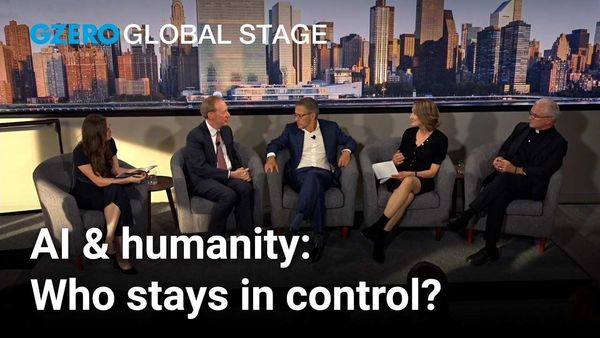
How can AI enhance human progress?

As artificial intelligence becomes more powerful and more deeply embedded in everyday life, how can we ensure it remains a tool for human progress, and under human control?

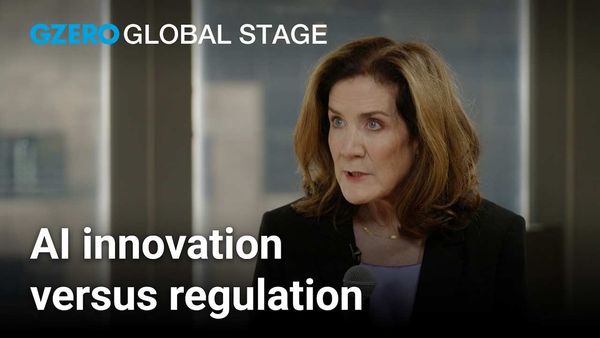
Ambassador Shea on AI risks, US-China ties and Lebanon

On the sidelines of the 81st UN General Assembly in New York at GZERO and Microsoft's innagural Global Stage Cafe, Ambassador Dorothy Shea, who previously served as US chargé d'affaires and acting representative to the United Nations, sits down with Tony Maciulis to unpack the debate over AI regulation, US-China relations and Lebanon's security future.

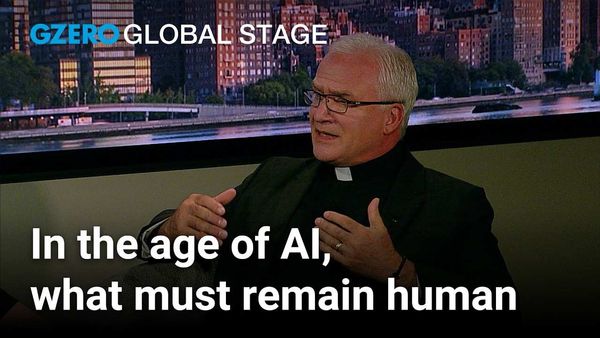
What does it mean to be human in the age of AI

As AI becomes increasingly embedded in everyday life, a deeper question is emerging: What does it mean to remain human in a world shaped by technology?

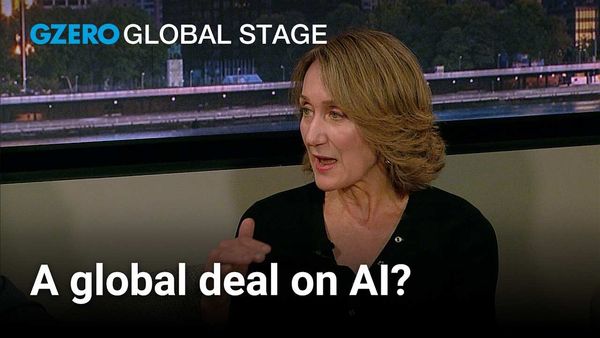
Is the world moving toward a global agreement on AI governance?

Could UNGA81 mark the beginning of a new global approach to governing AI? United Nations Foundation President and CEO Elizabeth Cousens says governments are rapidly recognizing the need to address AI safety, inequality, and access, and that the demand for international coordination is growing.

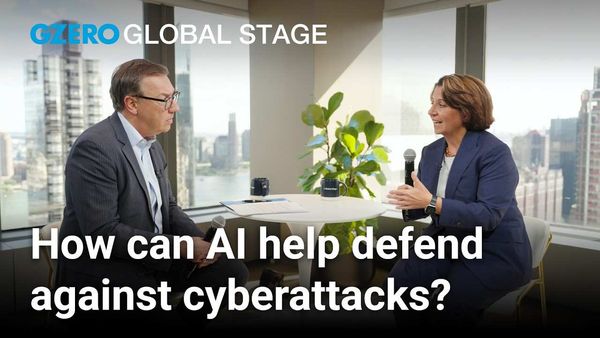
How can AI help defend against cyberattacks?

As AI reshapes the cyber threat landscape, governments and businesses are confronting new challenges around security, sovereignty, and resilience. Lisa Monaco, President of Microsoft Global Affairs, joins GZERO’s Tony Maciulis to discuss how AI is changing cybersecurity and the role of governments in defending against emerging threats.

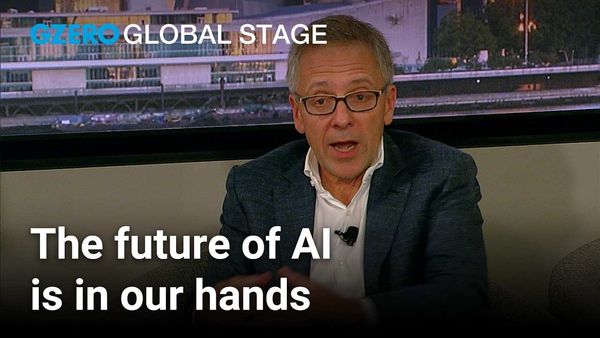
The real risk of AI is how humans use it

As the US and China race to develop and deploy AI, the biggest risks may come not from the technology itself, but from how humans choose to use it. Speaking on a Global Stage panel during the 81st UN General Assembly, Ian Bremmer examines how the AI race is reshaping geopolitics and changing perceptions of the technology.