What We're Watching
American sailors arrest Houthi militants
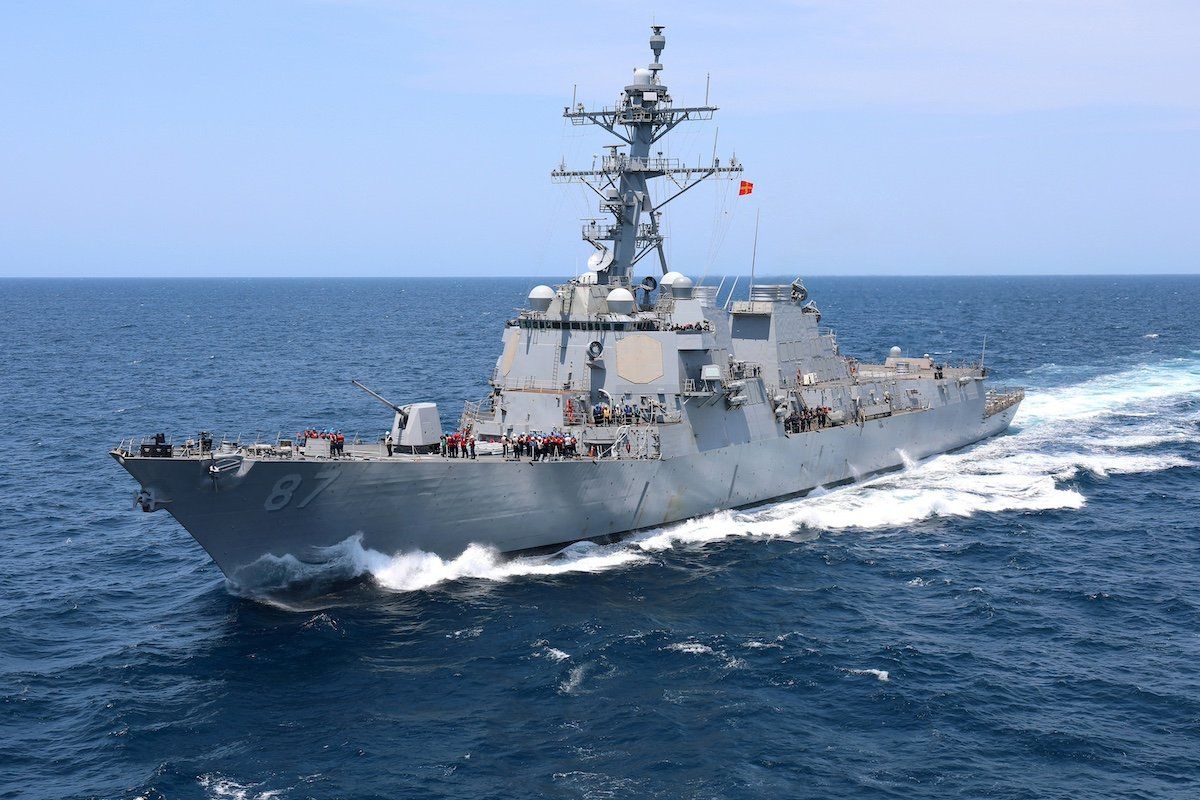
File Photo: The U.S. Navy guided-missile destroyer USS Mason pulls alongside a fleet replenishment oiler in the Atlantic Ocean, July 17, 2021.
U.S. Navy/Bill Mesta/Handout via REUTERS
Lost in the good news over a two-day extension of the humanitarian cease-fire in Gaza and the promised release of more captured civilians, is an event that could signal the rising risk of a broader Middle East war. On Sunday, a US warship captured five armed Houthi militants attempting to flee an Israeli-linked tanker they had briefly seized off the coast of Yemen. This is just the latest belligerent exchange between US forces and militants aligned with Iran. As in other cases, two missiles fired at the US ship from Houthi-controlled territory in Yemen looked more like a fist-shake than a serious attempt to hurt anyone.
But these incidents are likely to escalate as the Qatari-brokered cease-fire between Israel and Hamas ends in the coming days and the fighting intensifies sharply in southern Gaza. There is no evidence that Houthis and other Iranian proxies are following direct orders from Tehran, even if they share Iran’s view of the war. But if militants begin acting more aggressively on their own initiative, the risk of a deadly encounter that escalates the violence beyond Gaza will grow.
Artificial intelligence now contributes to more than half of cybercrime in Africa
US-backed negotiations are opening a possible path to democratic elections in Venezuela – even as the country’s most popular opposition leader remains outside the room.
Think you know what's going on around the world? Here's your chance to prove it.
The Democratic Republic of Congo has reportedly banned exports of copper and cobalt concentrates – the goal is to force more processing at home and capture a larger share of profits generated from its natural resources.