GZERO World with Ian Bremmer
Campus protests over Gaza: Now what?
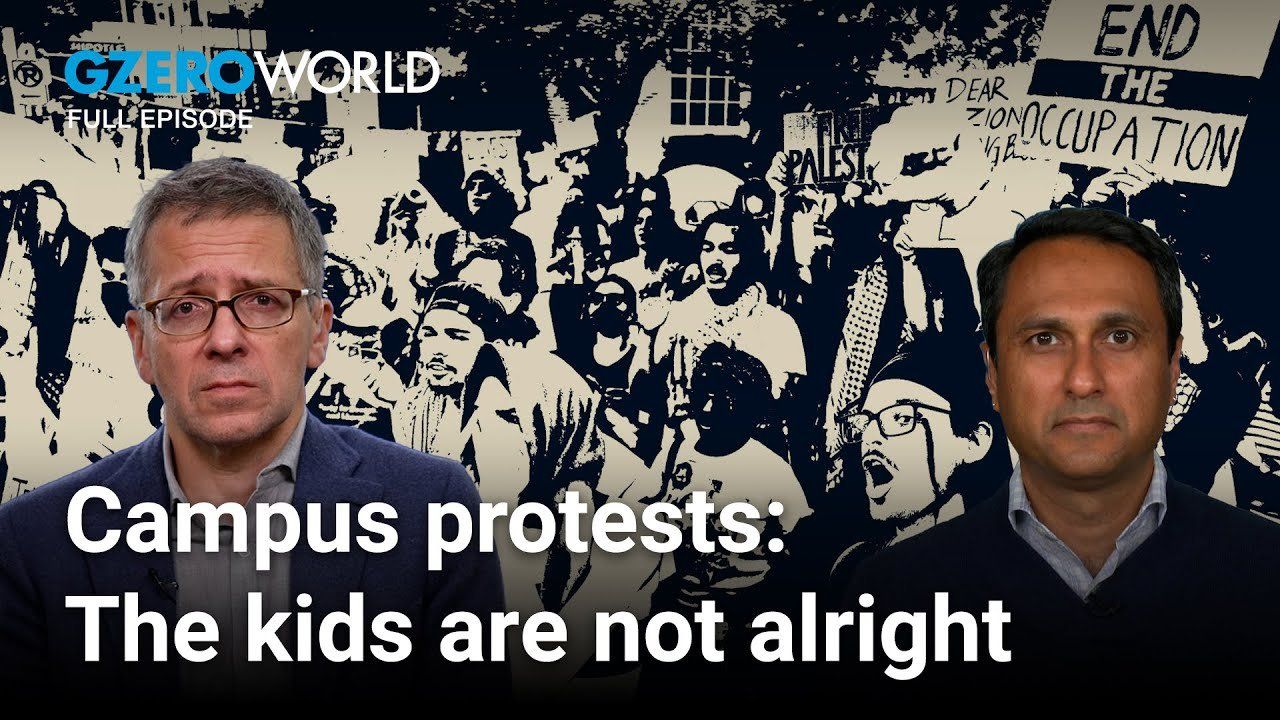
Campus protests over Gaza: Now what? | GZERO World with Ian Bremmer
Something is happening here—on college campuses, that is. But what do we make of protests that turn violent, like what we saw at UCLA or even some of the Columbia conflicts? In a wide-ranging interview with Ian Bremmer on GZERO World, Eboo Patel, founder of the nonprofit Interfaith America, talks about his work on hundreds of college campuses to find common ground. His core message is simple: "Cooperation is better than division."
Patel advocates for a shift in focus from confrontation to cooperation on campuses, suggesting that universities should foster environments of civil discourse. He proposes initiatives like teach-ins and dialogues to explore constructive solutions to complex issues. "I think the problem here, the thing that universities could control, which I think that they have gotten wrong in many cases over the course of the past five years, is the default mode has been set to confrontation, not cooperation."
It's true that finding common ground can be easier said than done when tensions are high. But as Patel points out, the majority of college campuses have been able to debate the Israel-Gaza war without the kind of chaos or violence we've seen on certain campuses. "The media, for good reasons, covers planes that crash and not planes that land," Patel explains.
As Hezbollah’s power weakens and Israel occupies parts of southern Lebanon, could the country finally reclaim its sovereignty? Or is it headed toward another war? Journalist Kim Ghattas joins Ian Bremmer on the GZERO World Podcast.
Think you know what's going on around the world? Here's your chance to prove it.
The World Health Organization said this week that 80% of the confirmed cases are coming from unknown chains of transmission
Ian Bremmer answers questions straight from you, GZERO readers, on whatever has been on your mind.