News
July 17, 2018
3,500: The Islamic State West Africa Province, a Nigerian jihadist group aligned with ISIS, is estimated to have around 3,500 fighters today, more than the original group now has in Syria and Iraq. Africa may well be the next front for “the caliphate” as it continues to cede ground in the Middle East.
1,692: Civilian deaths in Afghanistan reached a record of 1,692 in the first half of the year, despite a temporary ceasefire between the government and the Taliban, according to a new UN report.
180: One way to prevent online dissent: turn off the internet. Between January 2016 and December 2017, there were more than 180 documented instances of government-imposed online blackouts around the world, according to the internet advocacy group Access Now. The longest lasted 93 days and took place in Cameroon.
160: A stockpile of gold estimated to be worth $160 billion is locked away in Hindu temples across India. That hidden fortune is increasingly becoming a target for theft in a country where more than 70 million still live in extreme poverty.
7: This week’s meeting between Trump and Putin was the seventh official summit between the leaders of the US and Russia since the collapse of the Soviet Union and the first since Russia’s 2014 annexation of Crimea.
More For You
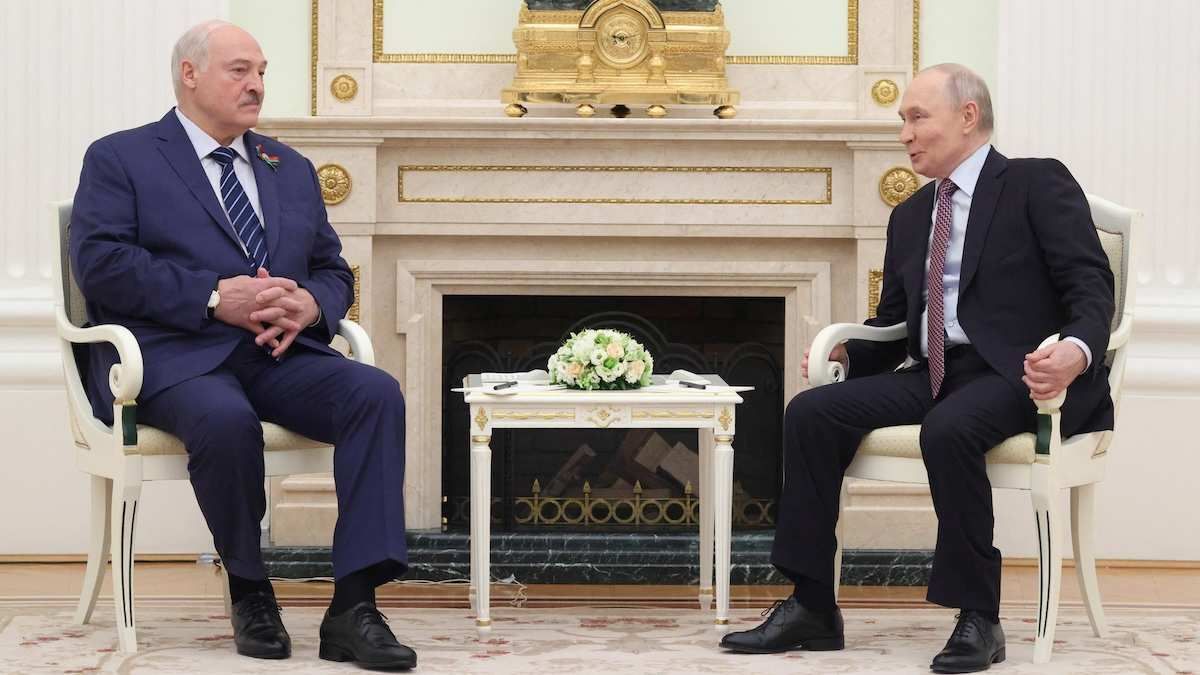
Russian President Vladimir Putin and Belarusian President Alexander Lukashenko attend a meeting in Moscow, Russia, on May 8, 2026.
REUTERS/Ramil Sitdikov/Pool
Aleksander Lukashenko is facing pressure from both Vladimir Putin and Volodymyr Zelensky – and he must find a way to placate both.
Most Popular
Think you know what's going on around the world? Here's your chance to prove it.
An astonishing heat wave has swept across Europe this week, with France the hardest hit.
As America approaches its 250th anniversary, Bank of America is investing in the legacy of leadership — committing $5M to the Theodore Roosevelt Presidential Library and conserving 110 presidential portraits at the Smithsonian National Portrait Gallery, so the history of leaders who defined our nation is preserved for generations to come. Learn more here.
© 2025 GZERO Media. All Rights Reserved | A Eurasia Group media company.