Search
AI-powered search, human-powered content.
scroll to top arrow or icon

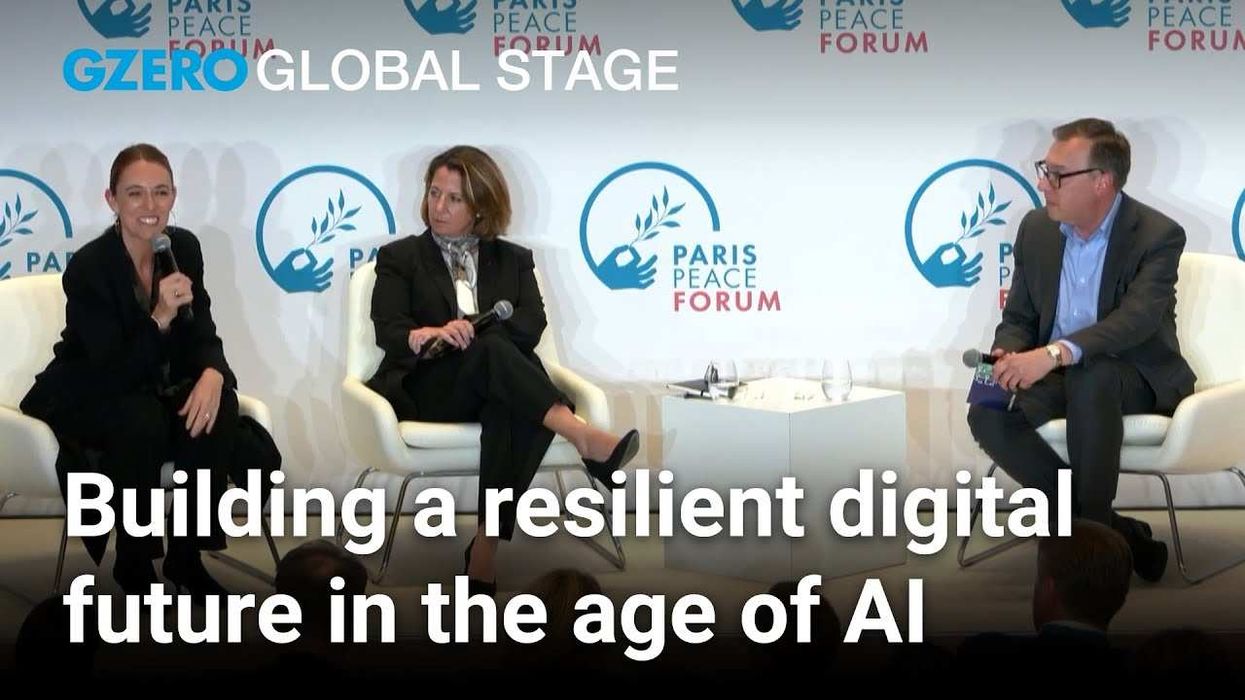
Jacinda Ardern on AI's role in countering extremism online

Former New Zealand Prime Minister Jacinda Ardern says AI can be both a force for good and a tool for harm.

“AI has either the possibility of…providing interventions and disruption, or it has the ability to also further harms, increase radicalization, and exacerbate issues of terrorism and extremism online.”


Ardern highlights the Christchurch Call initiative, which brings together over 130 organizations to address emerging technology risks. “We need smaller operators to have access to these tools,” she said, noting the creation of open-source initiatives like Elevate and algorithmic research projects aimed at understanding and disrupting pathways to radicalization. She also points to Catalyst, a project tackling the intersection of gender-based violence and online extremism.

She spoke with GZERO Media’s Tony Maciulis at the 2025 Paris Peace Forum panel, “Collective Resilience in the Age of AI,” part of GZERO Media’s Global Stage series with Microsoft.
More from Global Stage

Can AI help solve global crises? Live from the AI for Good Global Summit 2026

As artificial intelligence rapidly reshapes the global economy, one question is becoming increasingly urgent: who will actually benefit? Recorded at the 2026 AI for Good Global Summit in Geneva, this special Global Stage conversation brings together leaders from the United Nations, Microsoft, and the scientific community to examine how AI can help tackle some of the world's biggest challenges, from disaster preparedness and climate resilience to humanitarian response and sustainable development.

How AI speeds up disaster relief efforts

Artificial intelligence is becoming an increasingly powerful tool for disaster preparedness and emergency response. Speaking at the 2026 AI for Good Global Summit in Geneva, Microsoft Vice Chair and President Brad Smith explains how AI combines predictive modeling, satellite imagery, and public data to help governments identify vulnerable communities before disasters strike and respond more quickly when they do.

Join us Sept. 23 for a Global Stage livestream from the UN General Assembly

Join us Sept. 23 for a Global Stage livestream from the UN General Assembly

Catch our upcoming livestream on Wednesday, Sept. 23 at 5:15 PM ET: How can a human-centered approach to AI help address some of society’s most pressing challenges while fostering inclusion, trust, and shared prosperity? Our livestream discussion, "Global Stage: Live from the 81st UN General Assembly" examines this key question, live from the sidelines of UN headquarters. Watch live at gzeromedia.com/globalstage

Building a safer, more equitable AI future

At the 2026 AI for Good Global Summit in Geneva, ITU Secretary-General Doreen Bogdan-Martin says the future of artificial intelligence depends on putting the right guardrails in place to ensure AI is developed safely, responsibly, and equitably.

The World Bank Group's Sangbu Kim on AI and job skills

More than half of Americans believe their job is vulnerable to AI. The data tells a more complicated and in some ways more hopeful story.

Can AI protect humanitarian aid?

Artificial intelligence is already helping humanitarian organizations identify people in need, improve supply chains, and deliver assistance more efficiently. But it also introduces new risks.