News
Hard Numbers: Turkey-Syria earthquake devastation
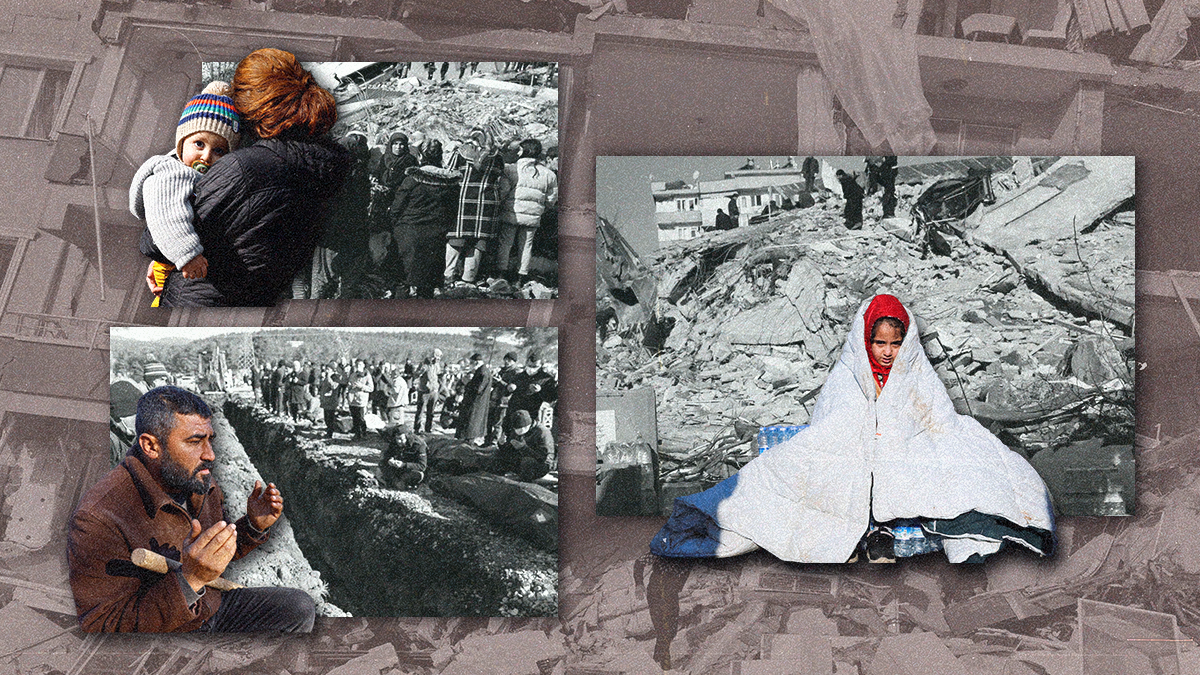
Photo composite of devastation in Turkey and Syria.
Annie Gugliotta
The death toll from Monday's earthquake in Turkey and Syria has now surpassed 20,000. Want to donate to help people in need? Consider these worthy causes: Ahbap Platform, Turkey Mozaik Foundation, Doctors Without Borders, Save the Children,UNICEF, Red Cross.
16: That’s how many unaccompanied babies have been flown from the southern Turkish city of Kahramanmaras to Ankara, the capital, after being rescued from the rubble. Presumably, most – if not all – are now orphans.
5,000: Lorries carrying aid entered northwestern Syria from Turkey on Thursday for the first time since the 7.8-magnitude earthquake hit the region. Still, Syria expert Charles Lister says these trucks contain enough to help just 5,000 people – at most – out of the more than 4 million Syrians in the northwest in need of assistance.
36: The European Union has sent a large delegation to the hardest-hit areas in Turkey, but so far EU rescuers have had success in rescuing just 36 people. The delegation also brought along 70 pups to search for survivors.
3,000: Roughly 3,000 White Helmet volunteers – a group of first respondents activated during Syria’s civil war – are combing through the rubble to find survivors in opposition-held northwestern Syria, where the death toll has already reached 1,930.
World leaders pretend to read just like the rest of us. What’s on Vladimir Putin’s nighttable? How about Trump’s, Modi’s, Lula’s, or Merz’s? #PUPPETREGIME
Russia may be on the back foot in the war, but life near Ukraine’s front lines remains brutal. On GZERO World, David Miliband talks about the human cost of war and why winning on the battlefield means nothing if Ukraine can’t sustain its people.
A year after USAID shut down, we’re seeing the effects of such a drastic drop in foreign aid during some major crises. David Miliband joins Ian Bremmer on GZERO World to discuss the shock to the system and what comes next.
Humanitarian aid isn’t just charity—it’s the world’s safety net against disease, conflict, and instability. David Miliband joins Ian Bremmer to unpack what America’s retreat from global aid means for the world and what comes next.