September 15, 2025
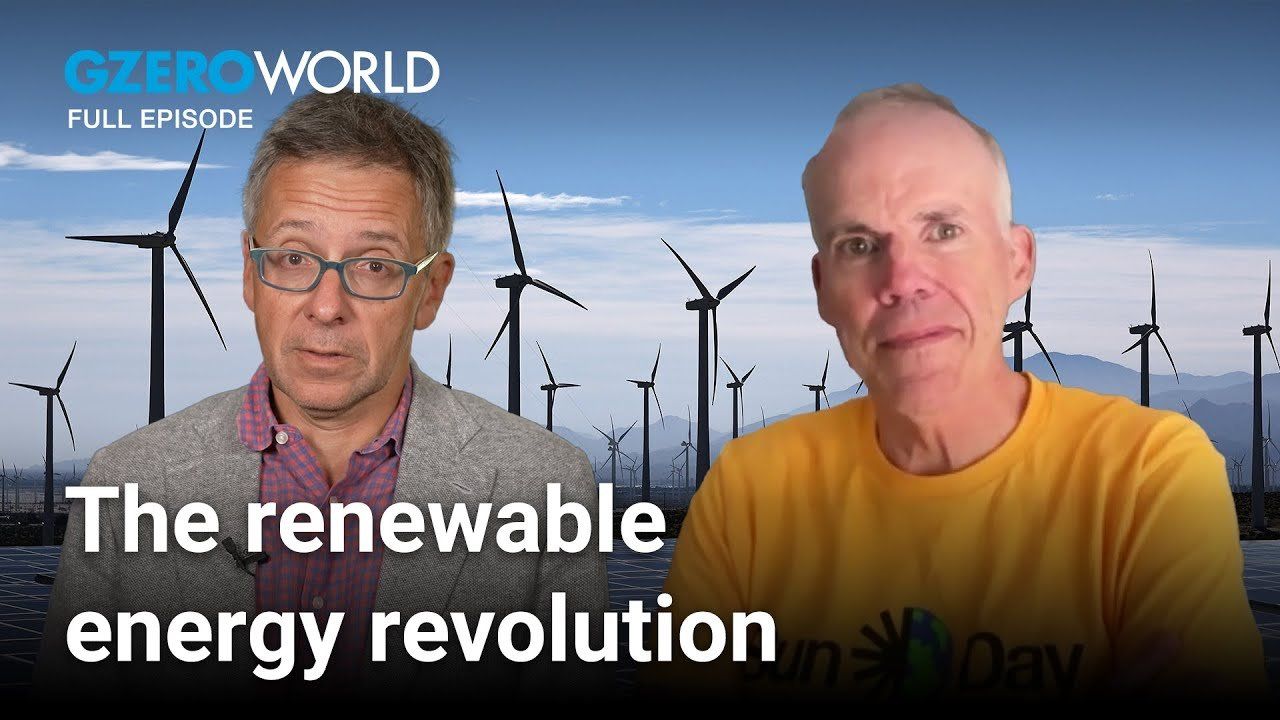
Over the past decade, renewable energy has exploded. Technology is improving. Costs are plummeting. This is now the fastest energy transition in human history. But just as the world goes all in on renewables, the US is doubling down on fossil fuels. Does it risk being left behind in the race to power the future? Environmentalist and author Bill McKibben joins Ian Bremmer on GZERO World to discuss the sudden and overwhelming surge of clean energy installation and generation over the past two years, China’s push to dominate the renewable market, and whether the Trump administration’s policies will put the US at a disadvantage.
The White House has cancelled funding solar and wind projects and is pushing other countries to buy more oil and gas, but McKibben says the scale and pace of the global energy transformation is just too powerful to ignore. McKibben’s new book, "Here Comes the Sun," argues that renewables aren’t just a climate fix—they’re a political and economic opportunity to reshape our future. He has no doubt that 30 years from now, we’ll run the planet on sun and wind simply because of economics, but also warns the world will face serious problems if it takes that long to get there
“Fossil fuels become harder to get over time. Renewable energy is the opposite,” McKibben says, “We now live on a planet where the cheapest way to make energy is to point a sheet of glass at the sun.”
GZERO World with Ian Bremmer, the award-winning weekly global affairs series, airs nationwide on US public television stations (check local listings).
New digital episodes of GZERO World are released every Monday on YouTube.Don't miss an episode: subscribe to GZERO's YouTube channel and turn on notifications (🔔). GZERO World with Ian Bremmer airs on US public television weekly - check local listings.
More For You
From shopping to services, consumer spending is showing strength across categories. Holiday shopping got an early start, and it’s not just higher earners filling their carts. Bank of America Institute sees continued spending growth recovery for lower- and middle-income households. See what’s driving the trends.
Most Popular
Members of the Green Bangla Garment Workers Federation hold a protest rally demanding the immediate reconstitution of the wage board for garment workers and the announcement of a minimum wage of Tk 30,000 in front of the National Press Club in Dhaka, Bangladesh, on October 9, 2026.
Mamunur Rashid/NurPhoto
Garment workers in Bangladesh have taken to the streets over the past week, demanding higher wages and forcing more than 600 factories to shut down nationwide.
As AI creates new opportunities, the people who understand a community best play an important role in determining how those opportunities take shape. Across the US, Microsoft is supporting AI literacy classes as part of a new program developed in collaboration with the Public Library Association, working through trusted local institutions to help people build practical AI skills. By pairing new technology with local knowledge, the initiative is helping communities explore how AI can support their needs and open new possibilities, while putting local leaders and organizations at the center of that work. Read the full story here.
People cast ballots inside the Cuyahoga County Board of Elections during early voting ahead of the midterm elections in Cleveland, Ohio, US, November 1, 2026.
REUTERS/Shannon Stapleton
We’re breaking down the three main issues that could help decide tomorrow’s elections: the cost of living, Israel, and AI.
© 2025 GZERO Media. All Rights Reserved | A Eurasia Group media company.