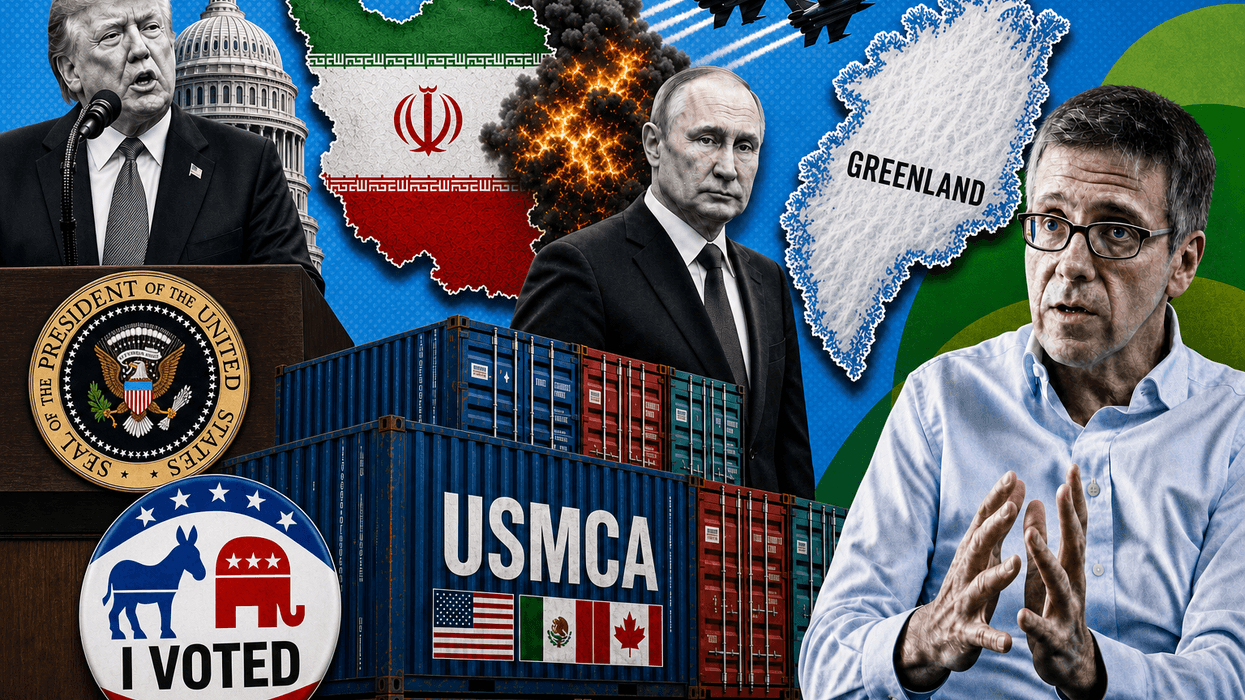
Last week, I wrote about the political revolution that President Donald Trump has launched in the United States and how it has made America a fundamentally unreliable player on the world stage.
This week, I’ll take on another question I detailed during my recent “State of the World” speech in Tokyo: How can/should the rest of the world respond to this new reality?
***
When dealing with a leader of the world’s most powerful country who ignores counsel and acts on impulse, most governments will have to avoid actions that make Trump-unfriendly headlines. (Looking at you, Doug Ford.)
This is the logic that led Canada to surrender on its plan to impose a digital services tax earlier this year, and why a TV ad aired by the province of Ontario using clips of Ronald Reagan to criticize Trump’s tariffs was hastily taken down when the US president got angry. It’s why Japan was wise to make unilateral concessions on Nippon Steel and automotive tariffs. To safeguard their national interests, if a fight can be avoided, other governments should avoid it – by whatever means necessary. Let the spotlight of Trump administration hostility fall on others.
Many US allies have moved to proactively limit damage from any future fight with the White House. The United Kingdom, the European Union, and a number of Southeast Asian countries have offered non-reciprocal trade deals. See also Saudi Arabia, the UAE, Argentina, and El Salvador.
From governments that have much more bargaining leverage – like China, Russia, and India – we’ve seen that standing up for yourself and a willingness to absorb punches can create needed space. That strategy won’t work for everyone. Japan, South Korea, Mexico, Brazil and many others need to stay on a positive track with Washington.
But all countries, whatever their current relationship with the White House, will need to build their own long-term capacity and reinforce their own stability – to become more economically dynamic and competitive for the future.
That’s China’s current approach. Beijing has also doubled down on its support for existing international institutions, in part because it calculates that an American step-back will create new opportunities to change them.
In short, when faced with an America that’s become a more unreliable player on the global stage, one that can’t be counted on to safeguard allies who have underinvested in their own security, the right strategy is defense first, hedge second.
Just as Russia’s invasion of Ukraine persuaded Europeans to quickly reduce their own dependence on Russian energy, European governments want to avoid finding themselves at the mercy of shifting policies from Washington.
America’s traditional allies will have to regain their competitive position. That means a focus on growth, robust industrial policy, streamlined regulatory and bureaucratic authorities, and expansive investment in new technologies. They must attract and invest in entrepreneurship, assert more diplomatic leadership internationally, and accept responsibilities in building multilateral architecture.
Models already exist. In particular, there is Mario Draghi’s crucial competitiveness report for the European Union. On a smaller scale, there is Mark Carney’s thoughtfully crafted “Canada Strong” plan. Most every global leader should be thinking in these terms.
It’s easier said than done. The near-term politics of making these transformations is daunting. The EU is not a single state, and Europe's need for consensus rulemaking and pushback from more euro-skeptic governments (which could arrive even in France and Germany in the next election cycle) pose an enormous challenge.
There will be opposition from the fast-rising Reform Party in Britain and some provincial governments in Canada.
But once all these economic, political, security, and diplomatic investments are made, America’s unreliability, in the years well beyond Trump, will matter less.
As for hedging…
- Europe has committed to spend much more money on its own defense and to address the security coordination problems NATO will suffer without clear US leadership.
- The Saudis have signed a nuclear deal with Pakistan to hedge against any future security neglect from Washington, and there’s already more defense and intelligence-sharing among Gulf States.
- India’s Narendra Modi is working hard to stabilize his country’s relations with China and to temper their rivalry.
- The EU has finalized three free trade agreements — with South American bloc Mercosur, Mexico and Indonesia — and is working toward an agreement with India.
- Mercosur sealed a free trade deal with the European Free Trade Area, four European countries outside the EU. It has restarted negotiations with Canada.
In short, the defense and hedging strategies are well underway and likely to succeed to varying degrees in various places over time – though we should be more skeptical about even a medium-term turnaround in competitiveness.
We’re now living in a post-American order, with no one willing or able to fill the vacuum. China has its own problems and isn’t about to bite off more than it can chew. Which means a deeper G-Zero world, leading to more conflict, inflicting more damage, and lasting longer.
This trajectory isn’t sustainable. During the Cold War, it took the Cuban Missile Crisis to convince leaders that armed confrontation would be catastrophic – and that new communication channels and agreements were essential. We don't know what form “the crisis we need” to build a new order will take this time. But it's coming.
Until then? The old rules don’t apply anymore, and new rules haven’t been written yet. We must brace for sustained turbulence.