Trending Now
We have updated our Privacy Policy and Terms of Use for Eurasia Group and its affiliates, including GZERO Media, to clarify the types of data we collect, how we collect it, how we use data and with whom we share data. By using our website you consent to our Terms and Conditions and Privacy Policy, including the transfer of your personal data to the United States from your country of residence, and our use of cookies described in our Cookie Policy.
{{ subpage.title }}
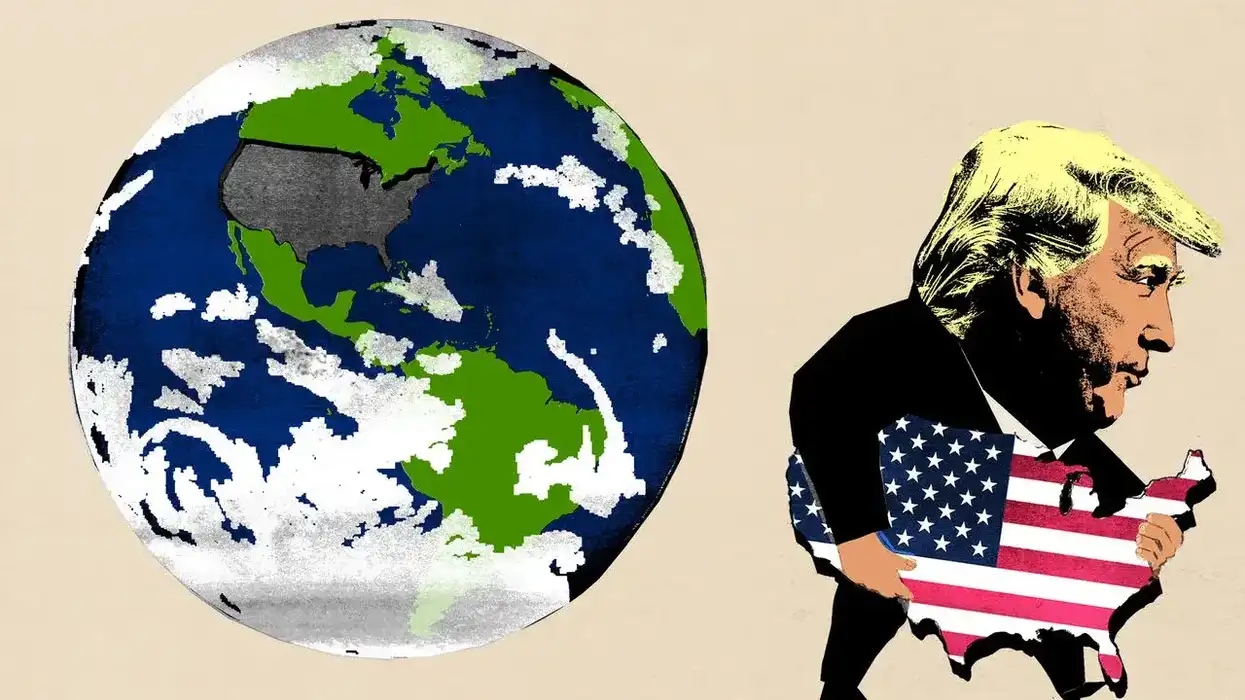
The world’s response to America’s Revolution
Last week, I wrote about the political revolution that President Donald Trump has launched in the United States and how it has made America a fundamentally unreliable player on the world stage.
This week, I’ll take on another question I detailed during my recent “State of the World” speech in Tokyo: How can/should the rest of the world respond to this new reality?
***
When dealing with a leader of the world’s most powerful country who ignores counsel and acts on impulse, most governments will have to avoid actions that make Trump-unfriendly headlines. (Looking at you, Doug Ford.)
This is the logic that led Canada to surrender on its plan to impose a digital services tax earlier this year, and why a TV ad aired by the province of Ontario using clips of Ronald Reagan to criticize Trump’s tariffs was hastily taken down when the US president got angry. It’s why Japan was wise to make unilateral concessions on Nippon Steel and automotive tariffs. To safeguard their national interests, if a fight can be avoided, other governments should avoid it – by whatever means necessary. Let the spotlight of Trump administration hostility fall on others.
Many US allies have moved to proactively limit damage from any future fight with the White House. The United Kingdom, the European Union, and a number of Southeast Asian countries have offered non-reciprocal trade deals. See also Saudi Arabia, the UAE, Argentina, and El Salvador.
From governments that have much more bargaining leverage – like China, Russia, and India – we’ve seen that standing up for yourself and a willingness to absorb punches can create needed space. That strategy won’t work for everyone. Japan, South Korea, Mexico, Brazil and many others need to stay on a positive track with Washington.
But all countries, whatever their current relationship with the White House, will need to build their own long-term capacity and reinforce their own stability – to become more economically dynamic and competitive for the future.
That’s China’s current approach. Beijing has also doubled down on its support for existing international institutions, in part because it calculates that an American step-back will create new opportunities to change them.
In short, when faced with an America that’s become a more unreliable player on the global stage, one that can’t be counted on to safeguard allies who have underinvested in their own security, the right strategy is defense first, hedge second.
Just as Russia’s invasion of Ukraine persuaded Europeans to quickly reduce their own dependence on Russian energy, European governments want to avoid finding themselves at the mercy of shifting policies from Washington.
America’s traditional allies will have to regain their competitive position. That means a focus on growth, robust industrial policy, streamlined regulatory and bureaucratic authorities, and expansive investment in new technologies. They must attract and invest in entrepreneurship, assert more diplomatic leadership internationally, and accept responsibilities in building multilateral architecture.
Models already exist. In particular, there is Mario Draghi’s crucial competitiveness report for the European Union. On a smaller scale, there is Mark Carney’s thoughtfully crafted “Canada Strong” plan. Most every global leader should be thinking in these terms.
It’s easier said than done. The near-term politics of making these transformations is daunting. The EU is not a single state, and Europe's need for consensus rulemaking and pushback from more euro-skeptic governments (which could arrive even in France and Germany in the next election cycle) pose an enormous challenge.
There will be opposition from the fast-rising Reform Party in Britain and some provincial governments in Canada.
But once all these economic, political, security, and diplomatic investments are made, America’s unreliability, in the years well beyond Trump, will matter less.
As for hedging…
- Europe has committed to spend much more money on its own defense and to address the security coordination problems NATO will suffer without clear US leadership.
- The Saudis have signed a nuclear deal with Pakistan to hedge against any future security neglect from Washington, and there’s already more defense and intelligence-sharing among Gulf States.
- India’s Narendra Modi is working hard to stabilize his country’s relations with China and to temper their rivalry.
- The EU has finalized three free trade agreements — with South American bloc Mercosur, Mexico and Indonesia — and is working toward an agreement with India.
- Mercosur sealed a free trade deal with the European Free Trade Area, four European countries outside the EU. It has restarted negotiations with Canada.
In short, the defense and hedging strategies are well underway and likely to succeed to varying degrees in various places over time – though we should be more skeptical about even a medium-term turnaround in competitiveness.
We’re now living in a post-American order, with no one willing or able to fill the vacuum. China has its own problems and isn’t about to bite off more than it can chew. Which means a deeper G-Zero world, leading to more conflict, inflicting more damage, and lasting longer.
This trajectory isn’t sustainable. During the Cold War, it took the Cuban Missile Crisis to convince leaders that armed confrontation would be catastrophic – and that new communication channels and agreements were essential. We don't know what form “the crisis we need” to build a new order will take this time. But it's coming.
Until then? The old rules don’t apply anymore, and new rules haven’t been written yet. We must brace for sustained turbulence.
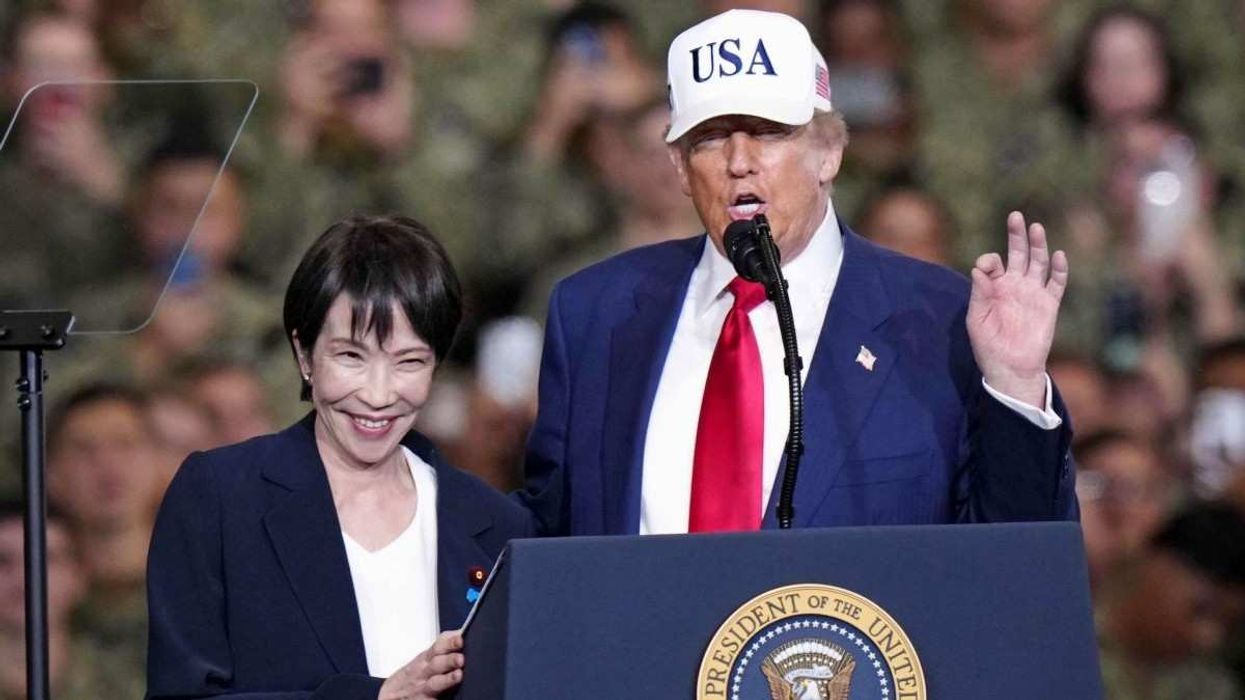
U.S. President Donald Trump, alongside Japanese Prime Minister Sanae Takaichi, speaks to the country's military personnel aboard the aircraft carrier George Washington at the U.S. Navy base in Yokosuka, Kanagawa Prefecture, eastern Japan, on Oct. 28, 2025.
What We’re Watching: US and Japan sign rare earths deal, Bill Gates softens on climate, world’s oldest leader declares victory
Trump signs deals in Tokyo
US President Donald Trump and Japan’s new Prime Minister Sanae Takaichi signed a critical minerals deal and Tokyo pledged $550 billion of fresh investment in the US, as well as purchases of American pickups. Trump heaped praise on Takaichi, Japan’s first female leader, who is a conservative China hawk and a protegé of slain former PM Shinzo Abe, a Trump pal. Takaichi called for Trump to win the Nobel prize. The dealmaking bonhomie smoothed rocky relations between the US and its longstanding ally Japan. Trump’s next Asia stop is in South Korea tomorrow, ahead of a crucial Thursday summit with Chinese President Xi Jinping. A mooted meeting with North Korean leader Kim Jong Un appears not to be in the cards.
Bill Gates changes his tune on climate change
A week before COP30 climate summit in Brazil, Bill Gates has cautioned against a “doomsday outlook” on climate change. Record scrrrratch – what? The global philanthropist, who has poured billions into the effort to slow global warming, now says we should focus more energy on tackling disease and poverty in the developing world instead. Gates’s focus has shifted in part because of the Trump administration’s moves to slash foreign aid budgets – he wants to fill the void left by defunct USAID programs. Earlier this year his flagship clean energy venture fund shuttered its climate policy group.
World’s oldest leader wins another term in Cameroon
Who’d have guessed it? Cameroon’s 92-year-old President Paul Biya was elected to an eighth seven-year term in office, after he was finally declared the victor of the West African country’s October 12th election on Monday. Biya officially won 53.7% of the vote, against just 35.2% for opposition leader Issa Tchiroma Bakary – who had declared victory last week. Biya’s victory claim has prompted violent unrest in the oil-rich nation, including in Bakary’s hometown of Garoua. The protests had been expected to continue Tuesday, but a combination of bad weather and a fierce crackdown appear to have kept demonstrators at bay for now.
Waiting for foot traffic to return in Tokyo
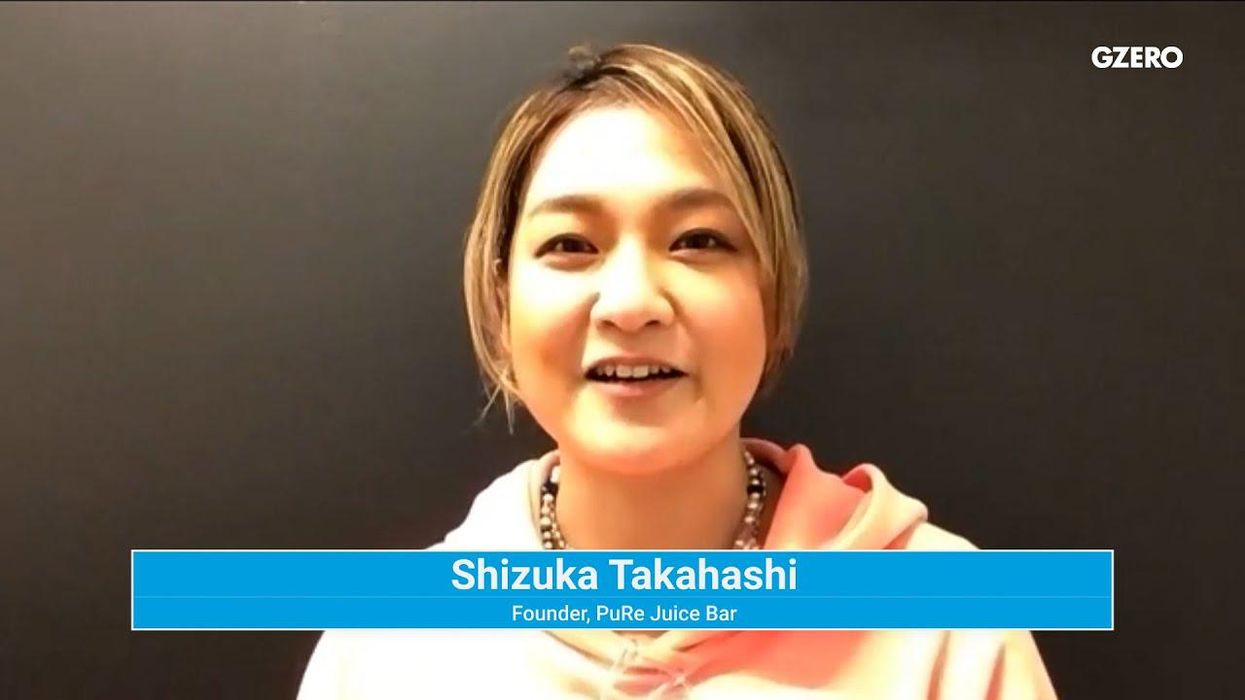
Shizuka Takahashi wants Tokyo’s foot traffic to return. Having face-to-face interactions with her customers means everything to her — in fact, the desire to interact with people is why she opened her Tokyo shop, PuRe Juice Bar. She got the idea while living in New York City, where people know and love smoothies. In Tokyo, however, the juice culture is less common. Takahashi opened in 2019 only to be hit by reduced sales as a result of COVID-19. By learning to market herself throughout the pandemic, and with government aid, she’s been able to keep her company afloat. Now she’s looking forward to helping her Japanese customers get hooked on healthy juice drinks.
Watch more from our conversation on how small businesses can thrive after COVID, which was recorded live on March 22, 2022.
Dick Pound: Olympics successful despite COVID tensions
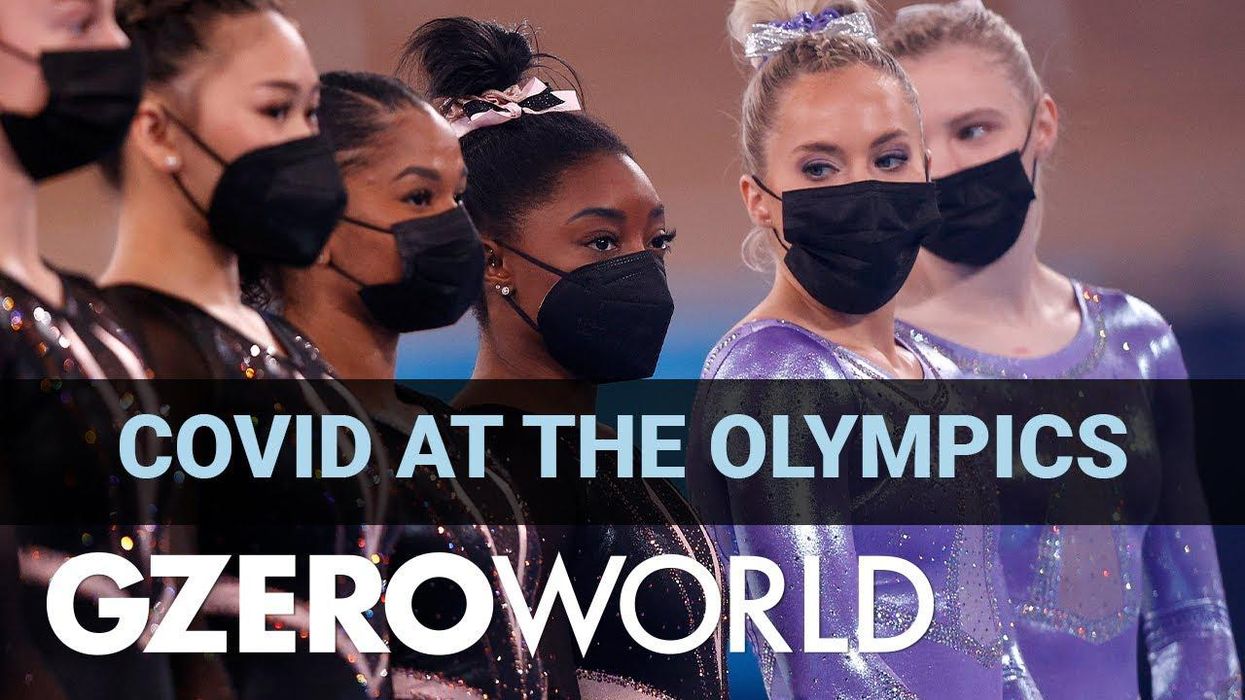
Before the Olympics, most Japanese people were against the Games due to fear of COVID. As the tournament got on, the International Olympic Committee's Dick Pound says that most resistance vanished, but some resentment still lingers among Tokyo's residents. "There's that tension, that still exists, but it's not interfering with the sport," Pound tells Ian Bremmer on GZERO World.
Watch this episode on US public television - check local listings.
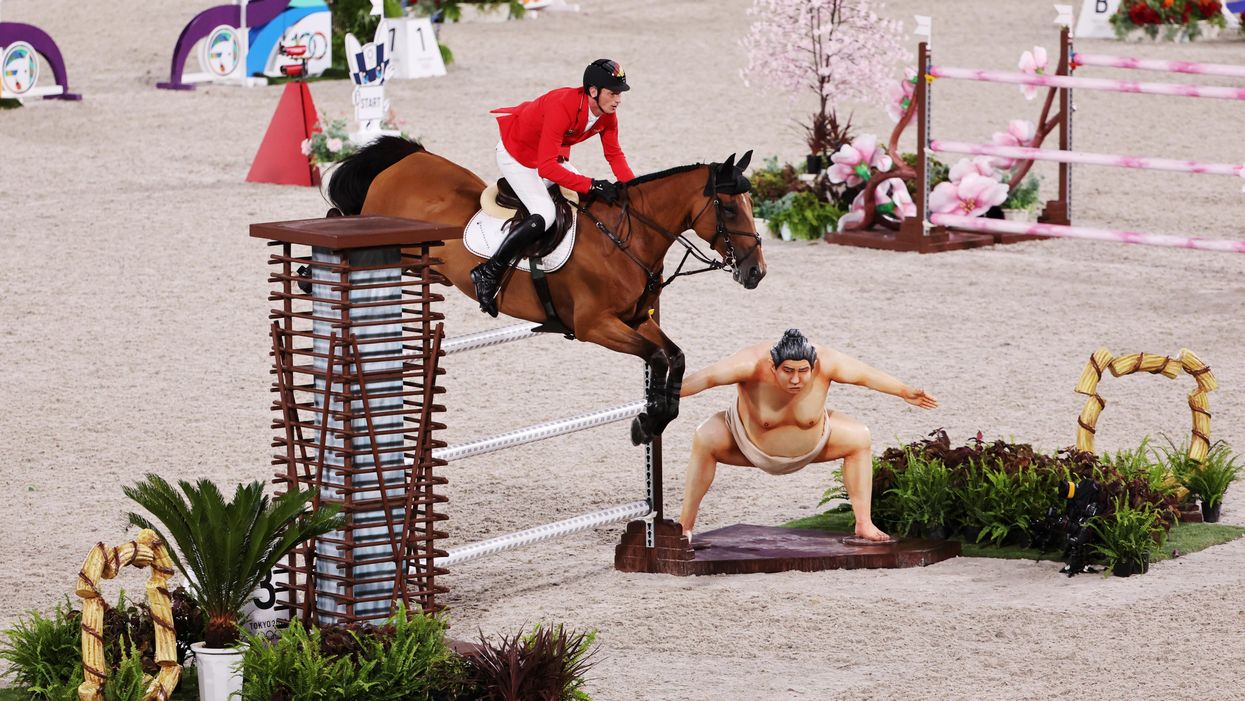
Olympics corner: Sumos spook the horses
Equestrian jumpers, and their horses, are disciplined species. They don't appreciate surprises very much.
But many participants were caught off guard during this week's individual jumping qualifiers in Tokyo by a very daunting statue of a sumo wrestler on the hurdle course (which is dotted with statues paying homage to traditional Japanese culture, like geisha kimonos, cherry blossoms, and taiko drums).
Jumpers had to clear 14 hurdles, and the sumo, stationed at hurdle 10, caused quite a stir. "Hunched over and seemingly ready to attack, the wrestler is facing away from approaching riders, meaning that when they complete a sharp turn to take on the jump, the first thing horse and human see is the wedgie created by the wrestler's mawashi," the Washington Post wrote.
The statue spooked several horses, and jumpers incurred penalty points as a result. Fun fact: American rider Jessica Springsteen, daughter of a certain famed musician called Bruce, was knocked out of the event after her horse knocked down a rail after confronting the sumo statue.
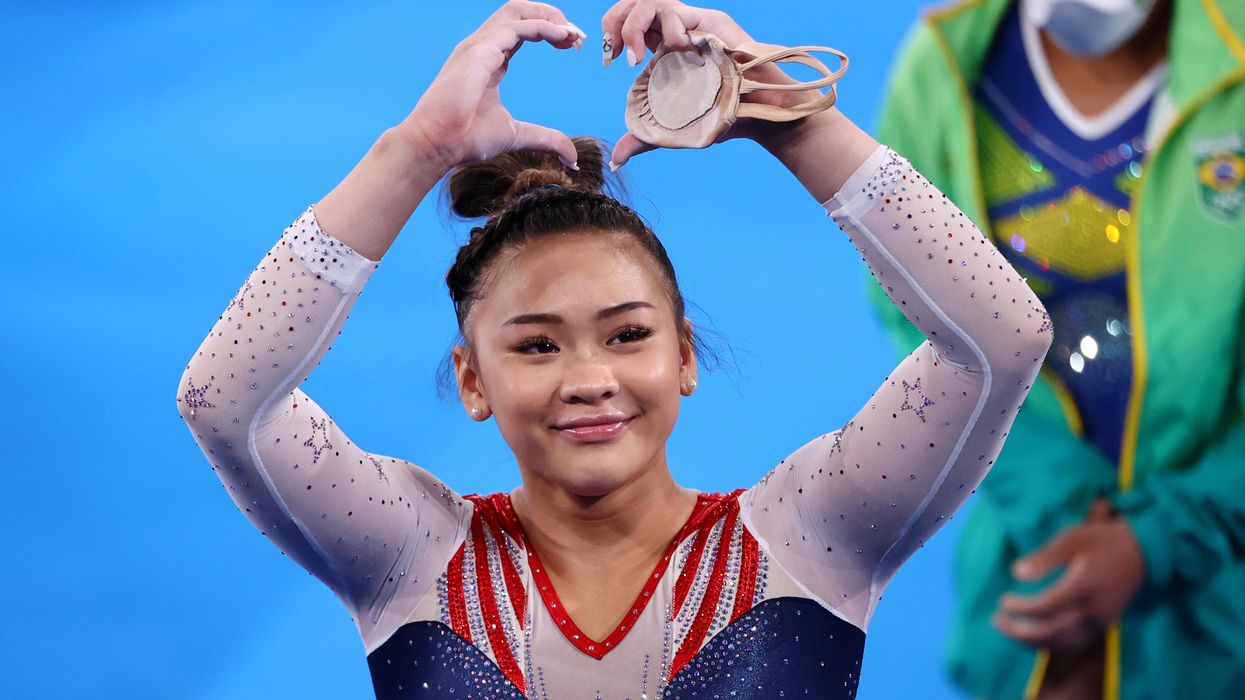
Olympics corner: Sunisa "Suni" Lee
American gymnast Sunisa "Suni" Lee, 18, stunned spectators around the world with her breathtaking performance in Tokyo Thursday that earned her the gold.
Here are some interesting facts about Suni Lee, the gymnast queen:
- Suni's parents emigrated to the US from Laos, and are both Hmong, an ethnic group spread out throughout parts of Southeast Asia. Lee's triumph is the biggest accomplishment for an American Hmong.
- The Lees were a family of modest means after moving to Minnesota. Suni's father, John, built a four-foot-long balancing beam out of a spare mattress for Suni to practice on as a kid, which still stands in their backyard.
- In 2019, just before Suni was set to participate in the US National Gymnastics Championships, John got into a terrible accident while helping a friend trim a tree, which left him paralyzed from the waist down.
US global reputation a year after George Floyd's murder; EU sanctions against Belarus; Olympics outlook
Ian Bremmer shares his perspective on global politics on World In 60 Seconds (aka Around the World in 180 Seconds) with help from Moose the dog:
On the anniversary of George Floyd's murder, have race relations in the United States tarnished its reputation globally?
Sure it doesn't help. There's no question in the United States is one of the most racially divided and violent countries among advanced industrial democracies. And to the extent that the United States attempts to talk about human rights globally, it has a harder time doing that than other G7 countries would. And the Russians historically, and increasingly the Chinese, are trying to propagandize pretty hard by pointing out American hypocrisy. So I think it matters, but I would still argue that what the United States does internationally probably matters a lot more in terms of the way the US is perceived by those countries. So, no question it's important. And the legacy one year in, so far in the United States in terms of improving race relations, the state of that trajectory does not look great right now.
The EU levied sanctions against Belarus. Now what?
Well, the EU responded collectively and quickly, that we can definitely say, in terms of preventing Belarus' flag carrier from traveling to points in Europe, as well as stopping European airlines from flying through Belarus airspace, that's a good first move. They've said there'll be additional sanctions, let's see what they are. Let's see if they're significant, if they're against Belarusian oil or potash, where they make their real money. Let's see if they really hurt the economy, which would also have knock on effects for Russia, which exports a lot of energy into Belarus, they'd be unhappy about that. So we'll see. For the first 24 hours, I give the EU, the United States, the UK, all pretty strong marks for the way they've responded. But this is an unprecedented act of state criminality on the part of a very illegitimate Lukashenko, who should not be president, was not legitimately elected, and he's not going anywhere anytime soon. I want to see what next sanctions come from the Europeans. I also want to see the Putin meeting in Sochi with Lukashenko next week, very important.
Finally, with the US adding Japan to the, "do not travel list," what's the outlook on the Olympics?
Not great. Over 80% Of Japanese now say that they actually don't want the Olympics to go forward, that's a pretty staggering number. The Japanese prime minister says, "It's not up to me, it's the IOC. And the IOC has the decision. They say it has to go forward." Look, the prime minister has sovereignty, if he wants to cancel it, he can cancel it, though clearly there will be costs for the Japanese government, major economic costs, major political costs for the prime minister either way. It's really staggering to see just how much the Japanese have lagged every other advanced industrial democracy in terms of a vaccine rollout. And, and I still think there's a good chance they do end up canceling this, but it's going right down to the wire. And my heart goes out to everybody involved, the Japanese people, the athletes that have been prepping; this is not the kind of Olympics that you really want to be hosting.
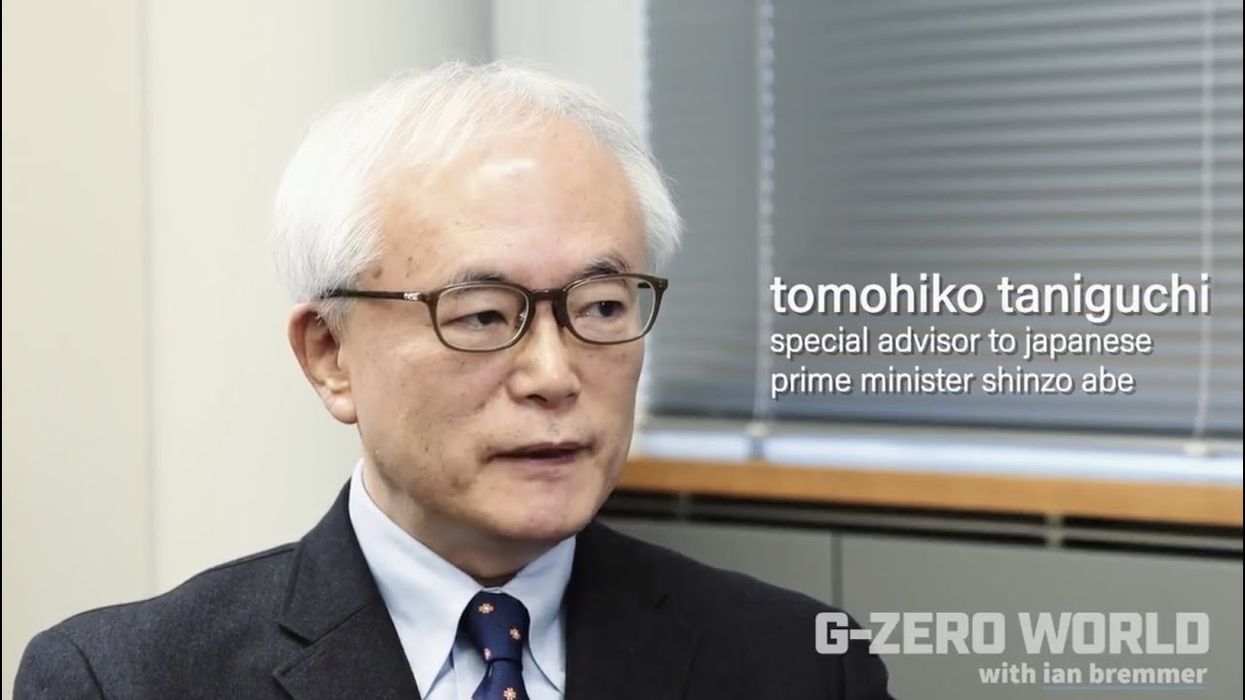
The Tokyo Show: Tomohiko Taniguchi
Ian Bremmer interviews Tomohiko Taniguchi, one of Prime Minister Shinzō Abe's most trusted aides, on GZERO World.