Twenty-five years ago, Destiny’s Child, NSYNC, and Britney Spears were atop the US charts, “Google” was a little known search website with a weird name, and two things happened that would shape the world we live in today, where populism defines politics and great power competition is back.
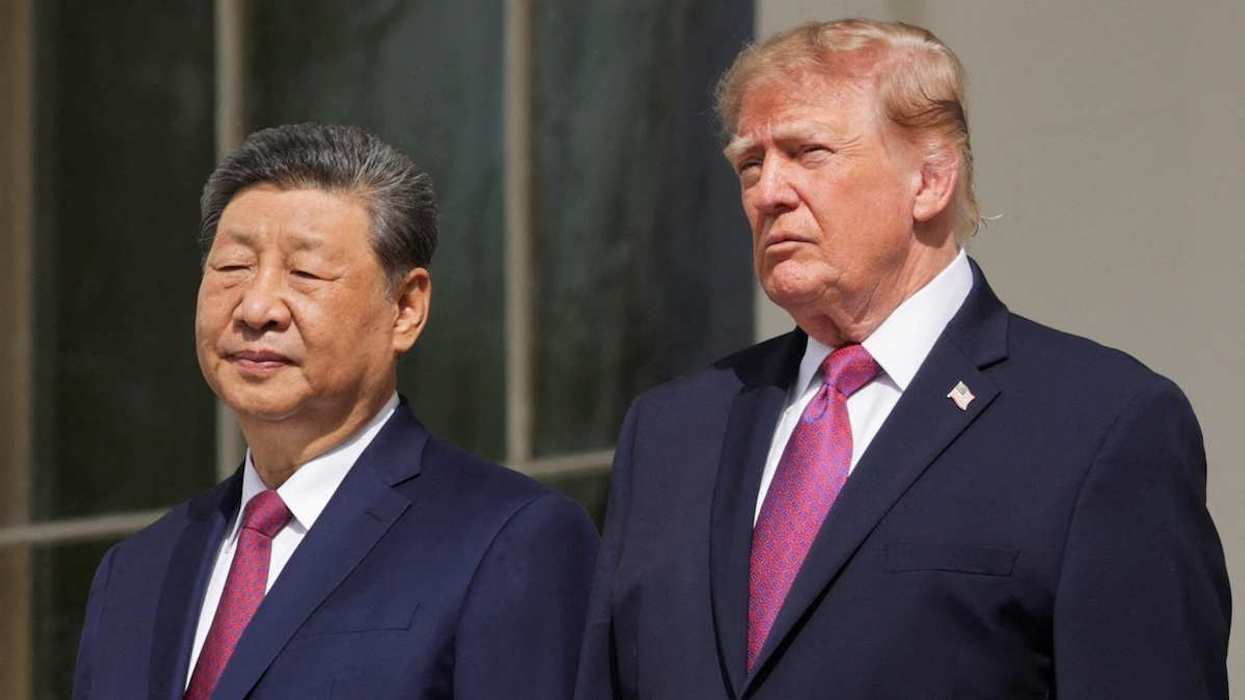
First, Congress passed a bill that paved the way for China to join the World Trade Organization and enjoy preferential trade relations with the US.
By the late 1990s, China had already ditched the command economy of the Mao era and embraced capitalism, enabling hundreds of millions to move from the countryside to work in the country’s booming, low-cost factories.
But China’s leaders hadn’t liberalized their political system. US President Bill Clinton thought he could change that: bringing China into the World Trade Organization, he believed, would eventually make China not only more capitalist, but inevitably more democratic too.
“China is not simply agreeing to import more of our products,” he told skeptics of the move, “it is agreeing to import one of democracy's most cherished values: economic freedom.”
Clinton’s belief was common among Western elites at the time. Capitalism and democracy were intertwined. At the “End of history,” the progress of both was inevitable. China, they insisted, would become more like us.
China did, it’s true, get vastly richer. Deeper integration with the global economy helped the country to lift more than 500 million people out of poverty after 2000, the largest single increase of human welfare in history.
Since joining the WTO, China’s share of global GDP has more than doubled, to 20%. It is now home to some of the world’s leading technology companies. It boasts the largest navy on the planet. It has spent hundreds of billions of dollars on infrastructure projects across the developing world.
In short, it became a formidable challenger, even competitor to the United States in global affairs. What it has not done, however, is “become more like us” politically. China’s leaders used its economic power to strengthen their control over the country, not to liberalize it.
Meanwhile, China’s economic rise also contributed, in ways that economists still debate, to the erosion of parts of the American middle class, and the blighting of once–thriving industrial heartlands where the populist message of a certain New York real estate tycoon has been most popular.
Second, remember “butterfly ballots” and “hanging chads?” On December 12, more than a month after the voters had gone to the polls in the 2000 presidential election, the US Supreme Court stopped the hand-recount of ballots in Florida, giving the presidency to George W. Bush.
A full recount would almost certainly have handed Democratic nominee Al Gore the White House. But SCOTUS thought the process was too painstaking and slow – election officials were peering through magnifying glasses at the holes punched in the ballots, making case-by-case judgment calls about voter intent.
Gore conceded, Bush took office, and the country moved, uneasily, onward from what was, in effect, a judicial coup: the Supreme Court had defied the popular will and delivered the election to the mathematical loser.
What was the effect? At the time, Justice John Paul Stevens, in dissent, wrote that the biggest loser wasn’t Gore, but “the Nation’s confidence in the judge as an impartial guardian of the rule of law.” The numbers don’t lie: today only 20% of Americans see the Supreme Court as “impartial.”
The ruling also, of course, made W. Bush president. While it’s hard to know how Al Gore would have responded to, say, 9/11, Bush made fateful choices.
Surrounded by advisers itching to use America’s then-unchallenged power to remake the Middle East, he launched the disastrous Forever Wars in Afghanistan and Iraq. He also presided over the Great Financial Crisis, which began with banks that had piled into risky assets encouraged by the Bush White House’s deregulatory push, and ended with the perception that the US government had bailed out Wall Street while letting main street hang.
Resentment of America’s military overreach, and anger at the one-percent were the seedbed for the populist backlash that began with Occupy Wall Street and the Tea Party movement. They reached their fullest and most spectacular political expression several years later in the election of Donald Trump as president .
What do you think? Were Bush v. Gore and China’s entry into the WTO events that shaped the world as you see it? Throw on Independent Women Part 1, think it over, and let us know here.