What We're Watching
Dockworker strike brings chaos to dozens of US ports
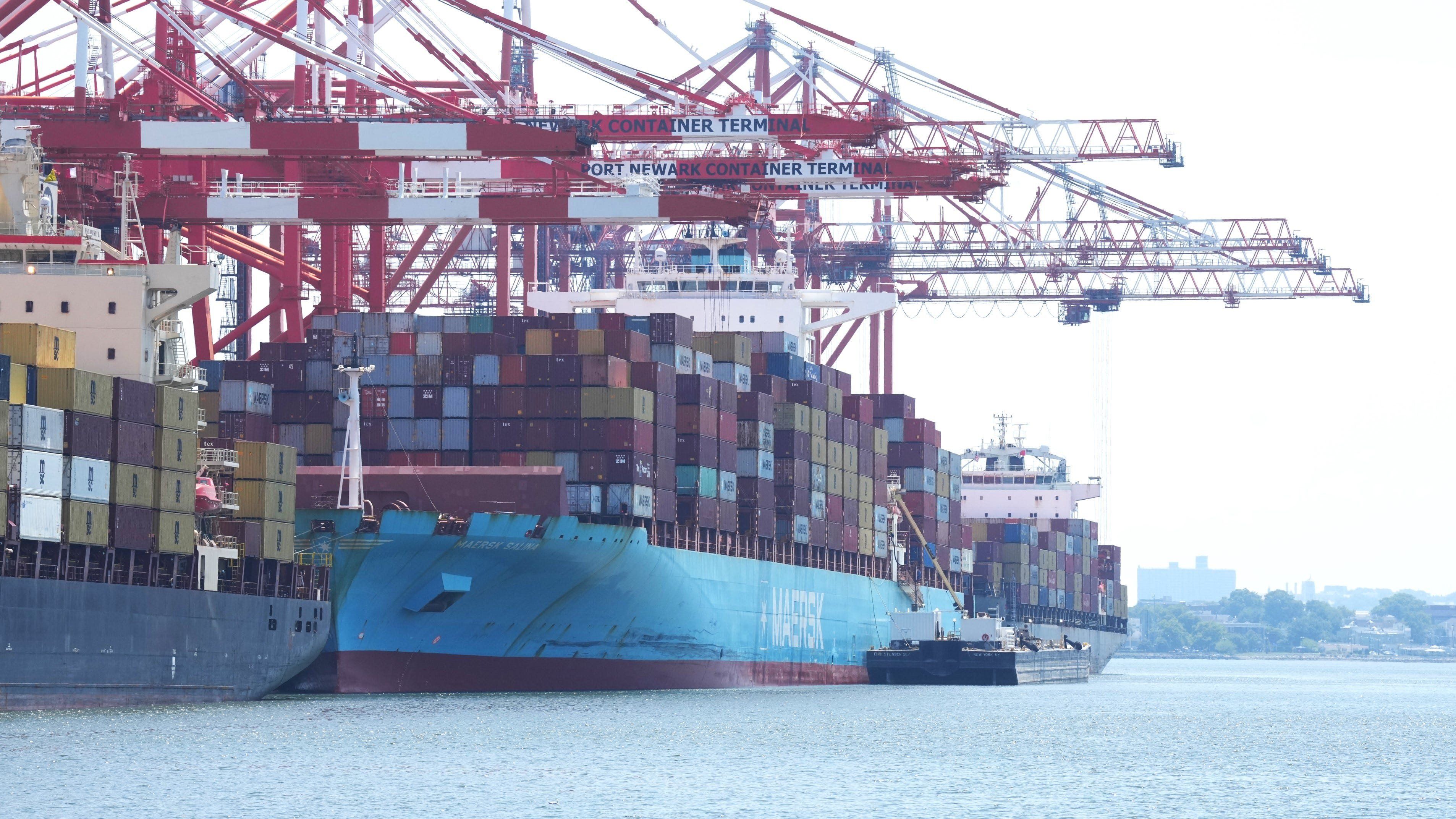
A strike by the International Longshoremen's Association, the union that represents 85,000 dockworkers, could shut down key port facilities in Newark and Elizabeth.
Traffic at East and Gulf Coast ports is set to plummet thanks to an overnight strike by the International Longshoremen’s Association. The union's 45,000 port workers launched a massive strike at midnight, halting operations at dozens of ports stretching from Maine to Texas.
The port workers have been demanding better pay and benefits and guarantees that automated machinery won’t replace their jobs. The ILA warned that if no agreement were reached with the US Maritime Alliance, the group representing employers, its members would walk off the job at 12:01 a.m. on Tuesday.
The strike will impact nearly half of all US sea-borne imports and as much as 68% of containerized exports — everything from seafood, electronics, and pharmaceuticals, to cars and parts, and even some fruits.
Joe Biden could use the Taft-Hartley Act to intervene in the labor dispute. “Invoking the act might prove enticing to protect national and economic security,” says Jeremy Slater, a trade and supply chains expert at Eurasia Group. But Biden is unlikely to do so in this case, Slater says, “because it essentially undercuts labor rights by forcing negotiations and prohibiting collective striking – not great optics for a pro-labor administration.”
“The knock-on effects from a disruption would compound with every day offline, with a two-week strike necessitating recovery efforts into 2025 by some estimates,” Slater warns.
China has defied Western sanctions for years and buys as much as 90% of Iran’s oil exports.
Think you know what's going on around the world? Here's your chance to prove it.
President Bola Tinubu faces strong headwinds in his bid for a second term.
Critics have said that Zelensky – now in his seventh year in office – has been in power for too long.