By Zohran Mamdani’s own telling, his campaign for mayor began roughly a year ago, when he stood on a street corner in the Bronx, the New York City borough that is home to some of the country’s poorest and most diverse congressional districts – typically the backbone of the Democratic coalition – asking voters why they voted for US President Donald Trump.
Mamdani, a democratic socialist, interviewed them for his social media account. He listened – these voters were upset about rising costs. And so he focused his own campaign on affordability, pledging to make New York City, the capital of global finance, a more affordable place for the working poor and middle classes. It worked. Yesterday, the residents of the United States’ largest city elected him to be their mayor.
When he takes office on Jan. 1, the real work will begin – and there is much of it.
Mamdani has promised a lot. Among his campaign pledges are: free universal childcare, free bus services, and city-run grocery stores. He also wants to deploy mental health workers to work alongside police officers. He says he will freeze the rent for rent-stabilized homes as part of a bid to lower housing costs.
So how is Mamdani going to pay for this? He wants to raise taxes. Specifically, he wants to increase state corporate tax from 7.25% to 11.5%, and introduce a flat 2% tax on the 34,000 people in New York City who earn $1 million or more annually. He also wants to boost tax collection and reform procurement procedures. These policies, he says, will raise $10 billion, enough to pay for the $6-billion cost of universal childcare and the $800-million price tag of free bus rides.
To do that he will need to look beyond the city itself. Firstly, increasing the state corporate tax will require approval from the New York State Legislature and Gov. Kathy Hochul – this will be especially challenging with Hochul up for reelection next year. Secondly, the City Council as well as the State Legislature will have to approve the additional tax for those earning over a million. Finally, these measures will face major opposition from the city’s financial establishment, most of whom supported Mamdani’s main opponent, former New York Gov. Andrew Cuomo.
Then there’s another major issue in New York City: public safety. Mamdani’s rivals – including Cuomo – relentlessly tried to paint him as being soft-on-crime, highlighting his previous advocacy for defunding the police. Mamdani has also raised fears among some of the city’s million-plus Jewish residents, in part over his refusal to denounce the use of the term “Globalize the Intifada.” To alleviate some of these fears, Mamdani said he will keep Jessica Tisch, a widely-respected technocrat, as police commissioner, who has presided over a significant drop in crime since being appointed by outgoing Mayor Eric Adams last year.
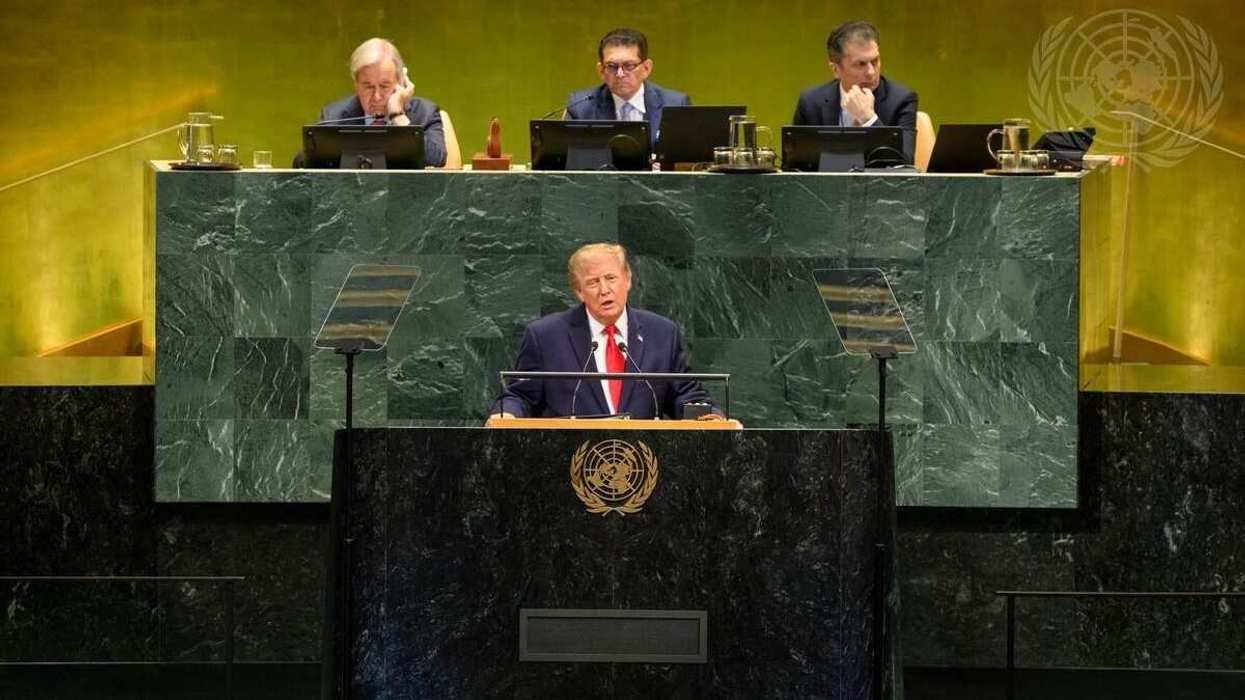
The Trump challenge. Mamdani will immediately be in conflict with the president over a range of issues: immigration enforcement, infrastructure financing, and public safety. The president has several powerful tools at his disposal – he can cut infrastructure funding to the city, as he did for a proposed tunnel across the Hudson River, and could send in the National Guard to quell protests and arrest undocumented migrants.
Trump and Mamdani, both populist New Yorkers from radically opposite points of the political and generational spectrum, seem to openly want this confrontation.
“Donald Trump, since I know you’re watching, I have four words for you,” Mamdani said during his victory speech last night. “Turn the volume up.”
Trump responded on social media last night: “…AND SO IT BEGINS!”