Europe takes control of Ukraine’s future
December 15, 2025
Global Stage LIVE from United Nations WATCH REPLAY
Ian Bremmer, political scientist and president of Eurasia Group and GZERO Media, shares insights on global political events.
Presented by

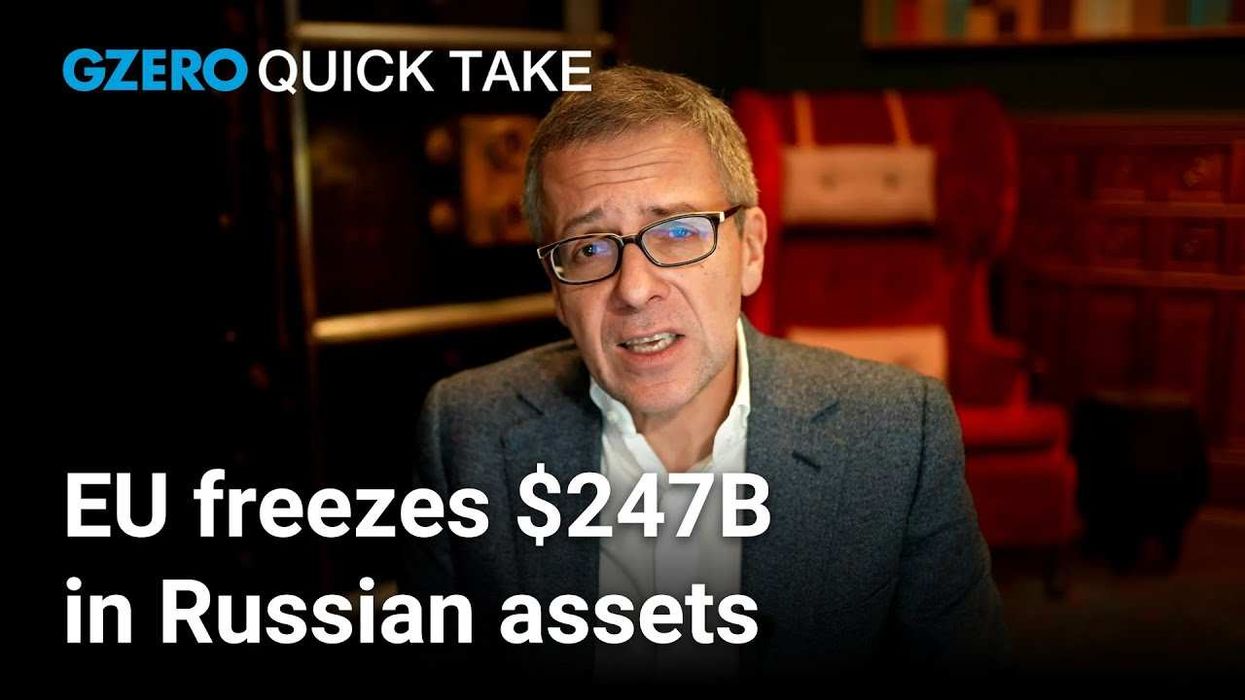
Ian Bremmer explains a major shift in the Ukraine war: Europe, not the United States, is now driving the strategy.
The EU has agreed to indefinitely freeze $247 billion in Russian assets, unlocking Belgian support for a nearly $200 billion loan to Ukraine. This guarantees Kyiv enough funding to continue fighting for years, regardless of what Washington does.
It also means Europe and Ukraine, not the US, will have more say over the war’s future. For the Trump administration, avoiding responsibility outweighs shaping the outcome.
But Europe faces vulnerabilities: slow growth, fragmented politics, weak defense capacity, and US pressure backing Euroskeptic movements. Whether the EU strengthens into a true geopolitical “pole,” or fragments, will shape the post–G-zero world.


Keep up with what’s going on around the world - and why it matters.