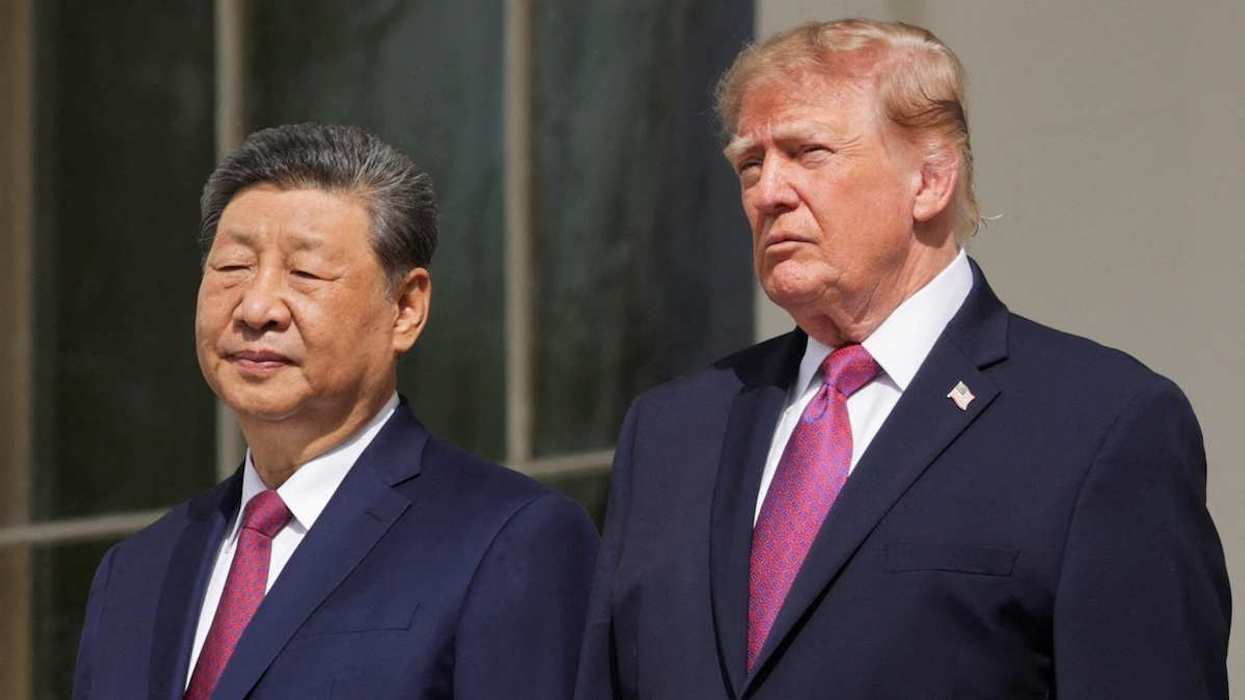
For months on the campaign trail and in a crescendo last week at a press conference at Mar-a-Lago, Trump has made promises to American voters. On foreign policy, this list includes everything from ending the war in Ukraine within six months of taking office and imposing “all hell” if the Israeli hostages are not released before Inauguration Day (with a ceasefire deal coming into view) to his more recent discussions about taking control of the Panama Canal.
In anticipation of Trump’s return, the world has been packing their go-bags and considering how best to prepare. The Trump administration the world has been preparing for, however, may not be the one it gets. It is becoming increasingly clear how distinctly different Trump’s current worldview is than what came before him – including what he envisioned during his first term.
Differing tactics
Unlike the administration of Joe Biden, which leaned heavily on consensus building, non-binding partnerships like the Quadrilateral Security Dialogue and negotiations ad infinitum, Trump’s tactics have always been different. The businessman-president trades in grievances. He looks for the points of disparity and deploys (largely economic) tools like tariffs and sanctions to bring his “adversaries” closer to his preferred position – and to advance what he sees as America’s best interests. During his first term, for instance, Trump walked back a threat to impose tariffs on Mexico’s goods only after its government agreed to a deal stemming the flow of migrants along the southwestern border.
From his post-election personnel decisions, policy proposals, and posts on Truth Social, it seems clear Trump will continue to deploy these tactics in his second term. But what is also emerging is a Trump foreign policy agenda that’s radically different from Trump 1.0. Then “America First” focused on immigration, bringing jobs and manufacturing home, with a significant focus on reorienting global supply chains. With the exception of the January 2020 assassination of Qasem Soleimani, Trump largely avoided telegraphed security operations.
An aspirational agenda
Now, Trump has seemingly set his sights on a much more ambitious set of priorities. In 2025, Trump is speaking of the dawn of “the golden age of America.” Making America Great Again looks less like an isolationist story and more like a no-stone-uncovered one. As Trump scans the horizon looking for the angles, he has put his neighborhood, Europe, and the world on notice that almost nowhere will go unconsidered.
To the North, Trump’s December announcement that he would impose 25% tariffs on Canada set off a chain reaction that ultimately led to an already-fragile Prime Minister Justin Trudeau’s resignation. Trump’s repeated barbs about Canada becoming the 51st US state and musings about removing the “artificial line” separating the two countries have continued to destabilize the political landscape. Canadian officials are reportedly drawing up their own list of American products to tariff should Trump make a move. To the South, Mexico has also been forced to respond to Trump's tariff and border vows. After he suggested renaming the Gulf of Mexico to the Gulf of America, President Claudia Sheinbaum went tit-for-tat with Trump proposing to call the US, America Mexicana.
Across the Atlantic Ocean, headline-grabbing claims about acquiring Greenland initially generated chuckles in Europe. His threat to tariff Denmark at a very high level to open the door for negotiations over Greenland is Trump 1.0. His articulated vision of needing Greenland for national security purposes (and ultimately access to the Arctic’s resources) while refusing to rule out the use of military coercion are hallmarks of the emerging new Trump foreign policy.
In Trump 2.0, anywhere is up for grabs (a real estate deal), and economic tools of national security will be backed up by more traditional force posturing. The lesson of the moment appears to be that the best countries can hope for is to stay out of Trump’s crosshairs. America’s EU allies, for their part, have responded by taking Trump’s ideas increasingly seriously. German Chancellor Olaf Scholz and France’s Foreign Minister Jean-Noël Barrot issued reminders of the inviolability of European borders, but European capitals are rattled.
In his news conference last week, Trump speculated that “since we won the election the whole perception of the whole world is different.” It is not just the case that the US and its voters may see themselves differently since Trump’s reelection, but the world has somehow been changed by it.
Still, according to Trump, “big problems remain that need to be settled.” The president-elect has spent the post-election period throwing up dozens of foreign policy trial balloons to clarify how he would like to see these problems settled. As the clock winds down to his inauguration, Trump’s more grandiose foreign policy vision may soon move many targets into the eye of the storm.
Lindsay Newman is a geopolitical risk expert and columnist for GZERO.