News
Hard Numbers: Qatar gets snubbed, Croatia gets Schengen nod, Nigerians get less cash, Indiana gets tough on TikTok
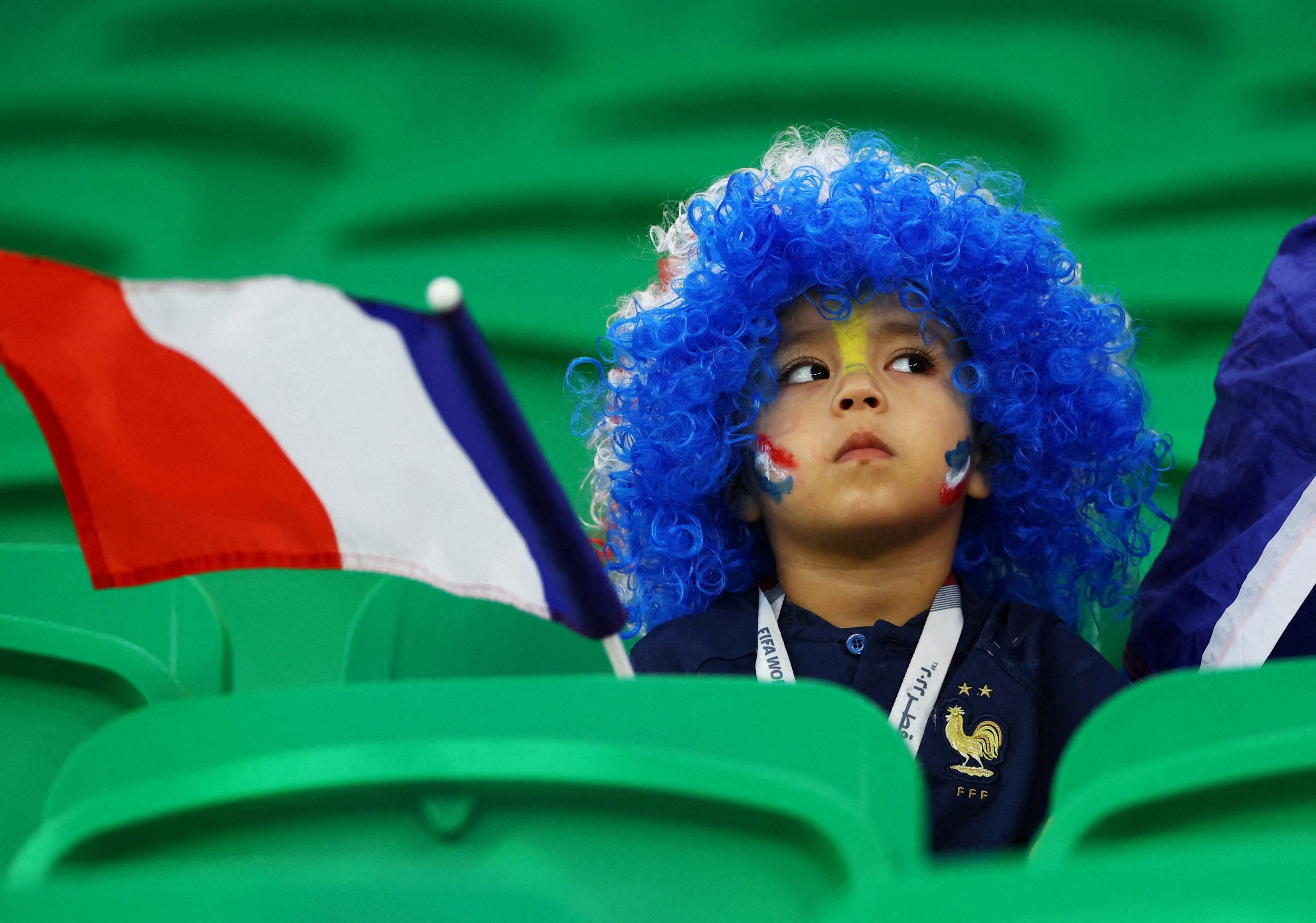
France fan inside the stadium before the World Cup 1/16 match against Poland.
REUTERS/Bernadett Szabo
765,000: That's how many visitors Qatar received during the first two weeks of the men's soccer World Cup, far less than the 1.2 million the host country was hoping for — with only eight out of 64 games left to play. Point the finger at political backlash, expensive tickets, almost no booze, and lack of hotel rooms.
3: The EU ruled Thursday on applications from three member states to join the Schengen Area, Europe’s ID-free travel zone. Brussels gave the thumbs-up to Croatia but told Bulgaria and Romania they'll have to wait a bit longer — likely because party-pooper Austria thinks they get too many non-EU migrants crossing over from the Balkans.
225: Nigeria has limited weekly cash withdrawals to $225 for individuals and $1,124 for corporations. The central bank believes that more digital payments will bring more Nigerians into the banking system, but critics warn it might have the unintended effect of pushing unbanked people — almost half the adult population — to hoard paper money.
2: Indiana filed two lawsuits against ByteDance, the Chinese company that owns TikTok. One complaint accuses ByteDance of violating the US state’s consumer protection laws, while the other takes aim at TikTok for allegedly failing to disclose whether China gets access to its users' private data.As America celebrates 250 years, Bank of America is proud to honor our shared history. Discover our commitment.
Last week, Microsoft highlighted its Ratepayer Protection Tariff (RPT) proposal, a framework designed to ensure datacenters bear the costs associated with required grid improvements rather than shifting those costs to residential customers. Developed in response to growing energy demand in Nevada, the proposal aims to support grid expansion and reliability while providing a model that could inform broader discussions about how states manage rising electricity demand. Read more here.
The World Health Organization said on Saturday the outbreak reached 3,605 cases
Japan and the United States confirmed today they jointly intervened to prop up the Japanese yen, the first such action since 2011.