What We're Watching
Starmer asks Meloni for a lesson on curbing illegal migration
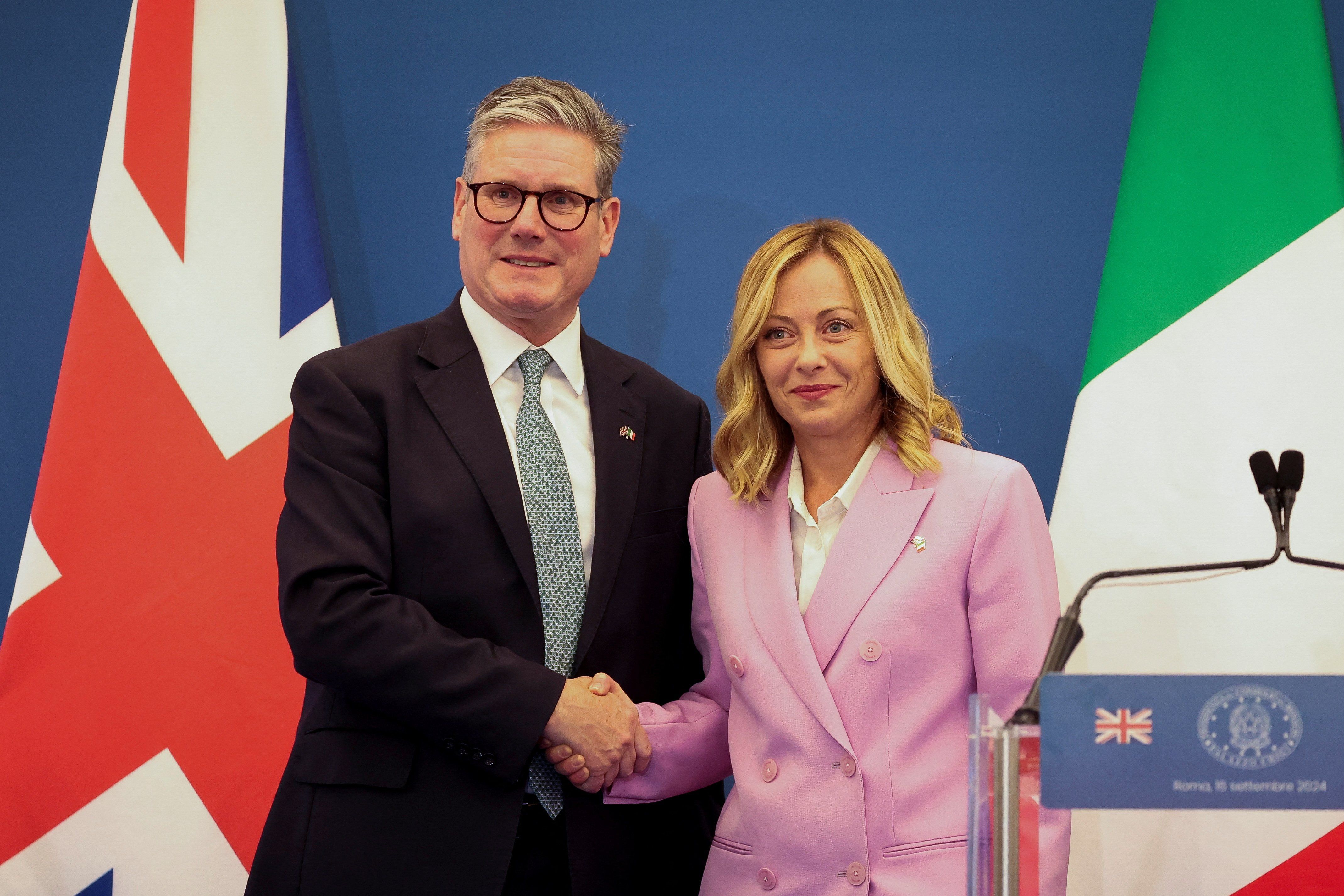
UK Prime Minister Keir Starmer meeting with Italy’s Prime Minister Giorgia Meloni.
REUTERS/Phil Noble/Pool
UK Prime Minister Keir Starmer meeting with Italy’s Prime Minister Giorgia Meloni.
UK Prime Minister Keir Starmermet with Italy’s Prime Minister Giorgia Meloni on Monday to learn how her hard-line tactics against irregular migration could help him deliver on his election promise to “smash the gangs” driving such migration to the UK. The meetings came after eight migrants died crossing the English Channel on Sunday and on the heels of disinformation-fueled anti-immigrant riots in August.
Starmer is interested in how Meloni cut irregular sea crossings to Italy by 60% over the past year, and in the so-called “Rome Process” she adopted last year when she forged deals with North African countries like Tunisia and Libya to tackle people-smuggling gangs, intercept departing boats, and return migrants. Starmer pledged £4 million to support the Rome Process. He also said he was open to following Italy’s lead on processing asylum claims offshore — a project Meloni is struggling to get off the ground in Albania but one that has generated the interest of leaders across Europe, including in Brussels.
The meeting shows how Starmer has changed his tune on immigration since campaigning against Rishi Sunak’s plan to deport illegal migrants to Rwanda. It also signals how Europe's shift to the right on immigration has positioned Meloni’s tactics – once considered fringe – in the mainstream.
South Sudan is accusing neighboring Sudan of launching a drone strike that killed at least 73 people at a market in Abyei, a disputed, oil-rich region of roughly 4,000 square miles claimed by both countries.
In this Quick Take, Ian Bremmer says President Donald Trump's approach to the war in Ukraine is putting more pressure on President Volodymyr Zelensky and raising concerns among European allies about the future of NATO.
Ongoing student protests in France descended into looting and riots over the weekend as more than half a million people took to the streets across the country.
After his father was killed in a plane crash in 2023, Pavel was tapped to lead Wagner.