Businessman, entrepreneur, and increasingly, a disruptive force in geopolitics.
Elon Musk, the owner of X, SpaceX, and Tesla, has never shied away from controversial political posts, but over these last few weeks, his online trolling has had very real-world consequences.
Last week, he amplified posts on X that fueled racist riots in the United Kingdom and prophesized that civil war in the country was inevitable. Today, he is reportedly set to interview former President Donald Trump on X, a sitdown that will generate hundreds of headlines in a presidential cycle in which the interviewer, Musk, has unabashedly chosen a side.
In the immediate aftermath of the assassination attempt in Pennsylvania last month, Musk took to his app to endorse Trump’s candidacy – shattering the norm of self-declared neutrality by the leaders of social media platforms. (Mark Zuckerberg, for example, is not nearly as vocal about his political views). And in July, Musk announced the creation of a political action committee, America Pac, that would “mostly but not entirely” support the Republican Party.
The South African-born investor has also signaled his disapproval of Trump’s opponent, Kamala Harris, and even disseminated a deep fake video purportedly showing Harris calling herself “the ultimate diversity hire.” He also suspended the account “White Dudes for Harris” on X after it held a massive fundraising call that raised more than $4 million for her campaign.
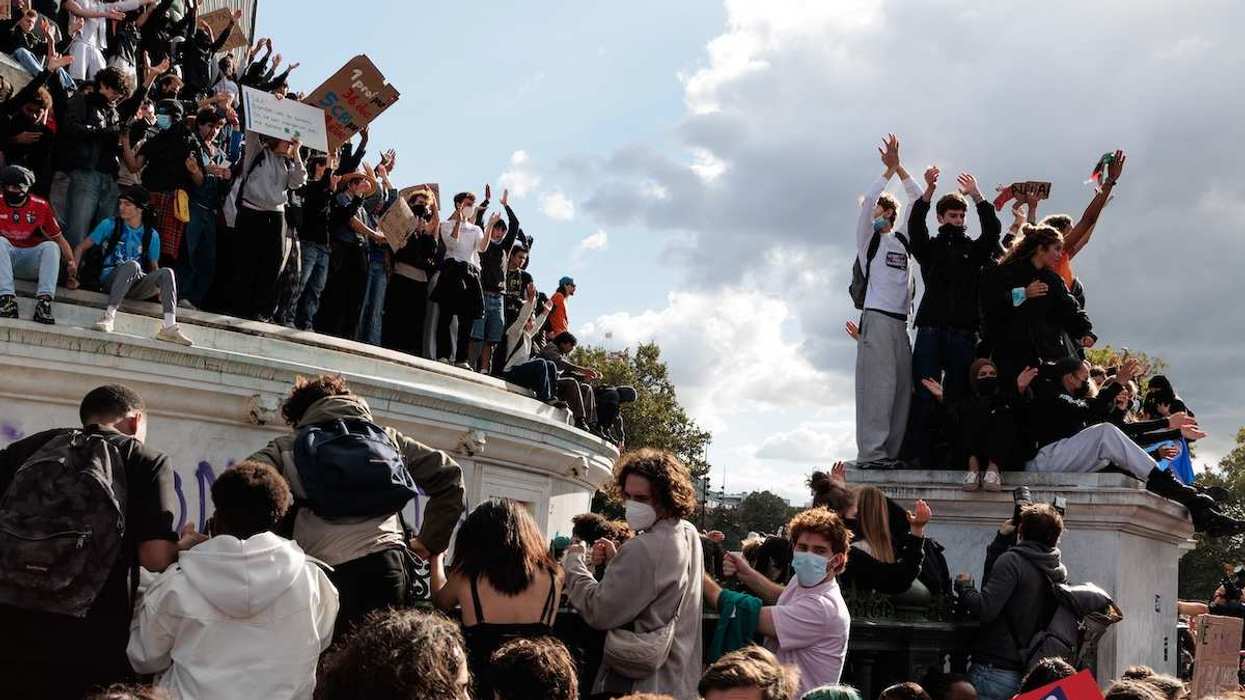
Musk’s political interventions on X have been particularly controversial in the UK, where his inflammatory posts have been linked to recent civil unrest. British officials have criticized Musk for spreading misinformation, including false claims that the murderer of three British girls – which fueled protests and riots last week – was a Muslim migrant. During the riots, “super sharers,” or accounts like Elon Musk’s with large followings, acted as “nodes” for disseminating this lie through their interaction with the far-right content.
Musk is also responsible for relaxing the content moderation guidelines on the site and reinstating many far-right accounts that acted as super-sharers of misinformation. For example, he unbanned Tommy Robinson, a fringe and four-times-jailed extreme-right British activist, who went viral during the riots. He also promoted Ashlea Simon – co-founder of a white supremacist group — who claimed UK Prime Minister Keir Starmer planned to send British rioters to detention camps in the Falkland Islands.
Can he be regulated? As a result of the riots, many political leaders, including Starmer, EU commissioners, and US senators, have called for an inquiry into social media’s role in spreading incendiary disinformation.
According to Scott Bade, a geo-technology expert at Eurasia Group, Musk is increasingly becoming a “geopolitical agent of chaos.” But Musk isn’t too powerful to regulate, says Bade. “The thing is, you’re not going to regulate Elon himself. You’re going to regulate the pieces of his empire.”
The Online Safety Act is already set to take effect in the UK at the end of the year and will require platforms to remove illegal content or be fined 10% of global annual turnover or £18 million, whichever is higher. In the wake of the riots, legislatures are considering tightening restrictions so companies can be sanctioned if they allow “legal but harmful” content such as misinformation to flourish.
“There is a clear consensus emerging in the aftermath of the riots that Musk and X are a problem, given the amount of misinformation, racial abuse, and incitement to violence that was spread on the platform,” says Eurasia Group Europe expert Mujtaba Rahman. “There will be a political and a policy response, but what shape that will take remains unclear for now.”