Search
AI-powered search, human-powered content.
scroll to top arrow or icon

Haiti stuck in a "vicious circle," says IMF economist

Amid the current global turmoil, one country that's definitely no stranger to crises is Haiti. Haitians will surely feel the pinch of rising prices of things like food and fuel, International Monetary Fund economist Nicole Laframboise says during a Global Stage conversation with GZERO Media in partnership with Microsoft.

With more than 60% of the population under the poverty line and food inflation up 40%, it's going to be "extremely difficult for the poor," she told Shari Friedman, Eurasia Group's Managing Director for Climate and Sustainability.

Haiti didn't suffer as much from the economic shock of the pandemic as other countries because it doesn't trade much nor have a big tourism sector.


But recently the much wider concern has been what Laframboise describes as "homegrown" political instability — which undermines the ability of the government and of the IMF to provide advice on macroeconomic policy.

"It's hard. It's hard for them, and it's hard ... for us." So, what do countries like Haiti do when they can't borrow money to pay for food when it gets more expensive?

They often have no choice but to print money, which makes inflation rise even more.

"It's kind of like a vicious circle," says Laframboise, "but we are working with the authorities to help them break out of this circle."

This interview was part of a series of Global Stage interviews with international thought leaders at the World Bank and IMF spring meetings. Watch the Global Stage livestream with several of these thought leaders here.
More from Global Stage

New Paris Peace Forum chief on kids, AI and a shifting world

Can sovereignty and cooperation go together? Franck Paris, the new director general of the Paris Peace Forum, says sovereignty without cooperation is "just an illusion."

France’s Éléonore Caroit on children's safety online and youth protests

As children face growing risks from social media, artificial intelligence, and other global challenges, France is calling for stronger international action to protect younger generations.

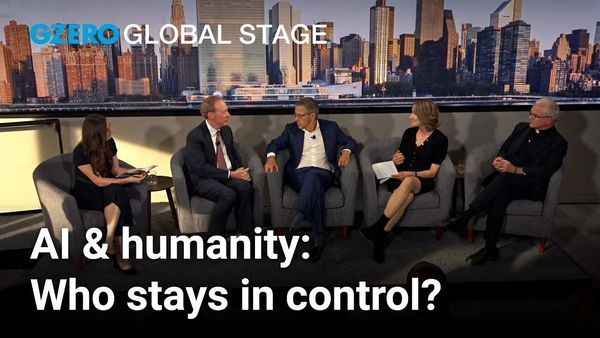
How can AI enhance human progress?

As artificial intelligence becomes more powerful and more deeply embedded in everyday life, how can we ensure it remains a tool for human progress, and under human control?

Loneliness, youth, and the rise of online radicalization

Should governments ban young people from social media? Paul Ash of the Christchurch Call Foundation says he has real reservations about age bans but understands why governments are turning to them.

How AI is changing violent extremism and radicalization

What happens when radicalization moves from public social media to private conversations with AI? Paul Ash of the Christchurch Call Foundation says it means fewer of the checks and balances found on other platforms.

How AI could accelerate global development

As countries work to meet development goals amid funding constraints, AI is emerging as a potential tool to accelerate progress and expand opportunity. Robert Opp of the United Nations Development Programme (UNDP) and Justin Spelhaug of Microsoft Elevate discuss how AI can support development and humanitarian efforts around the world.