GZERO Europe
EU battles delta variant with omicron next; Sweden government turmoil
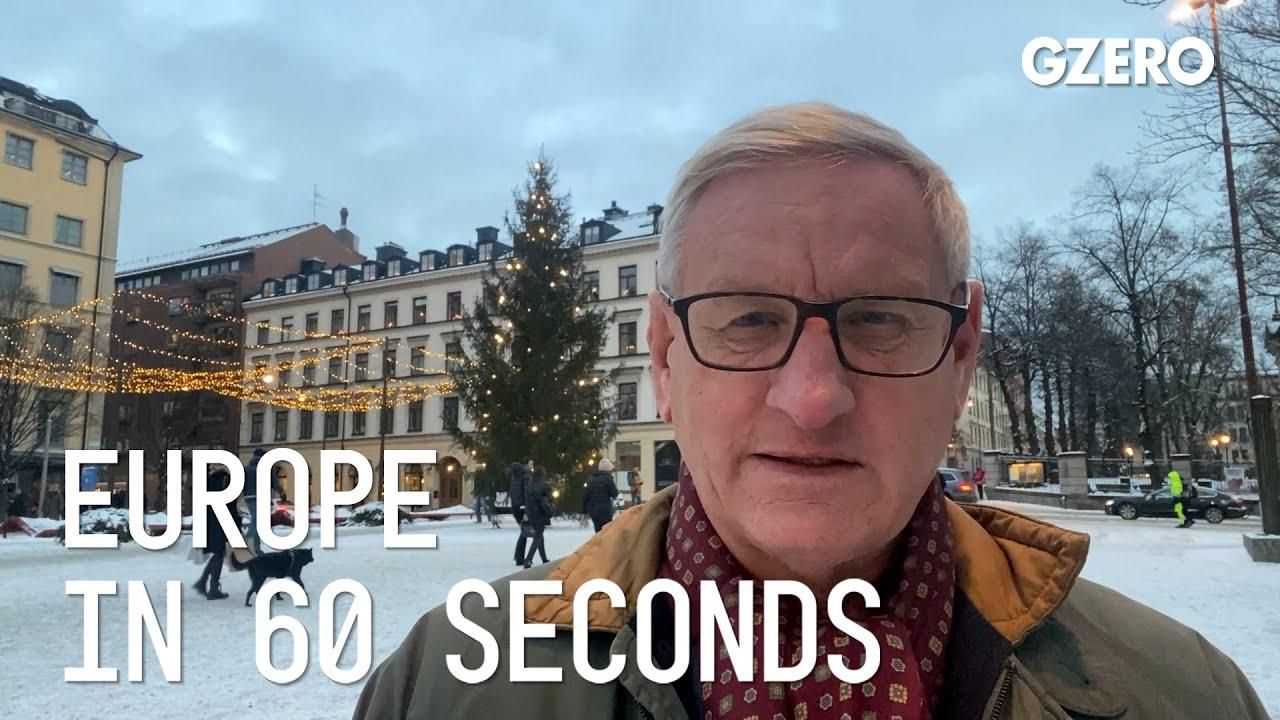
Omicron in EU Not as Much of a Concern as Delta | Sweden's Female PM | Europe In :60 | GZERO Media
Carl Bildt, former Prime Minister and Foreign Minister of Sweden, shares his perspective from Europe:
How is Europe dealing with new omicron version of the pandemic?
Well, I mean the big issue isn't really that one, the big issue if you see the havoc that is created in several European countries at the moment is the delta. The delta is making impressive strides, particularly in countries that have a slightly lower vaccination rates. So that's the number one fight at the moment. And then we must of course prepare for the omicron as well.
What's the turmoil in Sweden about governance?
Hmm, that's a long story. It goes back to a very complicated parliamentary situation and the fact that the government, the coalition government, and the arrangement that kept in place collapsed. And then we had turmoil and turmoil. And we now have, we are first female prime minister, a very weak coalition government, the budget has been dictated by the opposition. It will survive until the September election. It can't get anything done, but it will survive. And then it's going to be the September election next year that decides the governors of Sweden in the years ahead.China has defied Western sanctions for years and buys as much as 90% of Iran’s oil exports.
Think you know what's going on around the world? Here's your chance to prove it.
President Bola Tinubu faces strong headwinds in his bid for a second term.
Critics have said that Zelensky – now in his seventh year in office – has been in power for too long.