As the Davos jet set arrived in the Swiss Alps earlier this week, the weather matched the mood: gloomy, with much to be gloomy about.
A barometer on global cooperation released by the World Economic Forum suggested that in almost every category – trade, innovation, health, and security – the picture is as turbulent as a brooding J.M.W. Turner seascape.
The study suggested cooperation is being eroded by conflict and competition from autocracies around the world. In the WEF’s Chief Economists Outlook, 56% of the respondents said they expect the global economy to weaken this year, in part because of geopolitical uncertainty.
Events in Ukraine, Gaza, and the Red Sea are precarious, and the Western response is half-hearted, appearing to confirm Russian President Vladimir Putin’s view that democracies are weak and hamstrung by the need to win votes.
Attendees in need of a pick-me-up may have lamented the decision not to repeat the experiment of micro-doses of mind-expanding magic mushrooms that were on offer last year.
Democracies strike back
Strangely though, the clouds cleared, literally and metaphorically, as the week progressed, and leader after leader took to the stage to proclaim their optimism about the world in 2024.
Maybe it is because Western politicians were in such close proximity to the new masters of the technology universe – AI pioneers like Open AI CEO Sam Altman – and their unshakeable confidence that we are on the cusp of a new era of tech-driven prosperity.
Maybe it’s because the global elite are simple people with simple tastes – the best of everything – and Davos is obliging them.
Whatever the explanation, there was a spring in the step of many of last week’s keynote speakers. The democracies were striking back, based on their faith in the resiliency of their systems and their belief in the shortcomings of their adversaries.
The feeling is in line with the conclusion of the aforementioned barometer – that cooperation can co-exist with elements of great power rivalry, and that instances of cooperation can build mutual trust.
Jake Sullivan, President Joe Biden’s national security adviser, said on Tuesday that we have entered a new complex reality of strategic competition in an age of interdependence. This will be an era that builds on the core institutions that have kept the peace since 1945, one where the existing rules – “that crime doesn’t pay” – remain in force, he said.
Rivalry with countries like China means “a small yard with high fences,” Sullivan said, to ensure that technology like advanced semiconductors is not used to undermine America's national security. But he said that does not mean a technology blockade, pointing to a carve-out on commercial chips.
And he said recent agreements, such as renewed military-to-military communications and moves to reduce the export of fentanyl from China that followed Biden’s meeting with Chinese President Xi Jinping at the APEC summit in San Francisco last November show cooperation remains possible.
China’s conciliatory signals
The large Chinese delegation in Davos was led by Premier Li Qiang, who gave his own speech on Tuesday. He sounded like someone more interested in securing a better deal for China in this new world order than in blowing it up. He said China is seeking to rebuild trust by safeguarding the multilateral trading system. Beijing is committed to a policy of opening up to foreign investment “and will open the door still wider,” he added, to keep fostering a “market-oriented, law-based and world-class business environment.”
Naturally, Chinese leaders who witnessed an outflow of foreign investment in the third quarter of last year would make conciliatory noises, particularly in a room filled with executives from Middle Eastern sovereign wealth funds.
But Xi will have noted the world’s response to Putin’s aggression and is likely all too conscious that China cannot further alienate its trading partners at a time when it faces economic challenges. Those range from its shaky property sector to high levels of government debt, and from a lack of consumer confidence to demographic challenges.
Sullivan said his job is to worry but that he remains optimistic. “The more others seek to undermine stability, the more it brings our partners together,” he said.
He explained that people around the world are more interested in improving their own lives than in any “imperial projects or ambitions.” He said the democratic model remains more attractive than one based on coercion or intimidation and that violent disruption will fail.
Consensus-building efforts
However, for that to happen, countries have to come together and work toward a common interest, such as stopping Houthi attacks on shipping in the Red Sea, he added.
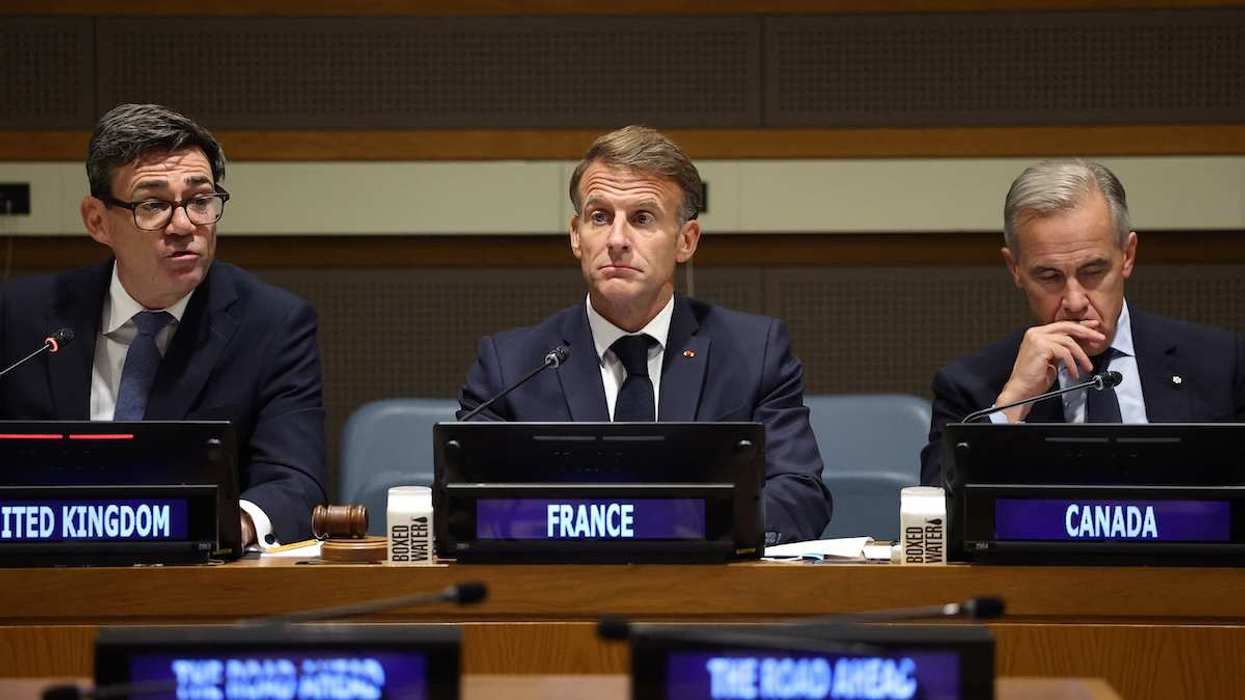
It was a theme reiterated by French President Emmanuel Macron in his address to the forum on Wednesday. He said Davos is always a venue for a global conversation and this year it should be realistic but optimistic, noting that “decisions that can change things are within our hands.”
US Secretary of State Antony Blinken on Wednesday offered a riposte to the idea that Russia is winning in Ukraine because of Vladimir Putin’s limitless tolerance for casualties and the failure of sanctions to cripple the Russian economy. He said Russia is weaker militarily, economically, and diplomatically than when Putin invaded two years ago. “Europe has severed its energy dependency on Russia. Ukrainians are more united than they’ve ever been. NATO is stronger, is larger, and will be larger still in the coming weeks."
“Putin has already failed in what he set out to do. He set out to erase Ukraine from the map, to eliminate its independence, to subsume it into Russia. That has failed and it cannot, will not succeed,” he said.
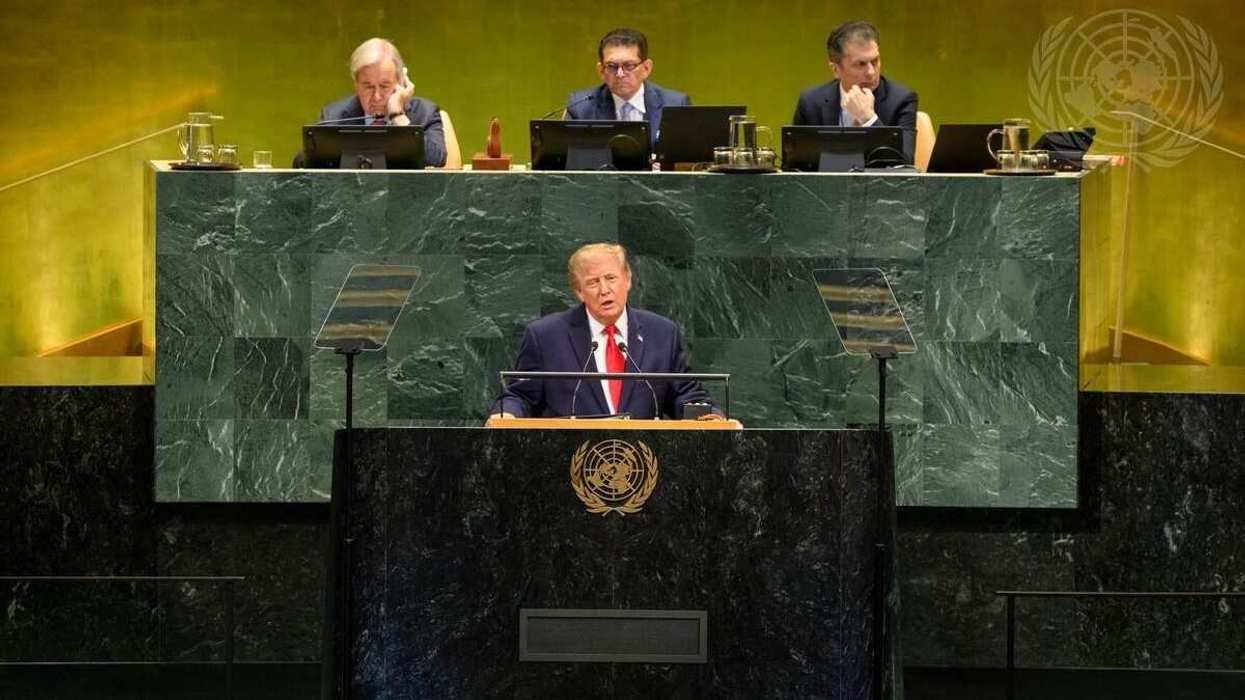
As Sullivan noted, nothing in world politics is inevitable. The election of Donald Trump would significantly alter the geopolitical calculus, potentially ending military assistance to Ukraine, giving China free rein to meddle in the South China Sea, and sparking trade wars with even the closest US allies.
But this past week, at least, there seemed to be a feeling in the famed Alpine village that the advantage has shifted in favor of the free world.