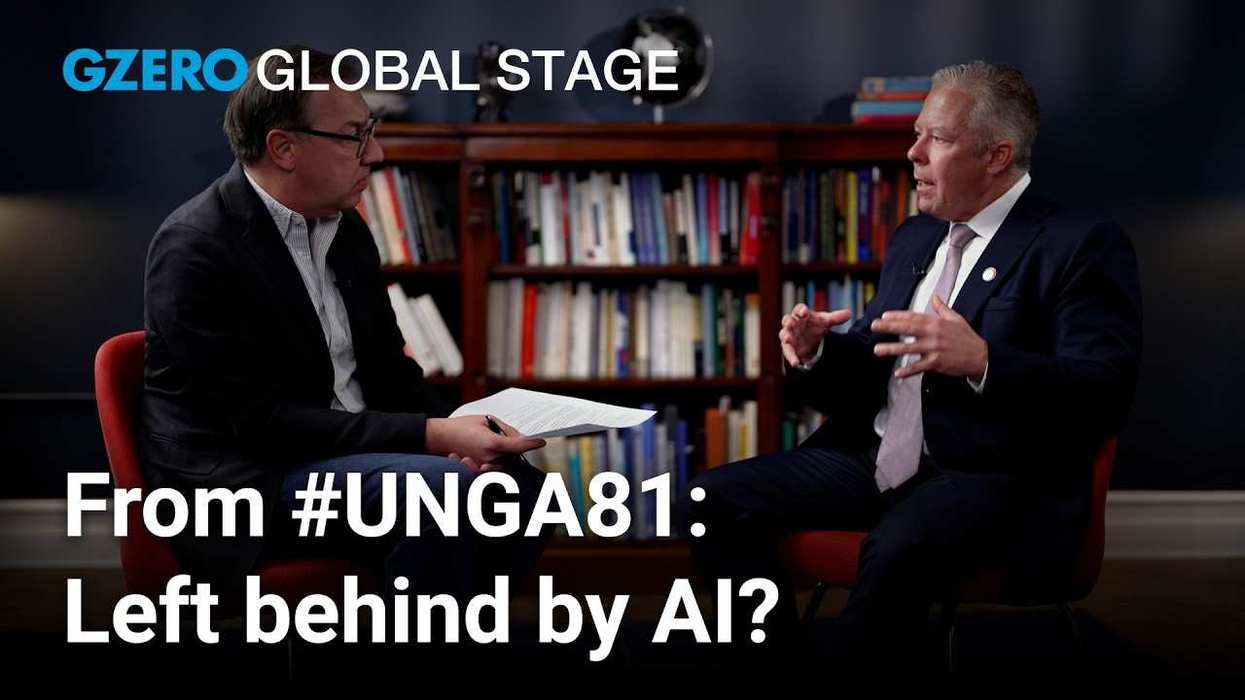
Ian Bremmer: Gillian Tett, last night, you were with the entire Ukrainian delegation, an emotional time for you. Tell me what you took away from that meeting.
Gillian Tett: Well, the first thing I took away was the fact that the Ukrainians are being exceptionally clever in terms of trying to rally support in the West by coming here. And it's quite remarkable that we had the mayors of a number of Ukrainian cities, a lot of the government figures. Many people in civil society coming all the way to Davos, to basically try and persuade the west that they need to rally support around them. And not just support them in terms of ending the war through sanctions and other measures and trying to get military support, but also very actively now, thinking about rebuilding and about the Marshall Plan.
Ian Bremmer: And I mean, Davos is not a place typically that you would expect to see a Ukrainian delegation rallying for support. They've gotten away with it because of the sheer brutality of the Russians, but also because of the trauma that is so evidently and abundantly being experienced by everyone in the delegation.
Gillian Tett: What I think was very clear is listening to the stories about the horrific events happening on the ground in Ukraine. Even as we speak, is injecting a level of emotion and shock into what's frankly normally often very dry and boring and wordy debates. And there's a huge amount of goodwill here. There's a huge recognition that what they're fighting for are values that Davos itself has often tried to reclaim or say that it espouses. There's also recognition that eventually there will be some kind of business opportunity in Ukraine for many people here, and they're looking about that as well. But in the short to medium term, the other issue of course, are questions of food security, the questions around sanctions, and how they're going to impact the global economy. And people are saying, "Yes, we absolutely support you, but there are also concerns we have."
Ian Bremmer: Now, on the sanctions piece, something the Financial Times is surely very interested in. I mean, we have an awful lot of assets that are being confiscated, and there's a lot of talk about taking those assets and helping to pay off the Ukrainians who have just been invaded by Russia. I've heard a lot of people criticizing that on the sidelines of this global group. What's your take?
Gillian Tett: I've heard lots of concern about that as well, not just from American financiers and lawyers who say, what about the due process element of all this? We want to have some kind of framework and due process. But also from the non-Western investors who have been investing in America or Europe in recent years are saying, "Well, hang on a sec, if due process is being overturned, what will it mean for us looking at America as an investment destination?" Now, the Ukrainians are aware of this and they've come up with a number of documents, which are trying to create some kind of framework and due process around this, which they've been passing around to people in recent days.
Gillian Tett: And it's going to be very interesting because there are a number of techniques and tools you can use that already exist under US law and in jurisdictions like France and Netherlands, which actually would allow you to do quite a lot of action right now. The question though is whether they're solid enough and whether the people in Davos will rally around any of the Ukrainian proposals around a due process.
Ian Bremmer: So, maybe, but what you're saying is we're not there yet?
Gillian Tett: Not there yet, and it's going to be very tough.
- What We're Watching: Zelensky at the UN, French race tightens, Sri ... ›
- Zelensky knows how to talk to the West - GZERO Media ›
- Russian ruble weathers sanctions storm - GZERO Media ›
- The Graphic Truth: Piling sanctions on Russia - GZERO Media ›
- Moisés Naim: With inflation & low trust in democracy, Latin America faces perfect storm for nasty politics - GZERO Media ›